
Understanding soil gas emissions, their impact on climate change, and strategies for mitigation.
Introduction to Soil Gas Emissions
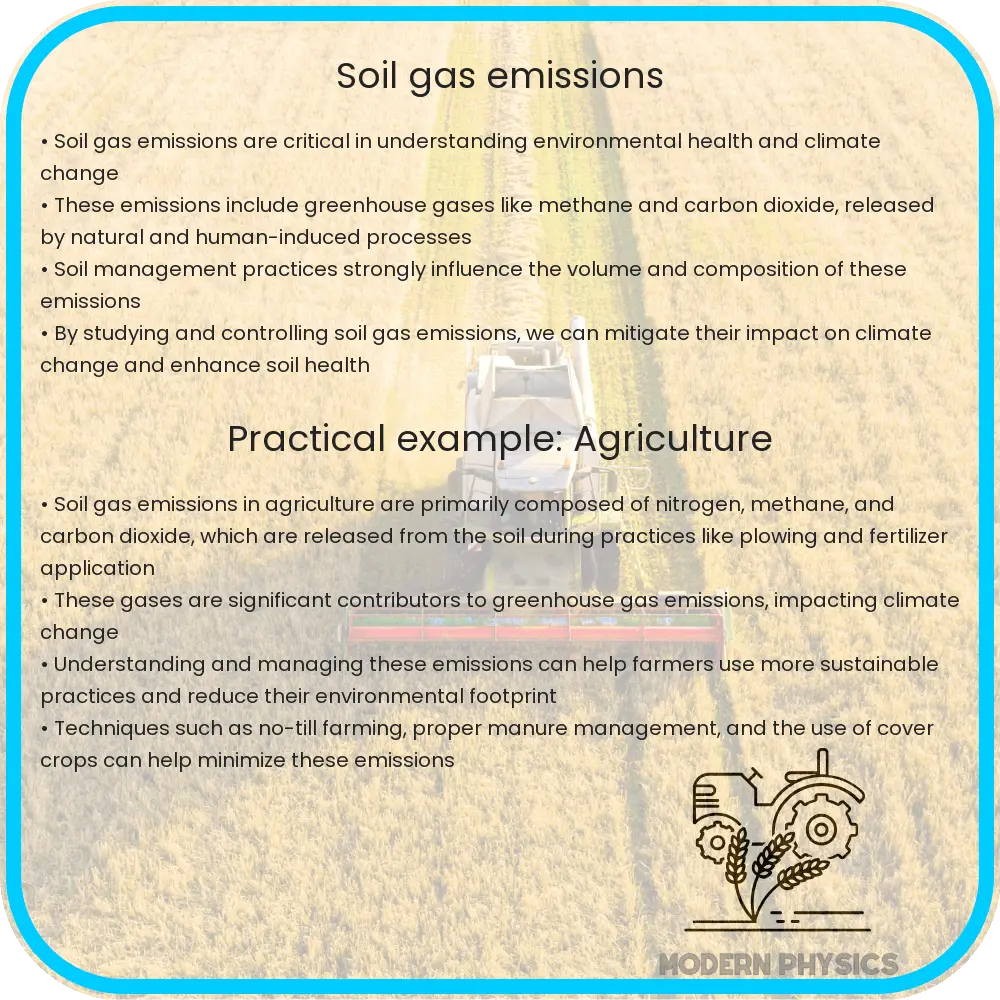
Soil gas emissions refer to the release of gases from the soil into the atmosphere. These emissions can consist of various gases, including methane (CH4), carbon dioxide (CO2), nitrous oxide (N2O), and volatile organic compounds (VOCs). The generation and release of these gases are influenced by biological, chemical, and physical processes within the soil, which are often impacted by human activities such as agriculture, landfill operations, and industrial processes.
Monitoring Soil Gas Emissions
Effective monitoring of soil gas emissions is crucial for understanding their impact on climate change and developing strategies for mitigation. Monitoring can be conducted using various techniques, including:
- Direct Measurement: Technologies such as gas chromatography and mass spectrometry are used to directly measure the concentration of gases emitted from the soil.
- Remote Sensing: Satellite or aerial imagery sensors detect gases over a large area, providing data on regional gas emissions.
- Soil Gas Probes: They are installed in the soil to collect gas samples at various depths, which can identify the sources and pathways of gas movement within the soil.
These techniques help scientists and environmentalists gather data on emission patterns, evaluate temporal variations, and correlate these findings with other environmental factors such as soil temperature, moisture, and the presence of specific microbes or plants.
Impact of Soil Gas Emissions
Soil gas emissions have significant environmental impacts, particularly in terms of climate change and air quality:
- Climate Change: Gases like methane and nitrous oxide are potent greenhouse gases. They have a much higher global warming potential than carbon dioxide, making even small concentrations significantly impactful.
- Air Quality: Certain soil gases, especially volatile organic compounds, contribute to ground-level ozone formation, which can impair lung function, aggravate respiratory conditions, and reduce lung capacity.
In agricultural contexts, the overuse of nitrogen-based fertilizers could lead to enhanced N2O emissions from the soil, which is a concern due to its significant global warming potential compared to CO2.
Mitigation Strategies
To address the release of harmful gases from soils, several mitigation strategies can be employed:
- Improved Agricultural Practices: Techniques like optimized fertilizer application, the use of nitrification inhibitors, and soil management strategies can reduce N2O emissions.
- Restoration of Wetlands: Wetlands can act as natural sinks for CO2 and can be managed to enhance this capacity.
- Control of Landfill Emissions: Methane recovery systems can capture CH4 released from landfills, which can then be used as a renewable energy source.
These methods not only help in reducing the impact of soil gas emissions but also contribute to sustainable land use and improved air quality.
Challenges in Managing Soil Gas Emissions
While mitigation strategies provide a path forward, there are significant challenges in managing soil gas emissions effectively:
- Measurement Accuracy: The heterogeneity of soil conditions can lead to variability in gas emission readings, making accurate measurement challenging.
- Economic and Policy Constraints: Implementing new technologies and practices may require substantial investment and supportive policies, which are not always readily available.
- Public Awareness and Engagement: Understanding and cooperation from the public and private sectors are critical, particularly in regions where regulatory frameworks are underdeveloped.
Addressing these challenges requires a concerted effort from governments, NGOs, scientists, and the community to foster better practices and stronger regulatory frameworks.
Future Prospects
The future of managing soil gas emissions looks promising with advancements in technology and increased global awareness of environmental issues. Innovations in remote sensing and biotechnology, for example, could lead to more effective monitoring and reduction of emissions. Additionally, international cooperation on climate change initiatives is likely to bolster efforts to manage soil emissions globally.
Continuous research and adaptation of best practices will be essential to mitigate the negative impacts of these emissions. The active participation of all societal sectors in embracing these new technologies and methods will be crucial in shaping a sustainable environmental future.
Conclusion
Soil gas emissions play a significant role in impacting climate change and air quality. Through effective monitoring, understanding the environmental impacts, implementing mitigation strategies, and overcoming management challenges, substantial progress can be made in reducing their harmful effects. Continued innovations and cooperation at both local and global levels are essential to manage these emissions effectively. By tackling this issue head-on, we can safeguard our environment for future generations while contributing to the overall health and sustainability of our planet.