
Explore the carbon cycle’s role in Earth’s ecosystem, its components, and human impacts on global climate.
Understanding the Carbon Cycle: Essential Process, Balance & Impact
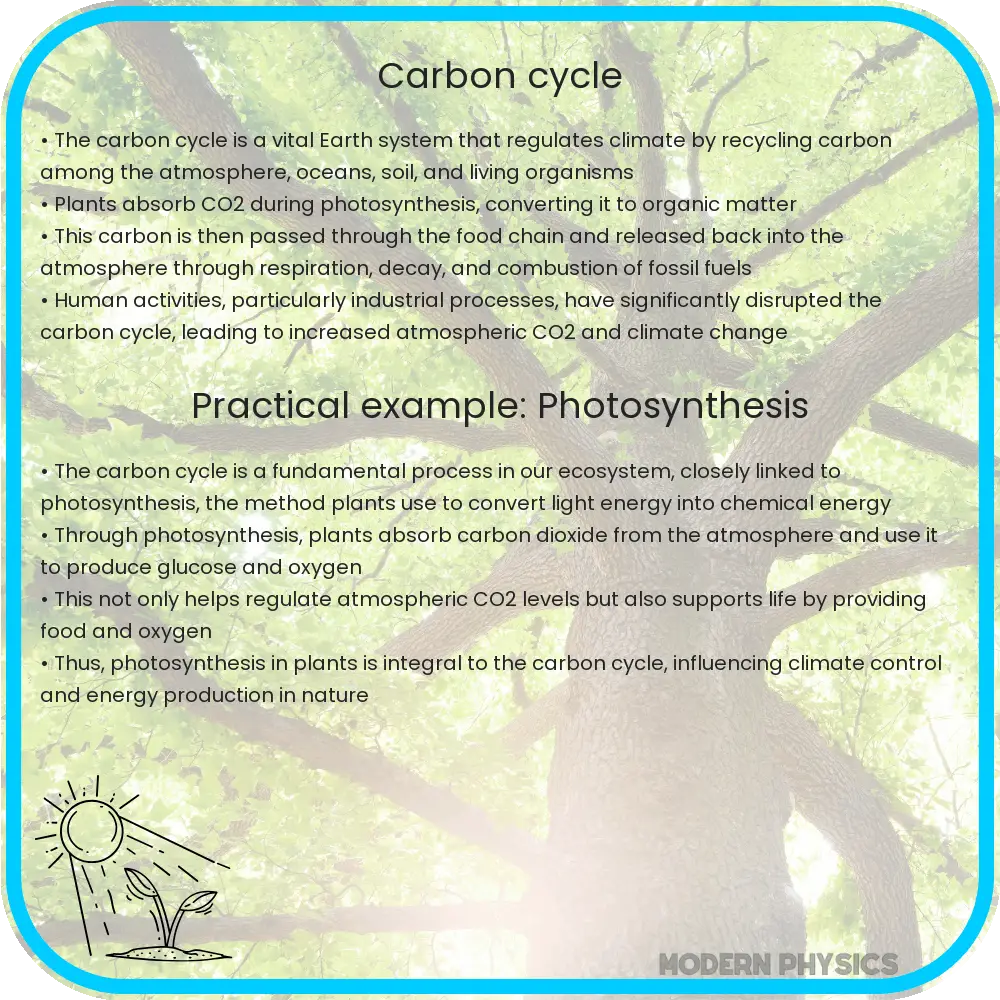
The carbon cycle is a fundamental process in Earth’s ecosystem that recycles carbon among the earth’s oceans, atmosphere, land, and living organisms. This cycle plays a crucial role in regulating the Earth’s climate by controlling the concentration of carbon dioxide (CO2) in the atmosphere. Understanding the carbon cycle’s phases and its environmental impacts is essential for grasping how human activities influence global climate change and the broader ecosystem.
Key Components of the Carbon Cycle
The carbon cycle consists of several principal components that ensure the continuous transformation and movement of carbon through various forms:
- Photosynthesis: Plants capture CO2 from the atmosphere and, using sunlight, convert it into glucose and oxygen. This process is fundamental, as it is the primary method through which carbon enters the food chain.
- Respiration: Conversely to photosynthesis, respiration by animals and plants releases CO2 back into the atmosphere as they convert organic molecules into energy.
- Decomposition: When organisms die, decomposers such as fungi and bacteria break down their bodies, releasing carbon back into the surrounding environment, which may then be used by other organisms or released as CO2.
- Sedimentation and Burial: Over long time scales, carbon finds its way into the Earth’s crust in the form of fossil fuels and sedimentary rock formations through the processes of sedimentation and burial.
- Release by Volcanic Activity: The Earth’s mantle contains vast amounts of carbon, which can be released back into the atmosphere or hydrosphere through volcanic eruptions.
- Oceanic Uptake: Oceans absorb a significant amount of CO2 from the atmosphere. This CO2 can be used by marine organisms in their biological processes or converted into dissolved ionic forms of carbonate (CO32-).
Human Impact on the Carbon Cycle
Human activities, especially those related to industrial processes and fossil fuel consumption, have significantly disrupted the natural balance of the carbon cycle. Deforestation, urbanization, and pollution are additional factors that compound these effects. These disruptions increase the concentration of CO2 in the atmosphere, leading to global warming and climate change:
- Burning Fossil Fuels: The combustion of coal, oil, and gas for energy and transport releases enormous quantities of CO2, far exceeding what plants can photosynthesize.
- Deforestation: The removal of forests decreases the number of trees that can absorb CO2 through photosynthesis, exacerbating the buildup of carbon in the atmosphere.
- Industrial Processes: Many industrial activities emit CO2 and other greenhouse gases directly into the atmosphere, thus altering the carbon cycle’s natural flow.
The alteration of the carbon cycle by human activities poses considerable challenges but also highlights the critical importance of sustainable practices and the potential for mitigative strategies. Understanding and managing the carbon cycle is crucial for the environmental health of our planet and the future of humanity.
Strategies for Mitigating Human Impact on the Carbon Cycle
In response to the negative influences human activities have on the carbon cycle, several strategies can be employed to mitigate these impacts and help restore balance:
- Reforestation: Planting more trees helps absorb excess CO2 from the atmosphere, effectively acting as carbon sinks and partially reversing the effects of deforestation.
- Carbon Sequestration: Advanced technologies now allow for the capture and storage of CO2 emissions from industrial processes before they enter the atmosphere. This carbon is then stored in underground reservoirs or used in other applications such as enhanced oil recovery.
- Renewable Energy: Shifting from fossil fuels towards renewable energy sources such as wind, solar, and hydroelectric power significantly reduces carbon emissions into the atmosphere.
- Improved Agricultural Practices: Modern agricultural techniques that minimize soil disruption and maximize carbon storage in soil can also contribute to carbon cycle balance.
By implementing these strategies, not only can we diminish our carbon footprint, but we can also create a more sustainable interaction with Earth’s natural systems, promoting a healthier planet for future generations.
Conclusion
The carbon cycle is a complex, critical process that sustains life and shapes the environment on Earth. The cycle’s delicate balance is currently threatened by human activity, particularly the consumption of fossil fuels and deforestation, leading to increased atmospheric CO2 levels and global warming. By understanding the intricacies of the carbon cycle and the role it plays in our environment, we can better recognize the importance of our actions and their long-term implications for the planet.
Emphasizing sustainable practices such as reforestation, carbon sequestration, and the adoption of renewable energy can help restore balance to the carbon cycle. These initiatives not only combat climate change but also secure a viable, sustainable environment for future generations. It is our responsibility to stay informed and actively participate in mitigating the anthropogenic impacts on the carbon cycle to foster a resilient ecosystem.
This knowledge equips us with the power to make informed choices in our daily lives and advocate for policies that prioritize the health of our planet. Understanding and respecting the carbon cycle is not just about scientific awareness; it’s about ensuring a sustainable future for all.