
Greenhouse gases are compounds that trap heat in Earth’s atmosphere, enhancing the greenhouse effect and contributing to climate change.
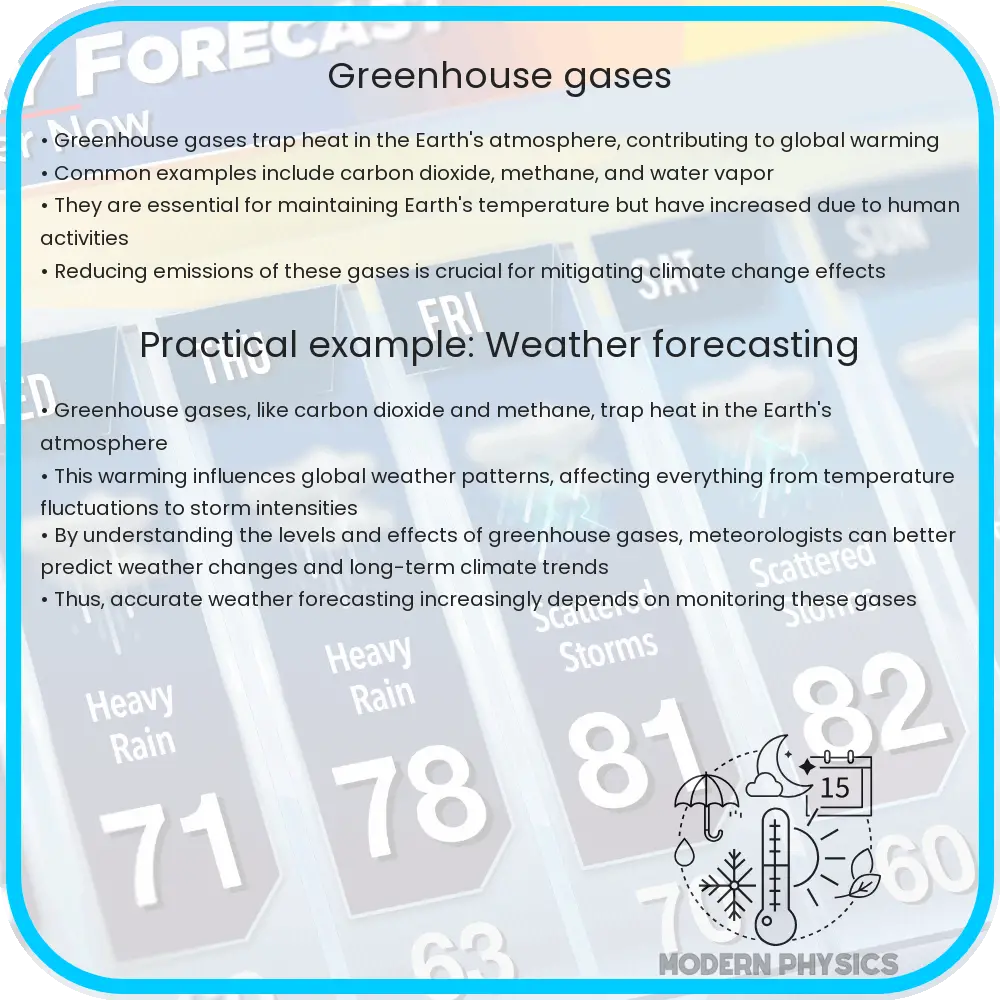
Understanding Greenhouse Gases and Their Impact on Climate
Greenhouse gases (GHGs) are a group of compounds that have the ability to trap heat in Earth’s atmosphere, leading to the greenhouse effect. This natural phenomenon is critical for life on Earth, as it helps maintain the planet’s temperature at a habitable level. However, human activities, primarily since the Industrial Revolution, have significantly increased the concentrations of these gases, intensifying the greenhouse effect and contributing to global warming and climate change.
The Role of Major Greenhouse Gases
The most significant greenhouse gases directly influenced by human activities are carbon dioxide (CO2), methane (CH4), and nitrous oxide (N2O). Each gas has a different ability to absorb heat (known as global warming potential) and remains in the atmosphere for varying lengths of time.
- Carbon Dioxide (CO2): Produced primarily through the burning of fossil fuels (such as coal, oil, and gas), deforestation, and other industrial processes. CO2 is the most abundant greenhouse gas attributed to human activities and is vastly responsible for the increase in Earth’s temperature.
- Methane (CH4): Emitted during the production and transport of coal, oil, and natural gas, as well as from livestock and other agricultural practices. Methane is far more effective at trapping heat than CO2, but it stays in the atmosphere for a shorter period.
- Nitrous Oxide (N2O): Comes from agricultural activities, fossil fuel combustion, wastewater management, and industrial processes. Like methane, N2O has a substantial heat-trapping capacity, significantly greater than that of CO2, and it also depletes the stratospheric ozone layer.
Implications of Increased Greenhouse Gases
The enhancement of the greenhouse effect through increased levels of greenhouse gases has led to numerous changes in global climate patterns, commonly referred to as climate change. Here are some of the critical impacts:
- Rising Temperatures: Global surface temperatures have increased, and this upward trend is projected to continue, influencing weather patterns and ecosystems globally.
- Extreme Weather Events: There is an increase in the frequency and intensity of extreme weather events such as hurricanes, heatwaves, and heavy precipitation events.
- Sea Level Rise: The warming of the planet leads to the melting of ice caps and glaciers, combined with the thermal expansion of seawater, all contributing to rising sea levels that threaten coastal areas and islands.
- Ecological Disruptions: Shifts in climate conditions affect the distribution of species and the timing of the seasons, which can disrupt natural ecological balances.
Understanding the role and impact of greenhouse gases is crucial for developing strategies to mitigate climate change. The next section will explore how human activities contribute further to GHG emissions and what measures can be taken to reduce them.
Human Contributions and Mitigation Measures
While natural processes do emit greenhouse gases, human activities contribute significantly more, exacerbating the greenhouse effect. Understanding these contributions is key to implementing effective mitigation strategies.
- Energy Production: Burning fossil fuels for electricity and heat is the greatest source of carbon dioxide and a significant source of methane. Transitioning to renewable energy sources like solar, wind, and hydroelectric can drastically reduce emissions.
- Transportation: Vehicles powered by gasoline and diesel are major emitters of carbon dioxide. Shifting towards electric vehicles and improving public transportation infrastructure can help decrease individual vehicle use.
- Agriculture: This sector is a primary source of methane and nitrous oxide, through livestock farming and fertilizer use. Adopting more sustainable farming practices and diets that require less animal protein can mitigate these effects.
- Waste Management: Decaying organic waste in landfills produces methane. Enhancing waste segregation, recycling, and composting can reduce the amount of waste deposited in landfills.
Government policies and international agreements also play crucial roles in regulating and reducing greenhouse gas emissions on a global scale. The Paris Agreement, for example, is a global accord that aims to limit global warming to well below 2, preferably to 1.5 degrees Celsius, compared to pre-industrial levels by reducing greenhouse gas emissions. Participation and commitment at all levels – from international down to individual actions – are essential for meaningful change.
Conclusion
The challenge of greenhouse gases and their impact on climate is among the most pressing environmental issues of our time. An enhanced understanding of these gases, their sources, and their dire effects on our planet is essential. Indeed, the interconnected roles of carbon dioxide, methane, and nitrous oxide elucidate the complexity of the Earth’s atmospheric dynamics and the urgent need for concerted global action.
By identifying the major human activities contributing to increased greenhouse gases, societies can tailor specific strategies to mitigate adverse effects. Actions such as transitioning to renewable energy, optimizing agricultural methods, and adopting sustainable waste management systems are not just beneficial; they’re imperative for the health of our planet and future generations. The fight against climate change will require persistent, unified, and dynamic efforts, and understanding the fundamental science of greenhouse gases represents a critical first step.