
Understanding Soil Carbon Sequestration, the process that captures atmospheric carbon dioxide and stores it as organic carbon in the soil.
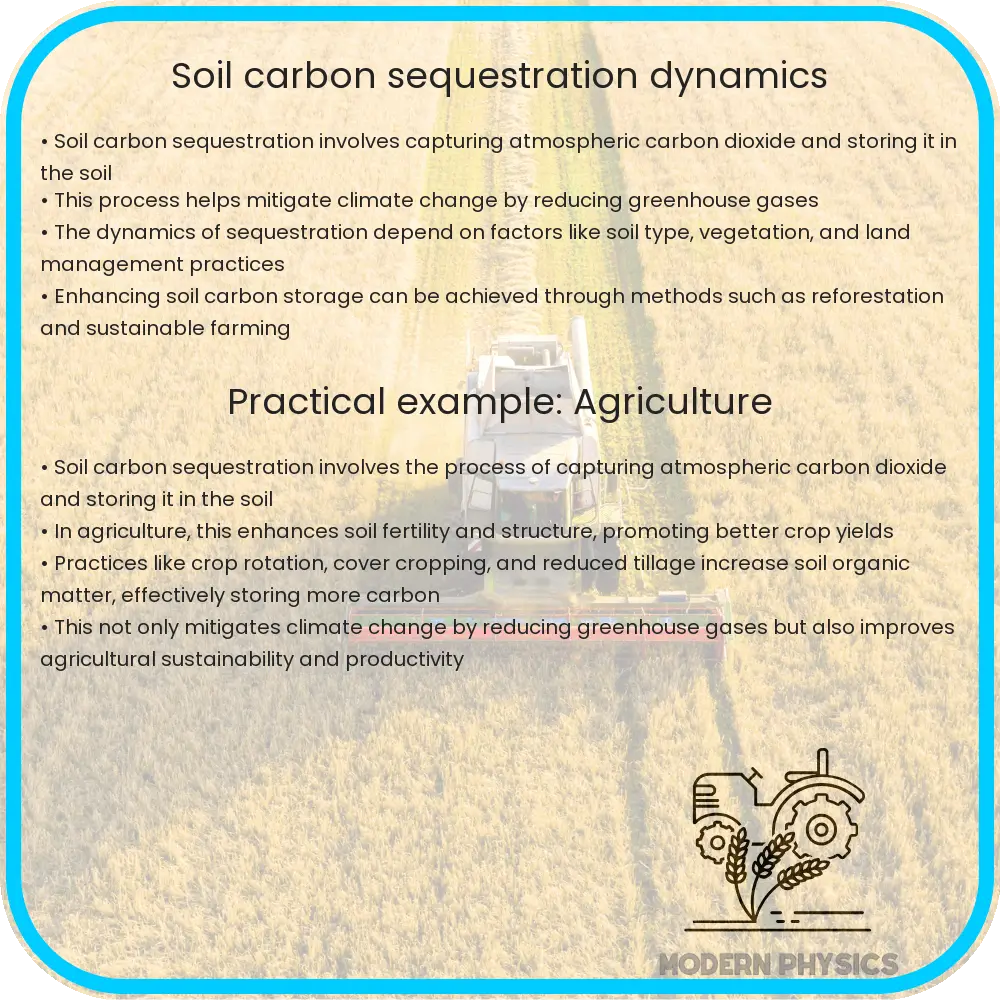
Understanding Soil Carbon Sequestration
Soil Carbon Sequestration is a crucial process in the cycle of carbon in our environment, significantly impacting global climate change measures. This process involves capturing atmospheric carbon dioxide (CO2), which is a major greenhouse gas, and storing it in the soil as organic carbon. Here, we explore what it is, how it can be enhanced, measured, and optimized.
How Soil Carbon Sequestration Works
The basics of soil carbon sequestration begin with the process of photosynthesis. Plants absorb CO2 from the atmosphere and use sunlight to convert the carbon into organic compounds. Some of this carbon is transferred from the plants to the soil through roots and decaying plant material. Microorganisms in the soil then break down these materials, resulting in the storage of carbon in the soil instead of releasing it back into the atmosphere as CO2.
The potential of soil to store carbon depends on numerous factors including climate, soil type, vegetation, and land management practices. Organic farming, reduced tillage, cover cropping, and the application of compost are common methods used to increase carbon sequestration in the soil. These practices not only improve soil structure, fertility, and productivity but also enhance the soil’s carbon storage capacity.
Enhancing Soil Carbon Sequestration
To enhance soil carbon sequestration, it’s imperative to understand and implement certain agricultural and land use practices:
- No-Till Farming: Limiting soil disturbance from tillage helps maintain soil organic carbon levels and reduce erosion. No-till farming allows organic material to build up and encourages more biological activity, which aids carbon storage.
- Use of Cover Crops: Planting cover crops during off-season or between planting periods adds organic matter to the soil. This not only prevents soil erosion but also enhances the soil’s structure, moisture retention, and carbon sequestration capacities.
- Organic Composting: Adding organic compost to soils introduces more organic material and microorganisms into the soil ecosystem. This decays into humic substances which are key to soil carbon storage.
Measuring Soil Carbon Sequestration
Accurately measuring the amount of carbon sequestered in soils is fundamental for tracking the effectiveness of various sequestration strategies. Measurement can be done through direct or indirect methods:
- Direct Soil Sampling: This method involves taking direct soil samples at various depths and calculating the soil organic carbon (SOC) content. This process is usually repeated over time to assess changes in SOC levels.
- Modeling: Computational models can estimate carbon sequestration based on input data such as soil type, climate, vegetation, and land management practices. These models help predict long-term carbon storage potential and guide future practices.
Both techniques provide essential data but can be complemented by emerging technologies such as satellite remote sensing and continuous soil monitoring sensors. These technological advances allow for more frequent and precise measurements across various landscapes and conditions.
Optimizing Soil Carbon Sequestration
Optimizing the process involves integrating best practices with environmental and economic considerations to make them sustainable and effective. This includes understanding the interactions between various agricultural practices and their impact on soil carbon levels. Integrated soil fertility management (ISFM), agroforestry, and controlled grazing are examples of systems that optimize carbon sequestration while supporting sustainable agriculture.
To truly optimize carbon sequestration, it is also important to consider policies that encourage the adoption of practices that increase soil carbon stocks. This could include financial incentives for farmers and land managers, rigorous research, and development in soil sciences, and international cooperation on climate change mitigation strategies.
Next, we will explore the challenges and future prospects of soil carbon sequestration in managing global carbon levels effectively.
Challenges and Future Prospects
Despite the benefits of soil carbon sequestration, several challenges impede its broader implementation. Firstly, changes in land management practices can be costly and require significant time and effort from farmers and landholders to adopt new methods. Secondly, the variability in soil types, climate conditions, and vegetation makes it difficult to develop a one-size-fits-all solution for effective carbon storage across different ecosystems.
Furthermore, while increasing the organic carbon in soil is beneficial for the climate, it also raises concerns about nutrient imbalances. More research is needed to understand how to maintain balanced nutrient levels while enhancing soil carbon storage.
Looking into the future, technological advancements and scientific research are set to play crucial roles in overcoming these challenges. Innovations in biotechnology, such as the development of genetically modified plants that have a higher carbon intake, or the use of biochar, could significantly boost the efficiency of carbon sequestration. Additionally, more sophisticated remote sensing technologies and improved soil sensors are expected to provide better data for managing soil carbon levels globally.
Conclusion
Soil carbon sequestration presents a promising opportunity to mitigate climate change by capturing atmospheric CO2 and storing it in the soil. Through the processes of photosynthesis and subsequent organic matter decomposition, carbon is effectively removed from the atmosphere and locked away in the earth, providing a natural means to counteract greenhouse gas emissions.
While there are challenges in implementing and optimizing these methods on a global scale, advancements in agricultural practices, technology, and policy can drive the potential of soil carbon sequestration forward. It is essential that these efforts are supported by both local and global initiatives to encourage sustainable land management and environmental stewardship.
In essence, maximizing the capability of our soils to sequester carbon not only benefits the ecosystem but also supports agricultural productivity and global environmental health. As we continue to explore and enhance these techniques, the role of soil in combating climate change becomes increasingly vital.