
Soil respiration is the process where CO2 is emitted from soil, crucial for assessing ecosystem health and impacting climate change.
Introduction to Soil Respiration and Its Climate Impact
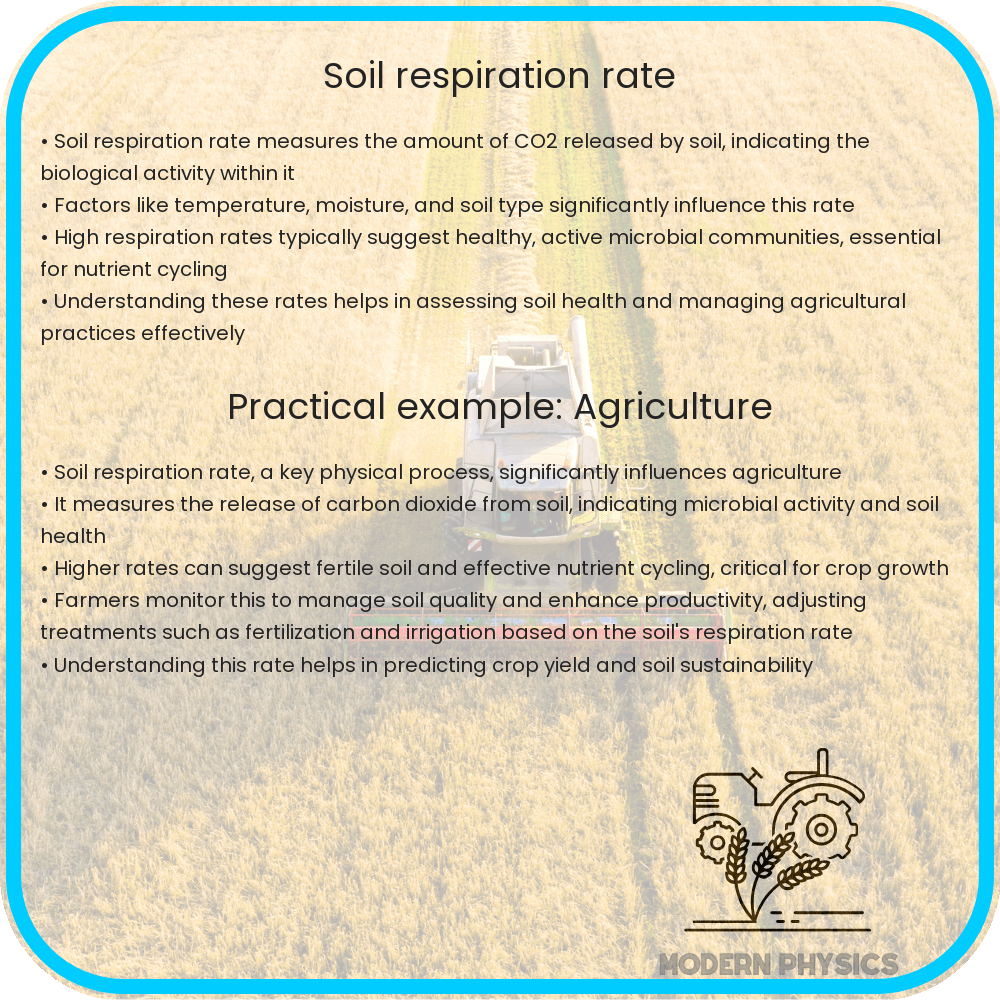
Soil respiration is a critical natural process in which carbon dioxide (CO2) is released from the soil as a result of the decomposition of organic matter by microorganisms and the respiration of plant roots. This process not only affects soil fertility but also has significant implications for global climate change. Understanding the rate of soil respiration is crucial in assessing ecosystem health, managing agricultural practices, and modeling climate dynamics.
How Soil Respiration Affects Climate
The release of CO2 from the soil contributes significantly to the atmospheric CO2 levels, which are a key driver of global warming. The balance between carbon sequestration in the soil and its release through soil respiration influences the net carbon exchange with the atmosphere. Therefore, changes in soil respiration rates can have profound impacts on carbon cycling and climate change.
- Enhancement of Greenhouse Effect: Higher rates of soil respiration increase the concentration of CO2 in the atmosphere, enhancing the greenhouse effect and leading to global temperature rise.
- Cycle Feedbacks: Climate change can alter soil temperatures and moisture levels, which in turn affect soil respiration rates, creating a feedback loop that could potentially amplify climate effects.
Measuring Soil Respiration
Accurate measurement of soil respiration is vital for ecological and environmental research. Several techniques are used to quantify this dynamic process:
- Chamber Methods: This approach involves placing a chamber over a soil area to capture the CO2 released, which is then analyzed using gas chromatography or infrared gas analyzers.
- Gradient Method: Measures the CO2 concentration at different depths in the soil to calculate flux based on Fick’s law of diffusion.
- Eddy Covariance: A more direct method that calculates soil respiration rates based on the changes in CO2 concentrations in the air above the soil surface.
Each method has its advantages and limitations, often influenced by environmental conditions, soil type, and spatial variability.
Impact of Soil Respiration on Crop Production
Soil respiration plays a pivotal role in agricultural productivity. It is a primary component in nutrient cycling, particularly the carbon cycle, which is crucial for crop growth. The rate of soil respiration can indicate soil health and fertility, helping farmers make informed decisions regarding crop management and fertilization practices.
- Nutrient Availability: The decomposition process that drives soil respiration also leads to the breakdown of organic matter into nutrients that are essential for crop growth.
- Soil Structure: The biological activity associated with soil respiration affects soil structure, influencing water retention and root penetration.
Determining the optimal balance of soil respiration is therefore essential for sustainable agricultural practices, ensuring both high productivity and minimal environmental impact.
Strategies for Managing Soil Respiration
Effective management of soil respiration is crucial for enhancing soil health and mitigating its impact on climate change. Various strategies can be implemented to regulate this process:
- Organic Farming Practices: Incorporating organic matter like compost can enhance microbial activity and soil structure, thereby maintaining a balanced respiration rate that supports crop growth and carbon storage.
- Cover Cropping: Using cover crops can improve soil organic content, moisture retention, and protect against erosion, all of which help stabilize soil respiration rates.
- Reduced Tillage: Minimizing tillage helps preserve soil structure, reduces CO2 emissions, and maintains higher levels of soil organic carbon.
Adopting these practices not only helps in controlling the release of CO2 but also enhances the overall resilience of agricultural systems to climate variations.
Future Research Directions in Soil Respiration
While the current methodologies for measuring and managing soil respiration provide valuable insights, there are still many areas requiring further research:
- Long-Term Impact Studies: More long-term controlled studies are needed to fully understand the implications of different management practices on soil respiration and climate change.
- Technological Advancements: Development of more accurate and less invasive measurement techniques could help in better quantifying soil respiration rates and understanding their variability.
- Global Data Integration: Creating a unified global database of soil respiration data could facilitate better predictive models and strategies for carbon management on a broader scale.
These research directions could provide deeper insights into the interactions between soil respiration and climate systems, leading to more effective global carbon management and climate change mitigation strategies.
Conclusion
Soil respiration is a fundamental ecological process that plays a vital role in carbon cycling and climate change. Understanding its dynamics is crucial for effective ecosystem management, agricultural productivity, and global climate regulation. By employing both innovative measurement techniques and sustainable management practices, we can better control soil respiration rates to achieve a balance between agricultural needs and environmental conservation. Future research and technological advancements will be key in refining our strategies toward these goals. Thus, embracing the complexity of soil respiration not only helps safeguard our environment but also ensures food security and sustainable development for future generations.