
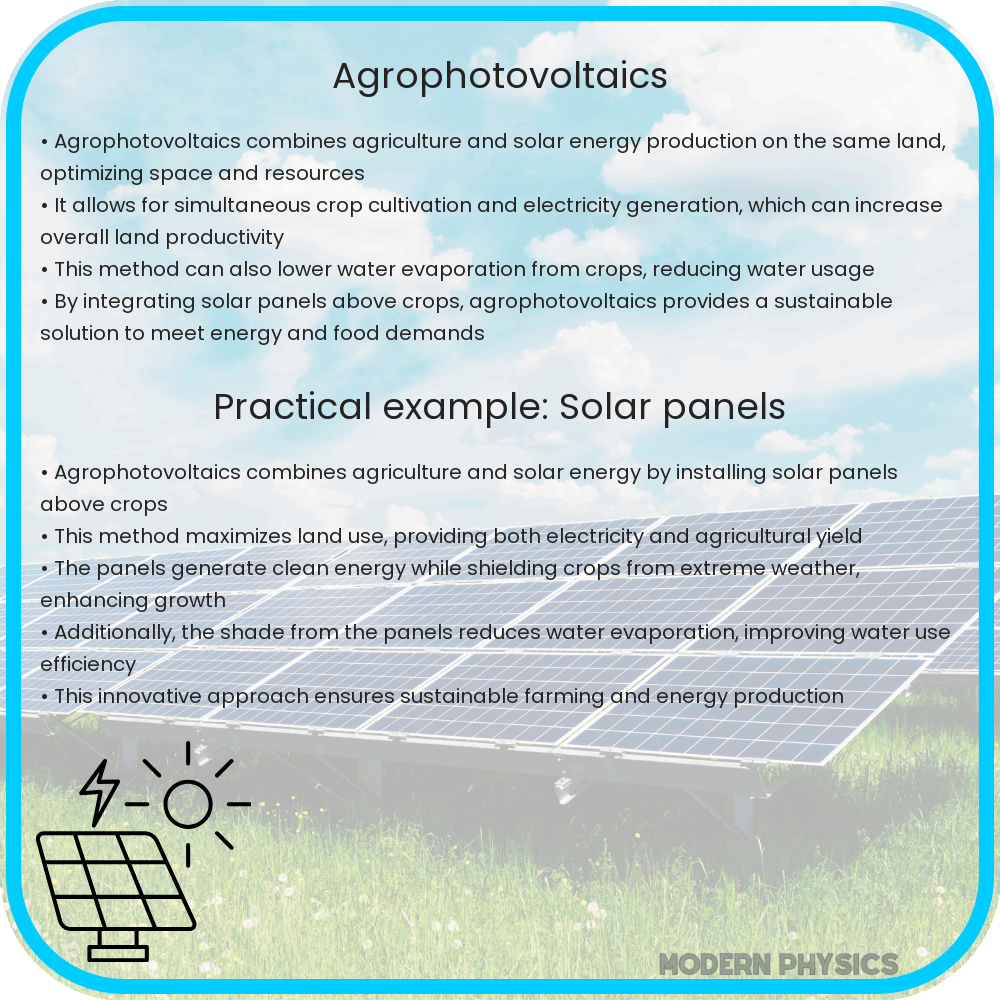
Agrophotovoltaics (APV) combines agriculture with solar photovoltaic systems to optimize land use and enhance sustainability.
Introduction to Agrophotovoltaics: Blending Agriculture with Solar Energy
Agrophotovoltaics (APV) is an innovative approach that seeks to synergistically combine agriculture with solar photovoltaic systems. This dual-use technology, also known as agrivoltaics, involves the installation of solar panels above crops, optimizing land use by generating renewable energy while simultaneously cultivating farmland. Originating from the need to find efficient land use solutions in face of increasing renewable energy demands and food production, agrophotovoltaics stands at the crossroads of sustainability and technological advancement.
How Agrophotovoltaics Work
The basic principle of agrophotovoltaics is simple yet ingenious. Solar panels are installed several meters above the ground, high enough to allow agricultural machinery to operate beneath them and for crops to grow. These solar arrays are typically designed to be semi-transparent or mounted in a way that sunlight can pass between them, ensuring that plants receive adequate light for photosynthesis. The strategic arrangement not only produces clean electricity but also provides shade, which can lead to a microclimate that reduces water loss from plants and soil, thereby improving crop yield in certain conditions.
Efficiency of Agrophotovoltaics
The efficiency of agrophotovoltaics hinges on its ability to generate solar power and support viable agricultural production. Photovoltaic cells convert sunlight into electricity, a process characterized by the power conversion efficiency (PCE) of the panels. Modern solar panels typically have a PCE between 15% to 22%. In agrophotovoltaics, the efficiency is also influenced by the crop yield. Studies have shown that while the presence of panels may reduce the total amount of sunlight reaching the crops, the moderated microclimate can lead to more efficient water usage and sometimes even enhance the growth conditions for certain crops, thereby compensating for any potential light reduction.
The configuration of solar panels plays a crucial role in the overall effectiveness of APV systems. By adjusting the spacing, orientation, and height of the panels, it is possible to optimize the amount of light that reaches the crops underneath. For instance, alternating row orientations or employing dynamic, adjustable solar racking systems can allow for maximum sunlight exposure when the plants need it most.
Sustainability Benefits of Agrophotovoltaics
Agrophotovoltaics offers several sustainability advantages that make it an attractive option for modern farming and energy production. First and foremost, by combining food production and energy generation on the same land, APV reduces the competition for land use between agricultural and energy sectors. This dual land usage approach is particularly crucial as land resources become scarcer and the population continues to grow.
In terms of environmental impact, agrophotovoltaics can lead to a significant reduction in water usage. The shade provided by solar panels reduces evaporation from soil and plants, maintaining soil moisture for extended periods. This not only conserves water but also makes farming more resilient against droughts and extreme heat conditions. Moreover, the reduction in water usage coupled with renewable energy generation results in a lower carbon footprint, aligning with global efforts to combat climate change.
Another key sustainability aspect of APV systems is the potential reduction in agricultural chemical use. The moderated microclimate under the panels can lead to fewer weed and pest infestations, which in turn can lower the need for chemical pesticides and herbicides, promoting a more organic farming approach.
Economic and Social Impacts of Agrophotovoltaics
The introduction of agrophotovoltaics brings not only environmental benefits but also significant economic advantages. Firstly, farmers can benefit from a dual income stream—selling both crops and solar power generated on their land. This diversification can provide financial stability in regions where agricultural income might be unpredictable due to weather or market conditions. Additionally, the energy produced can be used to power farm operations, reducing electricity costs and further enhancing the economic viability of farms.
Socially, APV systems can contribute to rural development by creating jobs not only in the farming sector but also in the renewable energy industry. The installation, maintenance, and monitoring of solar panels require skilled labor, which can encourage the development of new skill sets in rural communities. Moreover, APV can help stabilize rural populations by providing consistent employment opportunities, combating the urban migration trend seen in many countries.
Future Prospects and Challenges
While agrophotovoltaics presents a promising solution to many contemporary issues, it also faces several challenges that must be addressed to maximize its potential. Technological advancements are needed to create more efficient, transparent solar panels that allow for optimal light penetration for crops. Furthermore, integration into existing agricultural practices and scaling up to larger farms remains a logistical challenge, requiring tailored solutions that can adapt to different geographic and climatic conditions.
The future of agrophotovoltaics will likely depend on continued research and development, government support through subsidies and incentives, and broader acceptance within the agricultural community. Effective policies and strong collaborations between researchers, industry stakeholders, and policymakers will be crucial in overcoming these hurdles and achieving widespread deployment of APV systems.
Conclusion
Agrophotovoltaics represents a remarkable symbiosis of agriculture and solar energy production, offering a sustainable solution that capitalizes on the dual use of land. By addressing key issues such as land scarcity, water use, and energy consumption, APV systems can play a crucial role in creating a more sustainable and resilient agricultural sector. With the right mix of innovation, policy support, and community engagement, agrophotovoltaics could very well shape the future of farming and renewable energy, demonstrating that it is possible to responsibly meet the world’s increasing needs for food and clean energy.