
Learn about flexible photovoltaic films, their composition, advantages, applications, and the challenges they face in solar technology.
Introduction to Flexible Photovoltaic Films
The world is rapidly moving towards renewable sources of energy with solar power leading the charge. Among the innovations making significant impacts are flexible photovoltaic (PV) films, which have transformed the way solar energy can be utilized. These films are not only durable and lightweight but also boast an impressive efficiency that makes them an attractive option for a variety of applications.
Understanding Flexible Photovoltaic Films
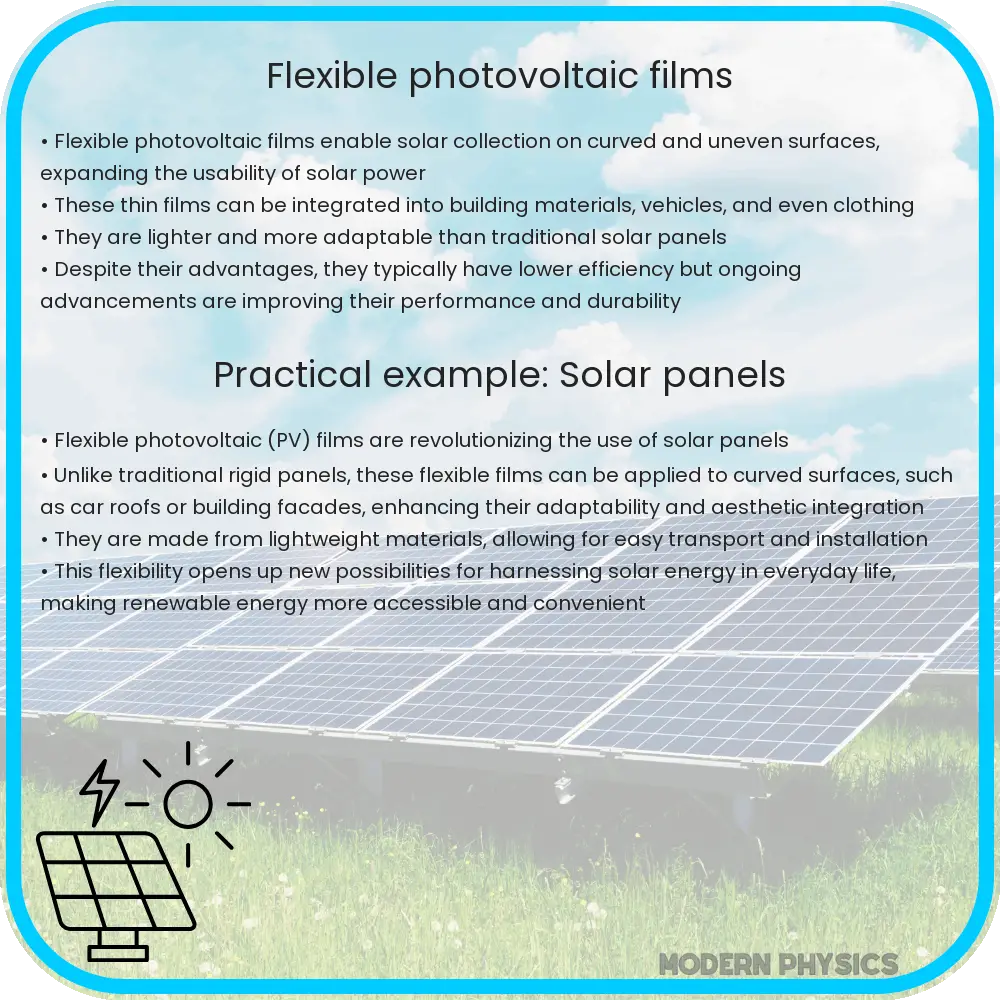
Flexible photovoltaic films are thin layers of photovoltaic material that can be applied to a variety of surfaces to generate electricity from sunlight. Unlike traditional rigid solar panels, these films are highly flexible and can be installed on curved surfaces, textiles, and even portable devices. This adaptability opens up new avenues for integrating solar power into everyday life, far beyond the standard rooftop installations.
The Composition of Flexible PV films
Most flexible photovoltaic films are made from materials like amorphous silicon, cadmium telluride, or organic photovoltaic cells. Each material offers unique benefits. For instance, amorphous silicon can be deposited on flexible substrates at low temperatures, making it cost-effective. Cadmium telluride, on the other hand, is known for its superior light absorption efficiency. Meanwhile, organic photovoltaic cells provide the utmost in flexibility and are ideal for consumer electronic applications.
Advantages of Flexible Photovoltaic Films
- Lightweight Design: The lightweight nature of flexible PV films makes them ideal for applications where traditional panels would be impractical, such as on non-load bearing structures or mobile installations.
- Improved Aesthetics: Since they can conform to the shape of the underlying surface, these films can blend into buildings and devices more seamlessly than bulky panels, maintaining the aesthetics of the structures on which they are installed.
- Increased Durability: Flexible photovoltaic films are typically encapsulated in durable, high-performance polymers that protect them from environmental factors such as moisture and UV exposure, significantly enhancing their lifespan and efficiency.
- Efficient Energy Production: Innovations in flexible PV technology have led to improved conversion efficiencies, with some films now offering efficiencies comparable to those of traditional silicon-based panels.
Potential Applications of Flexible PV Films
The versatility of flexible photovoltaic films makes them suitable for a wide range of applications. They are particularly useful in situations where traditional rigid solar panels are not viable. Some of the innovative uses include:
- Solar-powered wearables such as smartwatches and fitness trackers that can be powered entirely by light.
- Integration into architectural fabrics, such as awnings and curtain walls, allowing buildings to generate their power without altering their design significantly.
- Portable solar chargers that can be easily carried and used to power devices on the go.
- Vehicle integration, where films can be incorporated into the bodies of cars, buses, or trains to assist in powering these vehicles.
As technology advances, the potential applications of flexible PV films continue to expand, making solar power more accessible and versatile than ever before.
Challenges in the Development of Flexible Photovoltaic Films
Despite the numerous benefits, there are still some challenges facing the widespread adoption of flexible photovoltaic films. These include:
- Manufacturing complexity: The production of flexible films can be more complex and costlier than traditional panels, primarily due to the precision required in layering and encapsulating the photovoltaic materials.
- Longevity and degradation: While improvements have been made, the operational lifetime of flexible films can be shorter than that of traditional panels, mainly due to the softer materials involved which can be more susceptible to environmental wear and tear.
- Efficiency optimization: Continuous research is essential for improving the efficiency of energy conversion, which although comparable to rigid panels, still has room for enhancement especially under various lighting conditions.
The combination of technological advancement and ongoing research is crucial in addressing these challenges, thereby paving the way for more innovative and practical applications of flexible photovoltaic films in our daily lives.
Future Outlook and Technological Innovations
The future of flexible photovoltaic films looks promising with several research institutions and companies focusing on overcoming existing challenges and enhancing the capabilities of these innovative materials. The development of new organic compounds, improvements in nanotechnology, and more efficient production techniques are expected to drastically improve the efficiency and versatility of flexible PV films.
- New Materials: Researchers are exploring the use of perovskite and graphene among other materials, which may offer higher efficiencies and even greater flexibility.
- Wearable Technology: Ongoing advancements are expected to lead to more robust and energy-efficient solar films that could potentially power a broader range of wearable devices.
- Better Integration: Efforts are being made to integrate sensor technology within the solar films, which could lead to smart buildings that not only generate their own power but also adapt to environmental changes to improve energy efficiency.
Conclusion
Flexible photovoltaic films represent a dynamic and transformative technology in the field of renewable energy. With their light weight, adaptability, and improving efficiency, these films are paving the way for innovative applications that were not possible with traditional photovoltaic systems. As we continue to face global energy challenges, the flexibility and potential applications of these films make them an invaluable tool in our transition to a more sustainable energy future.
While there are still hurdles to overcome, particularly in the areas of longevity, manufacturing complexity, and efficiency optimization, ongoing research and technological developments hold the key to unlocking the full potential of flexible PV films. The ongoing advancement of materials science, combined with a greater understanding of nano-engineering and organic chemistry, promises to enhance the performance and durability of these films even further.
Ultimately, the success of flexible photovoltaic films will depend on our ability to innovate and integrate these technologies into real-world applications effectively. With each step forward, we come closer to a world where solar energy is more accessible, more efficient, and more integrated into our everyday lives. The journey of flexible photovoltaic films is just beginning, and it’s an exciting time to watch as this technology unfolds into the future.