
Exploring the efficiency, durability, and innovative advancements in photovoltaic (PV) panels.
Understanding Photovoltaic Panels: Efficiency, Durability, and Innovation
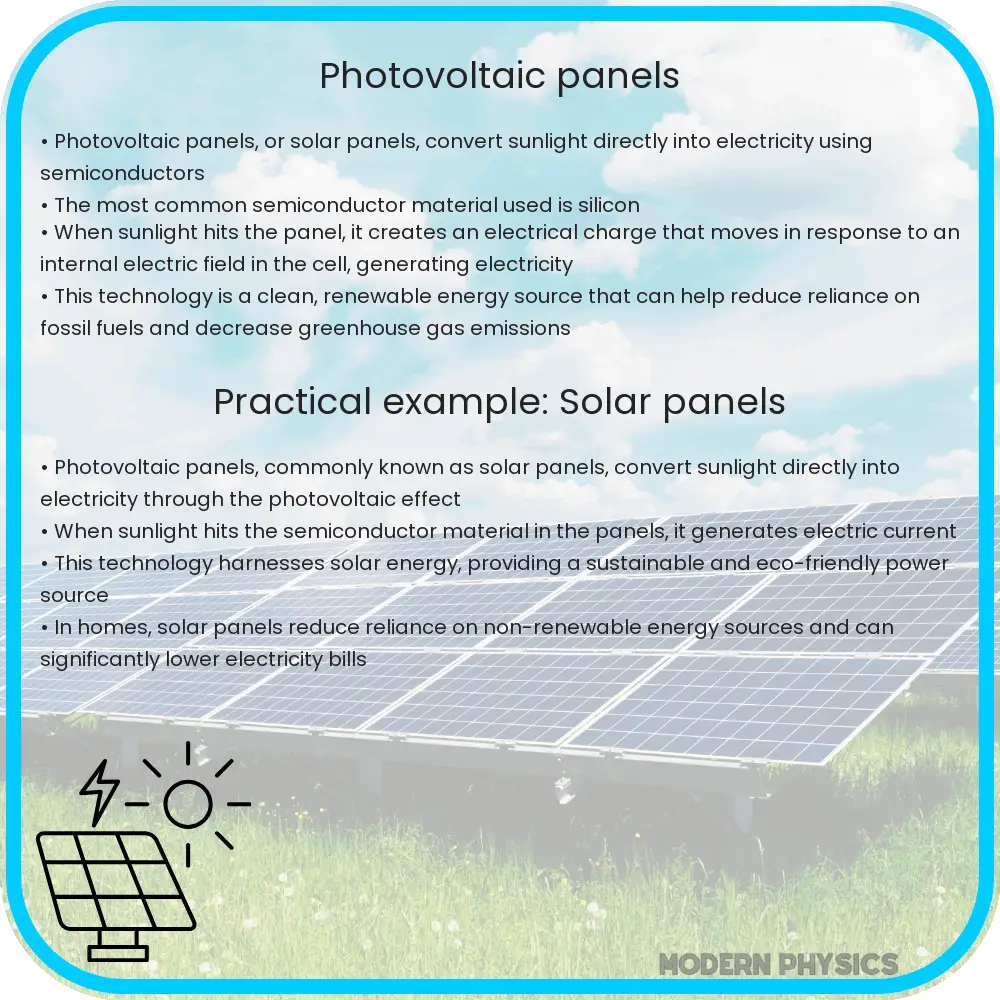
Photovoltaic (PV) panels, commonly known as solar panels, are devices that convert sunlight directly into electricity. They are a central technology in harnessing solar energy, one of the cleanest and most abundant renewable energy sources available. As concerns about climate change and energy security intensify, the efficiency, durability, and innovation in PV panels have become areas of significant research and development.
Efficiency of Photovoltaic Panels
The efficiency of a photovoltaic panel is a measure of its ability to convert sunlight into electricity. Typically expressed as a percentage, this metric directly influences how much power can be generated from a solar panel installed in a given area. Most commercial solar panels today have efficiencies ranging from 15% to 20%, although some high-performance models can exceed 22% efficiency.
The theoretical limit for silicon-based solar cells, which compose the majority of the market, is about 29%, known as the Shockley-Queisser limit. Overcoming this limit involves innovations like multi-junction solar cells, which use multiple layers of material optimized for different wavelengths of sunlight, potentially pushing efficiencies beyond 40%. Other technologies being explored include perovskite solar cells and organic photovoltaics, each offering unique advantages and challenges, particularly in terms of stability, cost, and manufacturing.
Durability of Photovoltaic Panels
Durability is another critical factor in the value of photovoltaic panels. A solar panel’s lifespan not only affects its economic value but also its sustainability profile. Most solar panels are warranted for 25 to 30 years, though they can often continue to function beyond that, albeit at reduced efficiency. The primary factors that influence PV durability include UV exposure, thermal cycling, humidity, and mechanical loads such as wind and snow.
To enhance durability, manufacturers seek to improve the encapsulation materials that protect solar cells and the glass covering that shields the panel surface. Innovations in these materials, as well as in the design and construction of the panels, can mitigate degradation mechanisms and extend the useful life of solar installations.
Innovative Technologies Enhancing Photovoltaic Panels
In the realm of innovation, the quest to improve photovoltaic panels covers several fronts—from new materials and technologies to better manufacturing processes and panel designs. For instance, bifacial solar panels, which capture sunlight from both the front and back sides, increase energy yield by taking advantage of reflected and diffused sun rays. Furthermore, incorporating tracking systems allows panels to follow the sun’s path across the sky, significantly boosting daily production.
Another promising area is the integration of nanotechnology. For example, the application of nanocoatings on the surface of solar panels enhances light absorption and reduces reflection losses. Similarly, embedding quantum dots in the solar cells can potentially tap into the broader spectra of sunlight, thus elevating efficiency.
As we continue to advance in these areas, understanding the principles that govern the efficiency and durability of photovoltaic panels is essential for developing more effective and lasting solar energy solutions. This not only involves enhancing their performance in converting sunlight to electricity but also in improving their longevity and reducing overall lifecycle environmental impacts.
Cost Considerations and Market Trends
While discussing technological advancements in photovoltaic panels, it’s pivotal to also consider the cost implications and market trends. The declining cost of solar panels has been a key driver in the widespread adoption of solar energy. Economies of scale, improved manufacturing techniques, and advances in materials science have collectively contributed to a significant reduction in the cost per watt of solar electricity. This trend is expected to continue, making solar energy increasingly competitive with conventional energy sources.
Market trends also reflect a growing preference for sustainable and renewable energy sources among consumers and businesses alike. Government incentives and regulatory support in several countries further bolster the market for solar panels, encouraging investments in solar energy infrastructure. These developments not only promote environmental sustainability but also create economic opportunities in new markets and industries.
Global Impact and Environmental Considerations
The global impact of photovoltaic panels extends beyond just energy production. By reducing dependence on fossil fuels, solar panels help to minimize carbon emissions and combat climate change. Moreover, innovations in recycling technologies for solar panels contribute to a more sustainable lifecycle for solar products. As the industry grows, it is crucial to address the environmental impact not only of the production and use of PV panels but also of their disposal.
Environmental regulations and sustainability goals drive research into more eco-friendly materials and production processes. This proactive approach in the photovoltaic industry is vital for ensuring that the growth in solar energy does not come at an undue environmental cost.
Conclusion
In summary, photovoltaic panels are at the forefront of the renewable energy revolution, setting the stage for a more sustainable and energy-secure future. As technology advances, not only does the efficiency of solar panels improve but so does their durability and cost-effectiveness. Innovations such as bifacial panels, tracking systems, and the use of nanotechnology continue to push the boundaries of what is possible in solar energy generation.
Furthermore, the descending cost trajectory and favorable market trends are making solar energy an increasingly attractive option globally. With ongoing support for research and development and a strong emphasis on sustainability, the potential of photovoltaic technology to transform our energy systems is immense. Ultimately, embracing the advances in solar panel technology will play a pivotal role in achieving energy sustainability and meeting global environmental targets.