
Explore how soil dielectric properties influence electromagnetic interactions, impacting agriculture, civil engineering, and environmental monitoring.
Understanding Soil Dielectric Properties
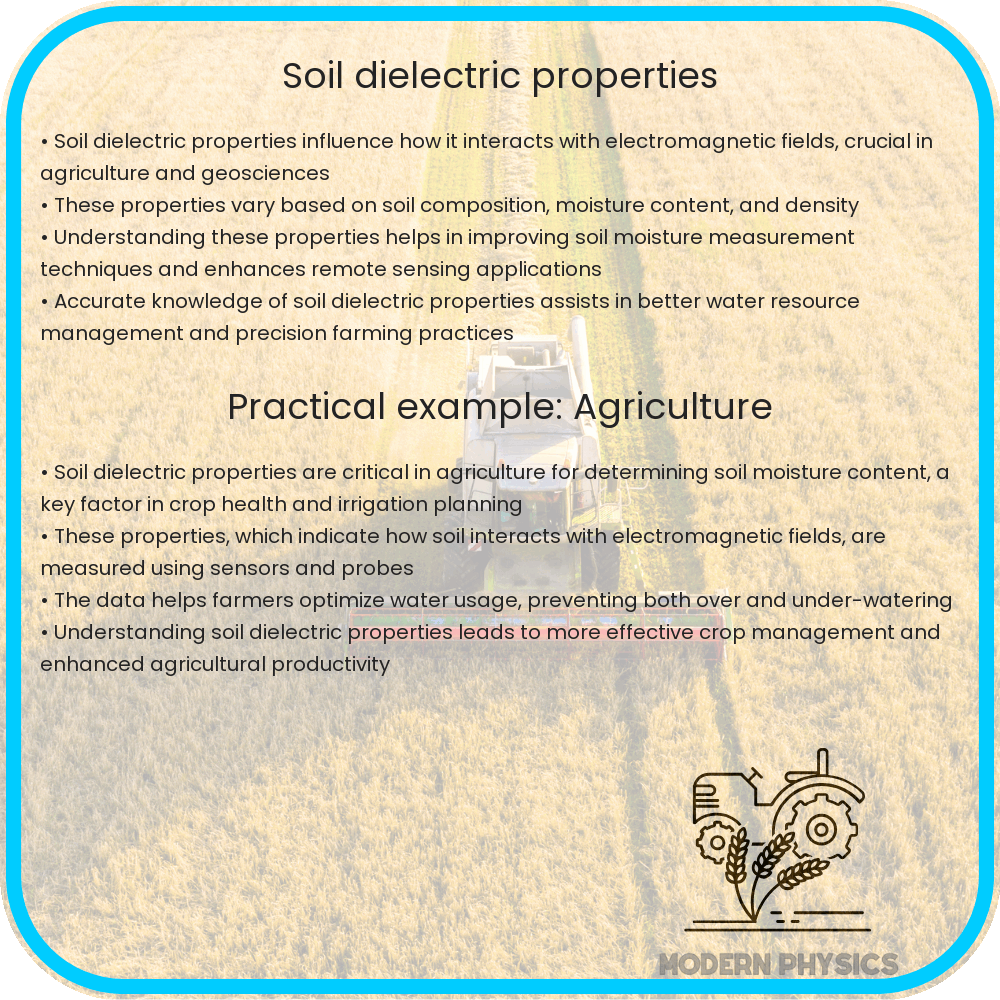
Soil dielectric properties are a critical component in the study and application of electromagnetic theory to soil sciences. The dielectric constant of the soil, often denoted as ε, significantly influences the interaction between electromagnetic fields and soil. This interaction is crucial for various applications, from agriculture to civil engineering, and even environmental monitoring.
Measurement of Soil Dielectric Properties
Measuring the dielectric properties of soil involves determining the dielectric constant and conductivity. These measurements can be performed using different techniques, the most common being the Time Domain Reflectometry (TDR) and Frequency Domain Reflectometry (FDR). TDR measures the time it takes for an electromagnetic pulse to return after being emitted into the soil, whereas FDR involves analyzing how a continuous electromagnetic wave alters upon interacting with the soil. Both methods provide insights into the soil’s ability to store and conduct electrical charge, which is influenced by factors such as moisture content, texture, temperature, and salinity.
- Time Domain Reflectometry (TDR): Used widely for its accuracy in measuring the volumetric water content in soil, which directly relates to the dielectric constant.
- Frequency Domain Reflectometry (FDR): Often preferred for its ability to provide continuous monitoring of soil properties over time with minimal disturbance.
Impact of Soil Dielectric Properties
The dielectric properties of soil impact many practical applications. In agriculture, accurate measurement of soil moisture informs irrigation management, helping to optimize water usage and increase crop yield. In civil engineering, understanding the dielectric properties can aid in assessing soil stability and suitability for construction projects. Furthermore, in the field of environmental science, monitoring changes in soil dielectric properties can indicate contamination or changes in soil composition.
Applications of Dielectric Measurements in Soil Science
One of the prime applications of soil dielectric measurements is in the agricultural sector. Here, the ability to gauge soil moisture accurately is invaluable. For instance, the dielectric constant increases as the moisture content of the soil increases. This relationship allows for the development of precision agriculture techniques that can significantly conserve water by targeting only the areas that require irrigation.
In environmental monitoring, variations in the dielectric properties can be indicators of pollution or changes in organic content, guiding remediation efforts. Additionally, in civil engineering, knowledge of the soil’s dielectric properties can assist in designing foundations and other structures that are more resilient and fit for varying soil conditions.
Understanding these properties not only aids in theoretical research but also equips professionals across multiple disciplines with the data necessary to make informed decisions and innovations.
Challenges in Measuring Soil Dielectric Properties
Despite the advanced techniques available for measuring soil dielectric properties, several challenges remain. Heterogeneity in soil composition, such as variations in mineral content and soil texture, can lead to inconsistencies in measurement results. Environmental factors like temperature fluctuations and the presence of vegetation also affect the accuracy of these measurements.
- Environmental Influence: External conditions like humidity and temperature can alter the electromagnetic properties of the soil, leading to varying measurements.
- Soil Composition Variability: Differences in organic matter, clay content, and soil structure can significantly affect the dielectric properties and the reliability of measurement techniques.
Future Directions in Soil Dielectric Research
Advancements in sensor technology and data analysis are paving the way for more accurate and granular analysis of soil dielectric properties. Development of sensors that can compensate for environmental and soil composition variability is crucial. Moreover, integrating artificial intelligence and machine learning techniques could enable predictive modeling of soil behavior, enhancing the precision of agricultural and environmental applications.
Potential innovations include the development of portable, more affordable devices that provide real-time data to users, from farmers to construction managers, improving the accessibility and application of soil dielectric property measurements.
Conclusion
Understanding the dielectric properties of soil is essential across various fields such as agriculture, civil engineering, and environmental science. Techniques like Time Domain Reflectometry and Frequency Domain Reflectometry have revolutionized how these properties are measured, though challenges like environmental influence and soil variability persist. With ongoing technological advancements and the potential integration of AI, the future holds promise for even more precise and accessible soil dielectric property measurements. By bridging the gap between theoretical knowledge and practical application, the study of soil dielectric properties continues to be a vital area of research that offers significant benefits for sustainable development and efficient resource management.