
Learn about zeolite catalysts, microporous minerals used in chemical processes for their efficiency, stability, and selectivity.
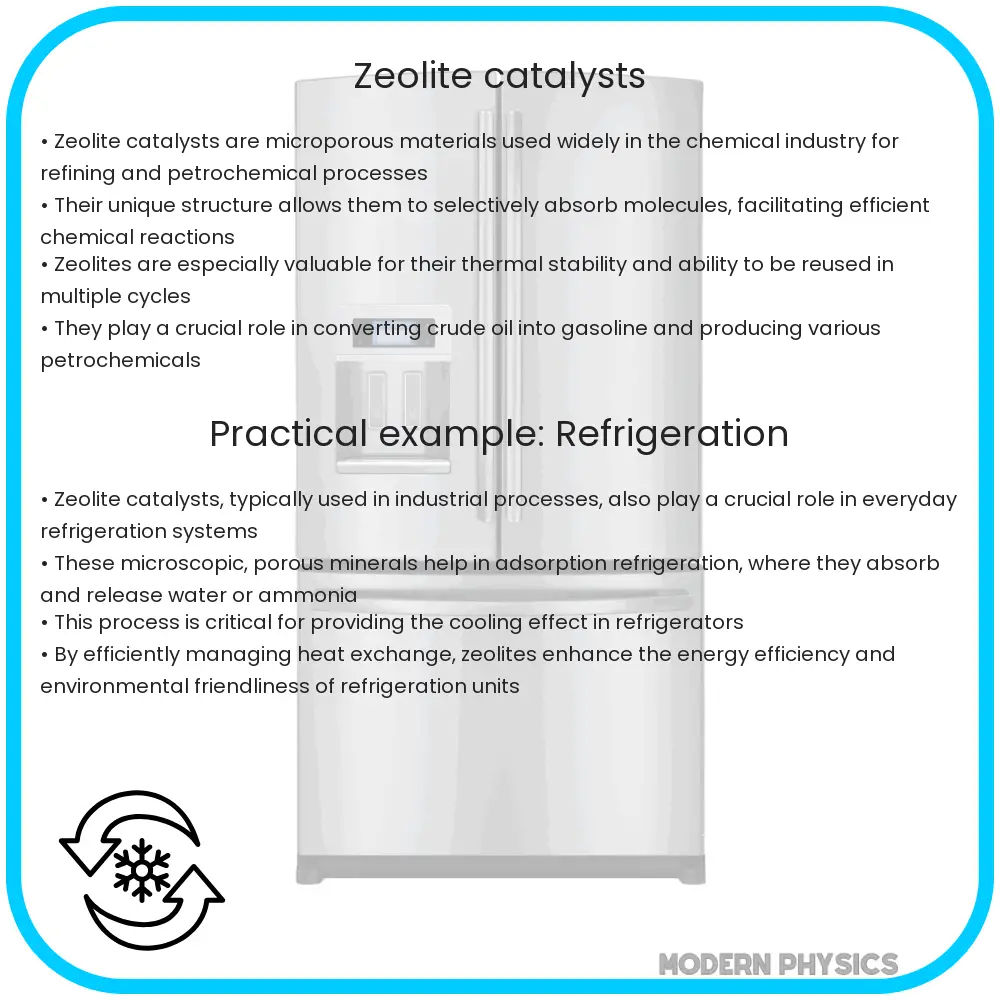
Introduction to Zeolite Catalysts
Zeolites are microporous, aluminosilicate minerals well-known for their ability to act as catalysts in various chemical processes. Originating naturally and also synthetically manufactured, zeolites have a unique crystalline structure that makes them highly effective in catalysis. The presence of uniform pore sizes and the ability to exchange ions make them particularly useful in refining petroleum, organic synthesis, and environmental cleanup.
Efficiency of Zeolite Catalysts
One of the remarkable features of zeolite catalysts is their efficiency. This is mainly attributed to their high surface area and porous nature, which allow more reactant molecules to interact with the catalyst’s active sites simultaneously. Zeolites can facilitate chemical reactions that would otherwise require higher temperatures, pressures, or more hazardous conditions. For example, in the process of cracking crude oil into gasoline and other smaller molecules, zeolites reduce the energy input required and increase the yield of desired products.
Stability of Zeolite Catalysts
The structural stability of zeolites under high temperature and varying pressure conditions also plays a crucial role in their effectiveness as catalysts. The robust framework of zeolites can withstand harsh environments without breaking down, enabling their repeated use in industrial cycles. This stability not only ensures consistent performance but also minimizes the generation of waste, contributing to more sustainable processes.
Selectivity of Zeolite Catalysts
Selectivity is another significant advantage of using zeolite catalysts. Thanks to their well-defined pore architecture, zeolites can discriminate between different reactant molecules based on size and shape. This property allows them to catalyze specific reactions while minimizing unwanted byproducts. For instance, in isomerization, zeolites help to convert straight-chain hydrocarbons into more valuable branched-chain hydrocarbons, which are better suited for high-performance fuels.
- Increased Reaction Rates: The porous structure of zeolites enhances the contact between reactants and active sites.
- Thermal Stability: Zeolites resist deactivation from heat, thereby maintaining their catalytic properties over time.
- Selective Reaction Pathways: The ability to favor certain reaction pathways over others can lead to higher yields of desired products.
Each of these properties highlights the unique capabilities of zeolite catalysts and explains why they are highly valued in industrial applications. As we delve further, we will explore various applications of zeolite catalysts, demonstrating their crucial role in modern chemical engineering.
Applications of Zeolite Catalysts
Zeolites are utilized in a wide range of industrial applications due to their catalytic properties. One prominent area is in the petroleum industry, where zeolites are essential for fluid catalytic cracking (FCC). This process is vital for converting heavy crude oil into lighter fractions such as gasoline and kerosene. Zeolites also play a crucial role in environmental applications, such as the removal of ammonia from wastewater and reduction of air pollutants in vehicle exhaust systems.
In the petrochemical industry, zeolites are used to produce synthetic materials such as plastics and resins by facilitating polymerization reactions. Moreover, they are employed in the production of fine chemicals, including pharmaceuticals, where their selectivity and efficiency ensure the production of high-purity products.
Innovations and Future Outlook
The continuous research and development in zeolite technology promise even broader applications and efficiency improvements in the future. Innovations such as the development of hierarchically structured zeolites, which possess mesopores as well as micropores, expand the range of molecules that can be processed, thus enhancing both activity and selectivity of chemical reactions. Further, advancements in the synthesis of zeolite materials allow for better control over their properties and tailor them more closely to specific industrial needs.
Environmental sustainability remains a significant driving force in the advancement of zeolite catalyst technology. Their ability to facilitate reactions under milder conditions, their reusability, and their proficiency in reducing unwanted by-products make them valuable in efforts to design greener chemical processes. As global emphasis on pollution control and sustainable practices intensifies, the role of zeolites in environmental stewardship is set to increase.
Conclusion
Zeolite catalysts represent a fusion of natural mineralogy and advanced chemical engineering. They bring efficiency, selectivity, and stability to various chemical processes, revolutionizing industries from petroleum refining to environmental management. Their well-defined pore structures provide unique reactive sites that enhance reaction rates and product selectivity, offering a superior alternative to traditional catalysts. With ongoing research yielding innovations in zeolite synthesis and application, these versatile materials will undoubtedly continue to play a pivotal role in advancing technological and environmental solutions. The future of zeolite catalysts is as promising as it is dynamic, poised to meet the evolving demands of the global industry.