
Explore the integration of synthetic and biological networks, their complexities, dynamics, and applications in healthcare, biofuels, and more.
Synthetic and Biological Networks: Unveiling Complexity and Dynamics
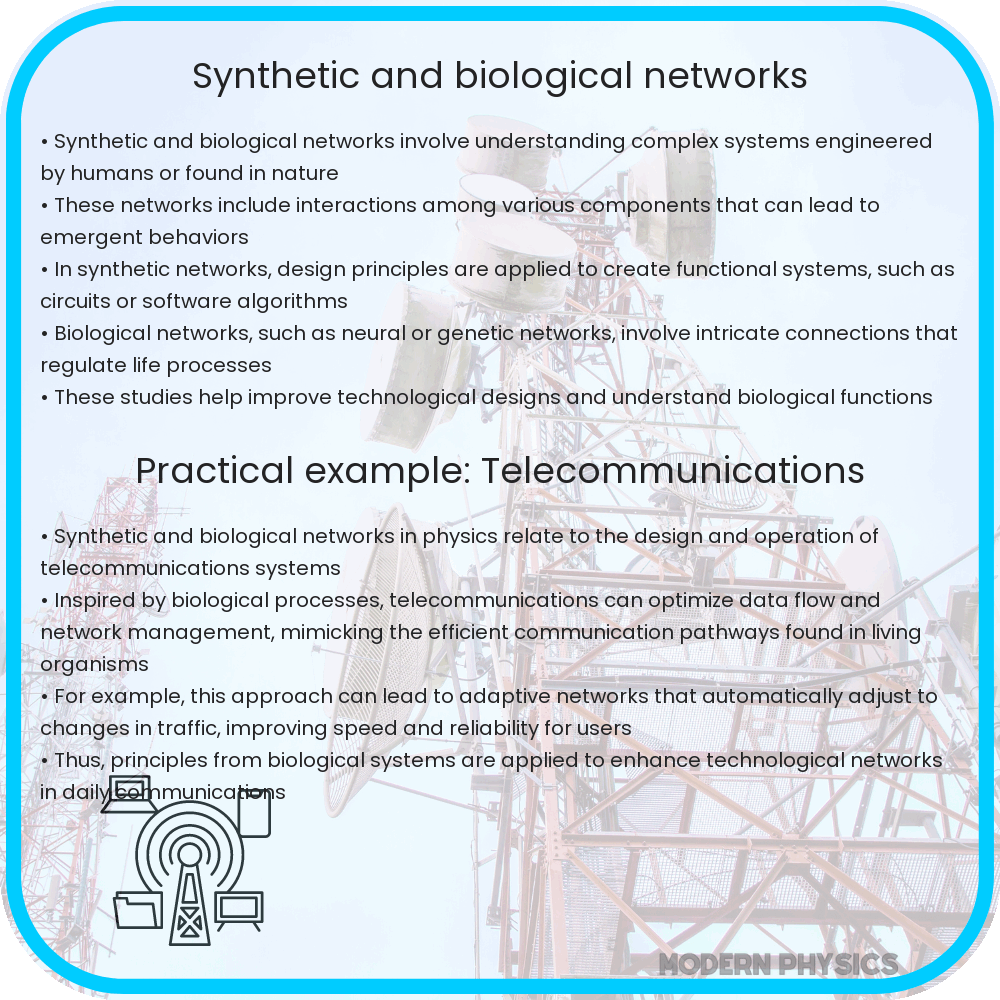
The intertwining of synthetic and biological networks marks a significant leap in the realms of science and engineering. This convergence paves the way for innovative approaches to understand complex systems and design solutions mimicking or interfacing with living organisms. By exploring the intricate dynamics and underlying principles, researchers and technologists are unraveling new possibilities in healthcare, environmental sustainability, and bio-inspired materials.
The Essence of Biological Networks
Biological networks are the cornerstone of life, encompassing various levels of biological organization. From genetic regulatory networks that dictate cellular functions to neural networks that process information in the brain, these systems are characterized by their complex, dynamic, and adaptive nature. Understanding these networks involves dissecting the interplay between their components, which can lead to breakthroughs in medicine and biotechnology.
Synthetic Networks: Bridging the Gap
On the other side of the spectrum, synthetic networks, engineered through principles of synthetic biology and network science, aim to replicate or augment biological functionalities. These networks can be designed from scratch, allowing for the control and manipulation of their properties. The ultimate goal is to create systems that can interact seamlessly with biological counterparts or perform specific functions within living organisms or ecological systems.
Complexity and Dynamics at Play
One of the critical challenges in studying these networks lies in their complexity and dynamic behavior. Biological and synthetic networks often exhibit non-linear dynamics, meaning that small changes in one part of the system can lead to unpredictable and vastly different outcomes. This behavior is a hallmark of complex systems and necessitates advanced computational models and analytical techniques to understand and predict network behavior.
Design Principles and Applications
The design and construction of synthetic networks are guided by principles such as modularity, robustness, and scalability. By applying these principles, scientists and engineers can create networks that not only mimic biological systems but also offer new functionalities. Applications are wide-ranging, including the development of biosensors, smart drugs, and sustainable biofuels, showcasing the potential of integrating synthetic and biological networks.
Integrating Synthetic and Biological Systems
The integration of synthetic and biological networks is not without its challenges. It requires a nuanced understanding of biological complexity and a sophisticated approach to design and engineering. This interdisciplinary effort calls for collaboration across biology, chemistry, computer science, and engineering disciplines. One promising area of research is the development of bio-hybrid systems, where synthetic networks are embedded within living organisms to monitor health, repair tissues, or enhance biological functions.
Future Perspectives and Ethical Considerations
As we advance in the field, the potential for innovation is boundless. However, it is accompanied by significant ethical and safety considerations. The manipulation of biological and synthetic networks raises questions about biosecurity, environmental impact, and the implications of artificial life forms. Therefore, it is crucial to develop ethical frameworks and regulatory guidelines that keep pace with technological advancements, ensuring that these innovations benefit society while minimizing risks.
Conclusion
The exploration of synthetic and biological networks opens new frontiers in science and technology, offering profound insights into the complexity of life and the potential for groundbreaking applications. By understanding and harnessing the dynamics of these networks, we can design systems that better mimic, interact with, and enhance biological processes. However, as we navigate this exciting terrain, it is essential to approach with caution, considering the ethical, environmental, and social implications of our creations. The future of synthetic and biological network research holds great promise, poised to transform healthcare, environmental management, and materials science. The journey ahead is complex and fraught with challenges, but with careful stewardship and interdisciplinary collaboration, the rewards could redefine our relationship with the natural world.