
Learn how bioinspired materials design leverages nature’s innovations for creating sustainable, high-performance materials in material science.
Bioinspired Materials Design: Innovative, Sustainable & Strong
The field of material science is constantly evolving with the development of new materials that offer superior performance and sustainability. One of the most exciting trends in this field is the design of bioinspired materials. These are materials created by mimicking the structures and functions found in nature. The idea is to understand the fundamental principles underlying biological materials and then translate them into man-made materials that are innovative, sustainable, and strong.
Bioinspired materials design takes cues from the natural world, where organisms have evolved materials optimized for their environments through millions of years of natural selection. Examples range from the incredibly tough, flexible shells of mollusks to the lightweight, robust structure of bird bones. By studying these biological structures at the molecular and macroscopic levels, scientists and engineers can design materials that replicate these favorable properties.
Principles of Bioinspired Materials Design
There are several core principles underlying the design of bioinspired materials. These include:
- Hierarchical Structures: Many biological materials are composed of hierarchical structures where simple building blocks are organized in a complex way from the nanoscale to the macroscale. For example, bone is made from a combination of mineral and collagen fibers, arranged in a way that provides both strength and flexibility.
- Multi-functionality: Biological materials often have multiple functions simultaneously. For example, the skin is not only a barrier against environmental elements but also has properties critical for thermoregulation and sensory perception. Mimicking this multifunctionality can lead to materials with enhanced properties.
- Self-assembly: Many biological materials are self-assembled from smaller components into the final functional structure. Engineers can harness similar strategies to create materials that self-assemble, thereby reducing manufacturing complexities and costs.
- Environmentally Responsive: Bioinspired materials can also be designed to be responsive to environmental changes, such as temperature and pH, much like how certain plants can change their configuration in response to external stimuli.
These principles of bioinspired design not only enhance the performance of materials but also contribute to sustainability by utilizing materials and processes that are more environmentally friendly.
Applications of Bioinspired Materials
The applications of bioinspired materials are vast and varied, spread across multiple industries including aerospace, construction, healthcare, and more. Here are a few notable examples:
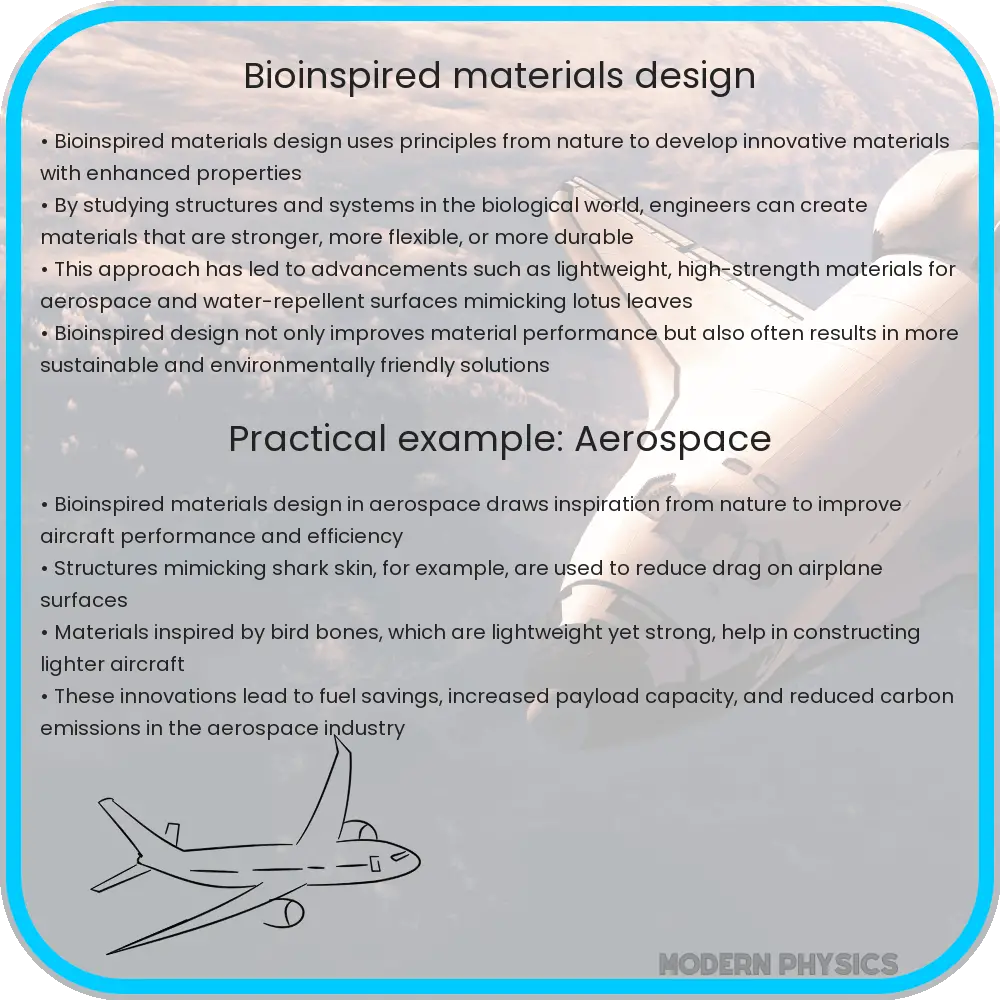
- Aerospace: The development of lightweight, strong materials inspired by bird bones can lead to more fuel-efficient aircraft.
- Healthcare: Bioinspired materials can be used to create better prosthetics and implants that mimic the properties of natural tissues, improving comfort and functionality for the user.
- Protective Gear: Materials inspired by spider silk, known for its toughness and elasticity, could revolutionize the design of protective clothing and equipment.
- Water Repellent Surfaces: Mimicking the surface structure of lotus leaves, which repel water and dirt, can lead to the development of self-cleaning surfaces, reducing the need for harsh cleaning products and processes.
By turning to nature for inspiration, engineers can push the boundaries of traditional material science, crafting materials that are not only structurally superior but also environmentally sound. The potential for future developments in this area is vast, promising a new era of material innovation inspired by the biology all around us.
Challenges and Future Directions in Bioinspired Materials Design
Despite the promising advantages of bioinspired materials, there are challenges that need to be addressed to maximize their potential. One of the main obstacles is the complexity involved in understanding and replicating biological processes and structures accurately. The intricate details that provide biological materials with their superior qualities are often difficult to mimic at an industrial scale.
Moreover, while bioinspired materials aim to be sustainable, the lifecycle of these materials—from production to disposal—needs careful evaluation to ensure they are truly beneficial for the environment. This includes assessing the energy consumption, waste production, and possible ecological impact of sourcing raw materials.
- Scalability: Translating laboratory successes into commercially viable products can be challenging. Scaling up the production while maintaining the unique properties of bioinspired materials is key to their future growth.
- Cost-effectiveness: Ensuring that bioinspired materials are cost-effective compared to conventional materials is essential for their adoption in various industries. Research into cost-reduction techniques and materials is ongoing.
- Interdisciplinary Collaboration: The field of bioinspired materials design benefits greatly from the collaboration between biologists, chemists, physicists, and engineers. This interdisciplinary approach is crucial for overcoming existing challenges and enhancing the functionality of bioinspired materials.
Continuing advancements in technology and deeper interdisciplinary research are opening new pathways to overcome these challenges. With ongoing innovation and improved understanding, the scalability and practical implementation of bioinspired materials will likely accelerate, leading to wider adoption across different sectors.
Conclusion
Bioinspired materials design is a revolutionary approach in material science, offering solutions that are not only innovative and strong but also sustainable. By mimicking the natural world, engineers and scientists have begun to solve complex engineering challenges, creating materials that blend the best of biology and engineering. As the field continues to evolve, the potential for these materials to transform industries is immense. From creating lighter and more efficient aircraft to developing medical implants that seamlessly integrate with human tissue, the possibilities are endless. Embracing the challenges and continuing to learn from nature will ensure that the future of bioinspired materials is as dynamic and vibrant as the ecosystems that inspire them.