
Learn about renewable energy, its importance, and various sustainable sources like solar, wind, and hydroelectric power for a cleaner future.
Understanding Renewable Energy: Sustainable, Efficient & Eco-Friendly Solutions
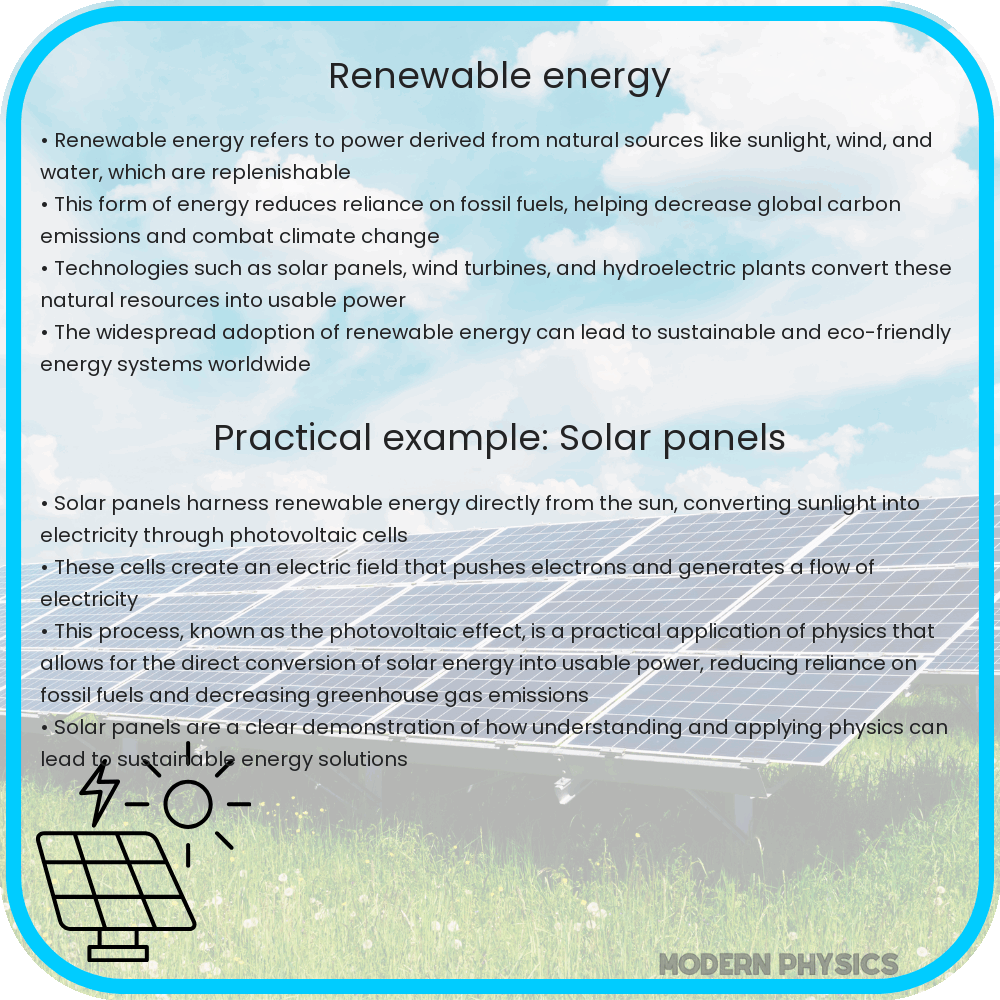
Renewable energy is at the forefront of strategies to combat climate change and reduce our dependence on fossil fuels. Defined as energy sourced from natural processes that continuously replenish themselves, renewable energy sources include solar power, wind power, hydroelectric energy, biomass, and geothermal energy. These sources not only contribute to sustainability but also promise a cleaner and more efficient energy landscape.
Why is Renewable Energy Important?
Renewable energy plays a crucial role in reducing greenhouse gas emissions, a leading cause of global warming. Traditional energy sources such as coal, oil, and natural gas involve burning fossil fuels, which releases significant amounts of carbon dioxide and other pollutants into the atmosphere. In contrast, renewable energy sources produce little to no greenhouse gases, presenting a cleaner alternative that contributes to a healthier planet.
Solar Power: Harnessing the Sun’s Energy
Solar energy involves converting sunlight into electricity using photovoltaic (PV) cells or through concentrated solar power systems. It stands as one of the most promising and widely utilized forms of renewable energy. Its applications range from small-scale systems for individual homes to large-scale solar farms that feed electricity into the grid. The main advantage of solar power is its abundance and ubiquity, making it accessible almost everywhere on the planet.
Wind Energy: Power Generated by Air Flow
Wind energy captures the natural wind in our atmosphere to produce electricity. Wind turbines convert the kinetic energy of wind into mechanical power, which can then be converted into electricity used to power homes, businesses, and industries. Wind farms can be located on land or offshore and are particularly effective in areas with strong, consistent winds. The scalability of wind energy, from small personal turbines to massive offshore wind farms, makes it adaptable to various energy needs.
Hydroelectric Energy: Power from Water
Hydroelectric power involves generating electricity using the flow of water from higher to lower elevations. Typically utilized in large-scale installations known as hydroelectric dams, this technology is one of the oldest and most reliable forms of renewable energy. Water is cycled through turbines, which generate electricity as water levels and flow intensities change. Not only does hydroelectric power provide a stable, reliable source of energy, but it also helps with water management, such as flood control and irrigation services.
Biomass Energy: Organic Materials as Fuel
Biomass energy is produced by combusting or biologically processing organic materials like plant matter and animal waste. Sources of biomass for energy include wood chips, pellets, and agricultural waste, which can be burned directly for heat or converted into biofuels such as methane gas or ethanol. Biomass is unique in renewable energy discussions as it involves carbon; however, the carbon released from burning biomass is balanced by the carbon absorbed by plants during their life cycle, contributing to a closed carbon cycle if managed sustainably.
Geothermal Energy: Earth’s Natural Heat
Geothermal energy is derived from the Earth’s internal heat. This can include heat contained in underground rocks and fluids, which can be harnessed by drilling wells and deploying technology to capture the steam or hot water that surfaces. Power plants or smaller scale heat pumps can convert this energy into electricity or direct heat for buildings and industries. Geothermal installations tend to have low emissions and a small land footprint, making them an advantageous choice in suitable locations.
Each type of renewable energy has its specific benefits and challenges, yet all contribute to a more sustainable and eco-friendly energy future. Understanding the mechanisms and impacts of these energy sources is crucial as we transition away from fossil fuel dependency and towards a cleaner energy economy.
Challenges and Future Prospects of Renewable Energy
Despite the clear benefits of renewable energy, several challenges need to be addressed to increase its adoption globally. Issues such as the intermittency of solar and wind power, the high initial investment costs, and the requirement for large physical spaces for installations can hinder growth. Technology improvements, energy storage solutions, and innovative financial models are being developed to overcome these hurdles. Additionally, policy frameworks and governmental support are critical to accelerating the growth of renewable energy sectors.
Innovations in Renewable Energy
Technological advancements continue to make renewable energy more efficient, cost-effective, and widely accessible. Innovations such as floating solar panels and offshore wind turbines have opened new avenues for tapping these resources in locations that were previously unfeasible. Battery technology is also improving, making the storage of renewable energy more efficient, thus ensuring a stable energy supply even when the sun doesn’t shine or the wind doesn’t blow. The future of renewable energy looks promising as these technologies evolve and become more integrated into our energy systems.
Conclusion
Renewable energy is not just an alternative, but a necessity in our transition towards a sustainable future. As we witness advancements in technology and better policy support, the integration of renewable energies into our daily lives becomes more achievable. Each type of renewable energy, from solar to geothermal, brings unique advantages and plays a crucial role in this transition. By understanding and supporting the development and deployment of these technologies, we contribute to a healthier, more sustainable planet. The journey to a cleaner energy future is complex but achievable with collective effort and innovation.