
Understanding how photovoltaic cells convert sunlight into electricity, their materials, efficiency, and latest innovations.
Understanding Photovoltaic Cells: Efficiency, Materials, and Innovation
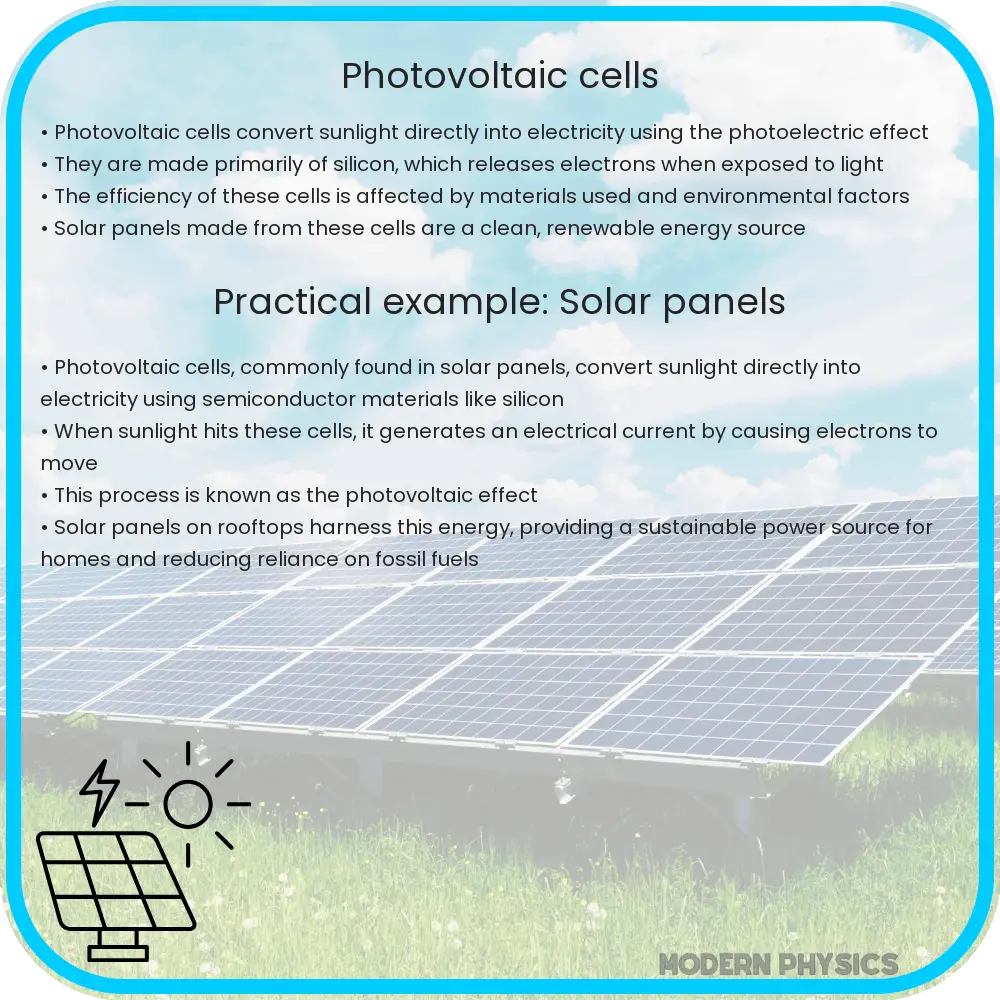
Photovoltaic (PV) cells, commonly known as solar cells, are devices that convert sunlight directly into electricity. They are a crucial component in solar panels and are key to harnessing solar energy, one of the cleanest and most abundant renewable energy sources available. The operation, efficiency, and advancements in PV cell technology have great implications for global energy systems.
How Photovoltaic Cells Work
The basic principle behind PV cells involves the photovoltaic effect. When photons, or light particles, strike the surface of a PV cell, they can excite electrons in the material, knocking them loose. These free electrons move through the material to produce direct current (DC) electricity. This process requires a material that has semiconductor properties, which most PV cells have. Commonly, silicon is used due to its efficient semiconducting properties. However, researchers are continually testing other materials for efficiency and cost-effectiveness.
Materials Used in Photovoltaic Cells
The choice of material not only affects the efficiency of a PV cell but also its cost, durability, and application. Here are some of the materials commonly used:
- Silicon: The most widely used material in PV cells, available in several forms:
- Monocrystalline silicon: Offers high efficiency but is expensive to manufacture.
- Polycrystalline silicon: Cheaper than monocrystalline but with slightly lower efficiency.
- Amorphous silicon: Used in thin-film solar cells, it has lower efficiency but is less expensive and flexible.
- Cadmium Telluride (CdTe): Another popular material for thin-film PV cells. It offers good efficiency and is cheaper to produce than silicon-based cells.
- Copper Indium Gallium Selenide (CIGS): Known for having a higher efficiency potential than CdTe and amorphous silicon, though it is more complex to manufacture.
- Perovskite: A newer and promising material that has shown high efficiency levels in lab conditions. However, issues with long-term stability and large-scale manufacturing need to be addressed.
Measuring the Efficiency of Photovoltaic Cells
Efficiency is a key factor in the performance of PV cells. It is defined as the ratio of the electrical power output, compared to the solar energy input. The efficiency of a solar cell is calculated using the formula:
Efficiency (%) = (Power Output / Solar Power Input) * 100
Factors that impact efficiency include the quality of the materials used, the architecture of the solar cell, and the amount of light absorbed by the cell. Innovations in cell design and material science have led to improvements in efficiency. For instance, the efficiency of silicon-based cells has increased from about 15% a few decades ago to over 20% today in commercial products.
Recent Innovations in Photovoltaic Technology
Technological advancements continue to push the boundaries of photovoltaic efficiency and application. Some notable innovations include:
- Tandem Solar Cells: These cells layer multiple types of materials each tuned to capture different segments of the solar spectrum, which significantly increases overall efficiency.
- Transparent Solar Cells: Researchers are developing transparent cells that can be used on surfaces like windows, integrating solar power generation into buildings without altering aesthetics.
- Flexible Solar Panels: Using materials like amorphous silicon or CIGS, flexible solar panels can be integrated into a variety of surfaces, opening up new applications.
Such innovations not only enhance the efficiency of photovoltaic cells but also expand their potential applications, promoting wider adoption of solar energy systems in various sectors.
Environmental Impact and Sustainability of Photovoltaic Cells
The adoption of photovoltaic cells also brings considerable environmental benefits. By converting sunlight into electricity, these cells produce clean, renewable energy, reducing reliance on fossil fuels and decreasing greenhouse gas emissions. However, the environmental impact is not only determined by the operation of the PV cells but also by their manufacturing process and end-of-life disposal.
Efforts are being made to make the PV cell lifecycle more sustainable. This includes developing manufacturing processes that use less energy and resources, improving the recyclability of materials, and increasing the longevity of the cells to reduce waste.
Economic Aspects and Market Trends
The economics of photovoltaic cells have improved significantly over the years. Costs have decreased due to advancements in technology and increased scale in manufacturing, making solar energy more competitive with traditional energy sources. Additionally, government incentives and decreased component costs are helping to drive the adoption of solar technology globally.
Market trends indicate a steady increase in the deployment of photovoltaic systems. This is propelled by both residential and commercial sectors aiming to reduce energy costs and minimize environmental impact. The increasing demand for renewable energy solutions worldwide further fuels this growth, indicating a promising future for the photovoltaic industry.
Conclusion
Photovoltaic cells stand at the forefront of the renewable energy revolution, offering a powerful solution to the world’s growing energy needs and environmental concerns. From their basic operational principles to the latest innovations and market trends, PV cells encapsulate a dynamic and evolving field that continually adapts to meet global demands. By understanding the technological, economic, and environmental aspects of photovoltaic cells, it becomes clear why they play a pivotal role in shaping a sustainable energy landscape.
The journey towards higher efficiency and broader adoption is fueled by ongoing research and innovations in materials and technology. As we continue to improve and deploy photovoltaic systems, the promise of a cleaner, more sustainable future becomes ever more achievable. Engaging with and supporting this technology not only helps address immediate energy needs but also sets the foundation for long-term environmental stewardship.