
Discover the world of Optical Alignment Tools, a must-read for enhancing precision, efficiency, and integration in various applications.
Understanding Optical Alignment Tools: A Guide to Precision, Efficiency, and Integration
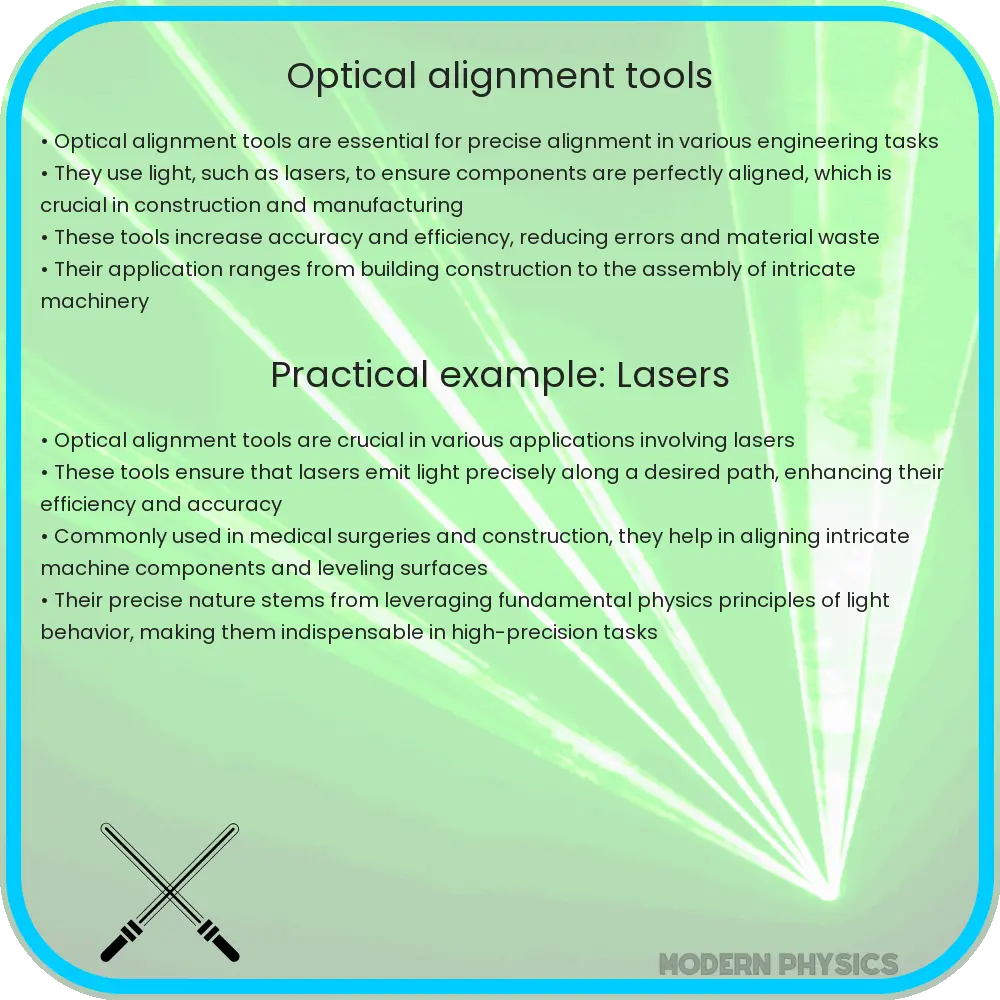
Optical alignment tools are essential in various industries, including manufacturing, aerospace, and scientific research. These sophisticated instruments ensure the precise alignment of components, crucial for optimal performance and product quality. This article delves into the nuances of optical alignment tools, focusing on their precision, efficiency, and the seamless integration they offer in complex systems.
Precision in Optical Alignment
The core of optical alignment tools’ value lies in their unmatched precision. Traditional alignment methods are often susceptible to human error and limited by the precision of manual tools. In contrast, optical aligners use lasers and other optical technologies to achieve micron-level accuracy. This precision is vital in applications where even the slightest misalignment can lead to significant performance degradation or failure.
Efficiency Gains with Optical Alignment Tools
Beyond precision, optical alignment tools significantly enhance operational efficiency. They streamline the alignment process, reducing the time and labor traditionally required. For instance, laser aligners can quickly and accurately align shafts or beams without the need for complex setups or multiple iterations of adjustments. This efficiency not only speeds up production lines but also minimizes downtime during maintenance or setup changes.
Integration into Complex Systems
Modern optical alignment tools are designed with integration in mind. They can be easily incorporated into existing systems, providing real-time alignment feedback and adjustments without disrupting ongoing operations. This integration capability is crucial for industries where continuous operation is essential, such as in semiconductor manufacturing or continuous flow chemical processes. The ability to integrate seamlessly with control systems allows for automatic adjustments, maintaining alignment within precise tolerances without manual intervention.
Additionally, the advent of Industry 4.0 has seen the incorporation of IoT (Internet of Things) capabilities into optical alignment tools. This advancement enables remote monitoring and control, further enhancing their efficiency and integration into smart manufacturing environments. The data collected from these tools can be analyzed to predict maintenance needs, optimize alignment processes, and improve overall system performance.
Optical Alignment Tools: Enhancing Precision, Efficiency, and Integration
Optical alignment tools are indispensable in various high-precision fields, such as manufacturing, engineering, and scientific research. These tools, designed to align components with utmost accuracy, significantly contribute to the efficiency and reliability of complex systems. By leveraging the principles of optics, they offer non-contact measurement solutions that ensure precision and minimize the risk of damage to delicate parts.
The Role of Optical Alignment in Modern Industries
Optical alignment tools are critical in industries where precision is paramount. They are used in the assembly of semiconductor devices, alignment of laser systems, and the manufacturing of mechanical components. These tools are prized for their ability to achieve alignment with micron-level accuracy. Their non-invasive nature allows for real-time adjustments and monitoring, enhancing the production process’s speed and reducing downtime.
Key Features of Optical Alignment Tools
- Precision: They offer unparalleled accuracy, capable of aligning components to within fractions of a micron.
- Efficiency: With rapid measurement and adjustment capabilities, these tools reduce the time needed for alignment processes.
- Integration: Easily integrated into existing manufacturing systems, they facilitate automated alignments, enhancing productivity.
Advancements in Optical Alignment Technology
Recent advancements in optical alignment technology have led to the development of more sophisticated tools. Innovations such as laser trackers and interferometers have revolutionized how alignments are performed, offering higher precision and greater ease of use. The integration of computer software with these tools allows for automatic data collection and analysis, further improving alignment accuracy and efficiency.
Conclusion
Optical alignment tools play a crucial role in ensuring the precision, efficiency, and integration of manufacturing and research operations. Their ability to provide accurate, non-contact alignment solutions makes them invaluable across various high-tech industries. As technology advances, the capabilities of these tools continue to expand, offering even greater accuracy and integration possibilities. Embracing these tools not only enhances the quality of products and systems but also significantly contributes to operational efficiency and innovation in the modern industrial landscape.