
Explore how optical quality inspection systems enhance manufacturing with precision, speed, and accuracy, revolutionizing quality control processes.
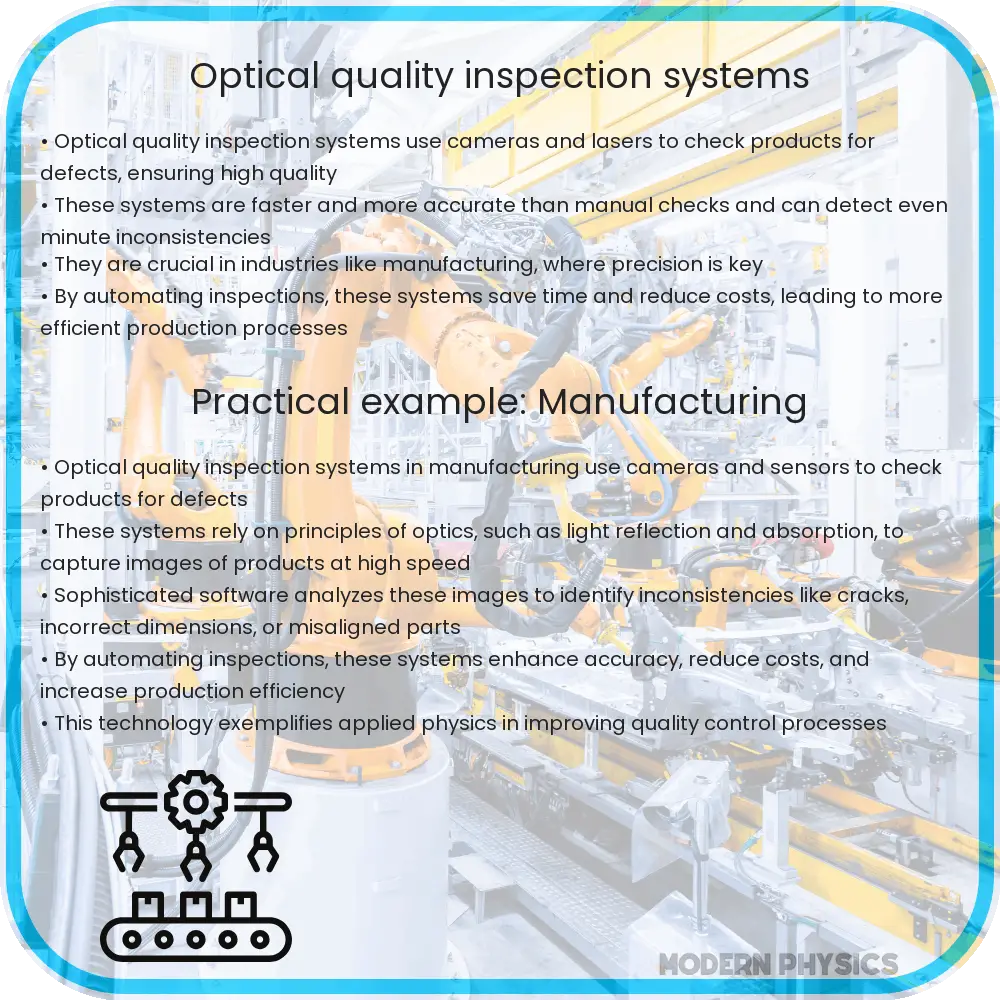
Understanding Optical Quality Inspection Systems
Optical Quality Inspection Systems are at the forefront of modern manufacturing, leveraging advanced imaging technologies to ensure products meet stringent quality standards. These systems combine precision, speed, and accuracy to detect defects, measure dimensions, and assess the overall quality of products in a non-contact, efficient manner. By doing so, they play a crucial role in reducing waste, increasing productivity, and maintaining consistency in production lines across various industries.
Key Components and How They Work
At the heart of an optical quality inspection system are high-resolution cameras and sophisticated software algorithms. These cameras capture detailed images of the products as they pass through the production line. The images are then analyzed in real-time by software algorithms designed to identify anomalies, variations, and defects. This process involves comparing the captured images against predefined standards or patterns to detect deviations.
Applications Across Industries
Optical quality inspection systems are versatile, finding applications in electronics, automotive, pharmaceuticals, and food and beverage industries, among others. In the electronics sector, they are used to inspect printed circuit boards (PCBs) for soldering defects, component placement, and surface flaws. Automotive manufacturers rely on these systems to check the integrity of safety-critical parts, such as airbag components and brake systems. In the pharmaceutical industry, optical inspections ensure the integrity of pill dimensions, color consistency, and packaging integrity, crucial for consumer safety.
Benefits of Optical Quality Inspection
- Precision: These systems can detect minute defects that are often invisible to the human eye, ensuring a high level of product quality.
- Speed: Optical inspections are performed in real-time, allowing for rapid assessment of products without slowing down the manufacturing process.
- Accuracy: With the ability to consistently identify and quantify defects, these systems reduce the likelihood of human error and ensure reliable quality control.
By integrating optical quality inspection systems into their production lines, manufacturers can significantly enhance their quality control processes. This not only leads to improved product quality but also optimizes manufacturing efficiency, reduces costs associated with defects and rework, and increases customer satisfaction.
Challenges and Future Trends
While optical quality inspection systems offer numerous advantages, they also present certain challenges. The initial setup and integration into existing production lines can be complex and costly, requiring significant investment in both technology and training. Additionally, the effectiveness of these systems can be influenced by the variability of product designs and the dynamic nature of manufacturing environments. Keeping the software and hardware components up-to-date is crucial for maintaining optimal performance and adapting to new quality standards.
Looking ahead, the future of optical quality inspection is promising, driven by advancements in artificial intelligence (AI) and machine learning (ML). These technologies are enhancing the capabilities of inspection systems, enabling them to learn from the data they collect, improve their algorithms over time, and make more sophisticated decisions about product quality. The integration of AI and ML is expected to increase the adaptability of these systems to various products and defects, making them even more efficient and versatile.
Integrating Optical Quality Inspection Systems into Manufacturing
To successfully implement an optical quality inspection system, manufacturers should consider several key factors. This includes selecting the right system that fits their specific product needs and production environment, ensuring compatibility with existing manufacturing processes, and providing adequate training for personnel. Ongoing support and maintenance are also essential to address any operational issues promptly and to keep the system updated with the latest technological advancements.
Conclusion
Optical quality inspection systems represent a significant leap forward in manufacturing quality control, offering unmatched precision, speed, and accuracy. By automating the inspection process, these systems minimize human error, enhance productivity, and ensure that products meet the highest quality standards. Despite the challenges associated with their implementation, the benefits they provide make a compelling case for their integration into modern manufacturing lines. As technology continues to evolve, we can expect these systems to become even more advanced, further revolutionizing quality control processes and setting new standards for manufacturing excellence.