
Explore how Neutral Density (ND) filters enhance photo clarity, control light, and unlock creative potential in long exposure and astrophotography.
Introduction to Neutral Density Filters
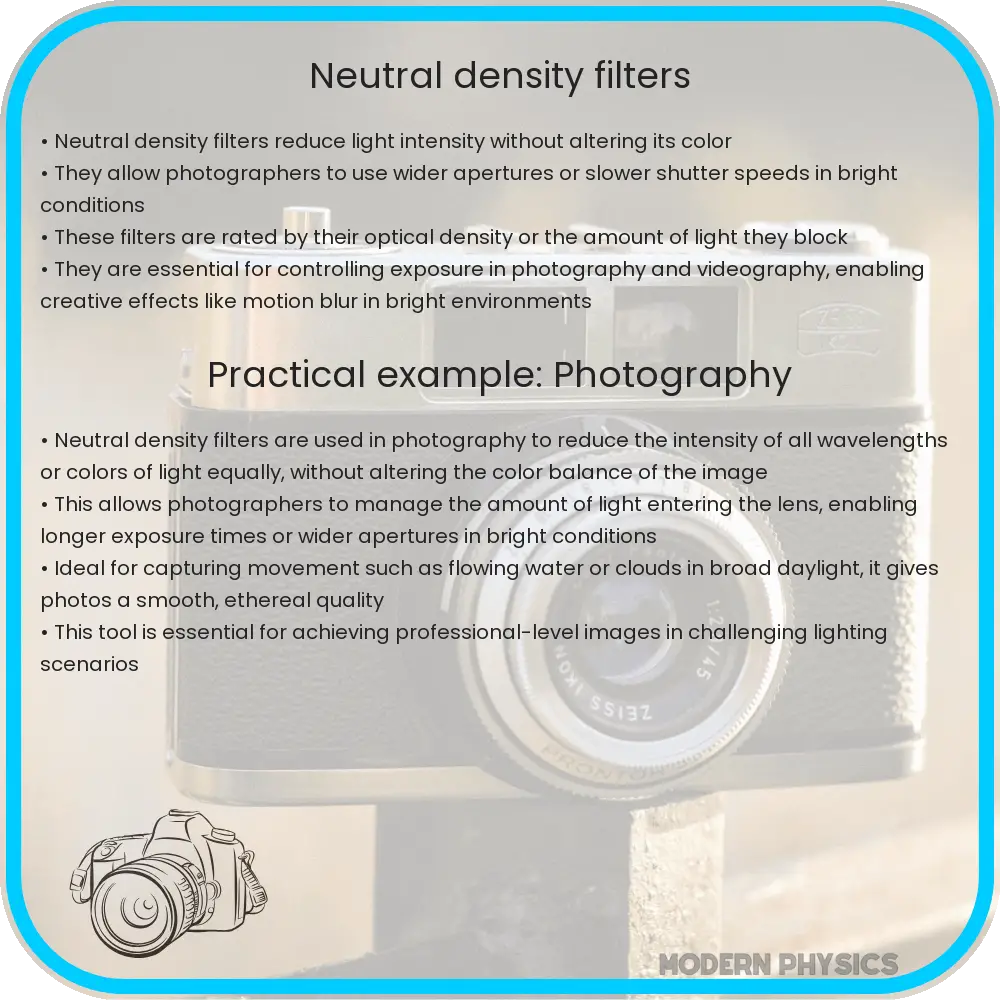
Neutral Density (ND) filters are a crucial tool for photographers and videographers seeking to control the amount of light that enters the lens without affecting the color of the image. These filters enable enhanced clarity and creativity by allowing for longer exposure times and wider apertures under bright lighting conditions. This article explores the uses and benefits of ND filters in photography, particularly focusing on landscape, long exposure, and astrophotography.
Enhancing Clarity with ND Filters
Clarity in photography is vital for capturing crisp and vibrant images. ND filters assist in managing the depth of field and reducing the amount of light entering the lens. This allows photographers to use slower shutter speeds and wider apertures without overexposing the image. The result is photographs with greater detail and sharpness, especially in bright environments where controlling light can be challenging.
Controlling Light for Better Exposures
ND filters come in various densities, measured in stops, which indicate the degree to which they reduce light. They range from slight (1-2 stops) to extreme (10 stops or more), allowing photographers to extend exposure times significantly. This is particularly useful for creating smooth, flowing water effects in daylight or reducing the visibility of moving objects for a serene and uncluttered composition.
Astrophotography and ND Filters
While ND filters are commonly used in daylight settings, they also play a significant role in astrophotography. By reducing light pollution and controlling the exposure in night skies, ND filters can enhance the visibility of celestial objects. This makes them invaluable for capturing detailed shots of the Milky Way, stars, and other astronomical phenomena without the common issue of overexposure that can plague night-time photography.
Using ND filters for astrophotography requires careful selection based on the desired outcome and the specific conditions of the shoot. Typically, lighter ND filters are preferred to avoid losing too much detail from the stars and galaxies.
Choosing the Right ND Filter
Selecting the appropriate ND filter depends on your specific photography needs and the environment in which you will be shooting. For general use, a 3-stop (ND8) or 6-stop (ND64) filter is versatile enough for both slight and moderate light reduction. For more extreme conditions, such as direct sunlight or long exposure seascapes, a 10-stop (ND1000) filter may be more suitable. It is also essential to consider the quality of the filter, as higher-quality ND filters provide better image clarity and fewer coloration issues.
Practical Tips for Using ND Filters
When using ND filters, it’s important to adjust your camera settings accordingly. Before attaching the filter, focus on your subject and set your desired composition. Once the filter is in place, you may need to switch to manual focus since the reduced light can affect the camera’s autofocus. Additionally, using a tripod is highly recommended to prevent camera shake during the longer exposures typically associated with ND filter use.
- Start with a low-density filter and gradually move to higher densities as you become more comfortable with the effects.
- Always test different shutter speeds and apertures to find the perfect balance for your shot.
- Consider using a remote shutter release to further reduce camera shake.
Conclusion
Neutral Density filters are an indispensable tool for photographers looking to enhance image clarity, control light, and delve into the realm of long exposure and astrophotography. By understanding how to choose and use ND filters effectively, photographers can unlock a new level of creative potential in their work. Whether capturing the serene movement of a waterfall, the bustling lights of a cityscape, or the majestic beauty of the night sky, ND filters help in achieving stunning, high-quality images. Embrace the use of ND filters in your photography practice to explore new perspectives and refine your photographic vision.