
Learn about nanostructured coatings, thin films enhancing durability and visibility in diverse applications from automotive to aerospace.
Introduction to Nanostructured Coatings
Nanostructured coatings represent a cutting-edge advancement in materials science that offers enhanced visibility and durability in a wide array of applications. From automotive to aerospace, these microscopic coatings are paving the way for new technologies that improve performance and longevity.
What are Nanostructured Coatings?
Nanostructured coatings are thin films applied to surfaces at the nano scale, typically between 1 and 100 nanometers (nm). At this scale, materials exhibit properties that are distinct from bulk materials, including increased strength, lighter weight, and improved chemical resistance. These coatings are engineered by manipulating matter at the molecular and atomic levels, which allows for precise control over the properties of the material.
Why Enhanced Visibility?
One notable application of nanostructured coatings is in enhancing visibility. They can be engineered to minimize reflections and glare, which is crucial for applications requiring high levels of accuracy and clarity, such as camera lenses and eyeglasses. Furthermore, they can be designed to absorb specific wavelengths of light, making them invaluable for improving the visibility of displays under different lighting conditions.
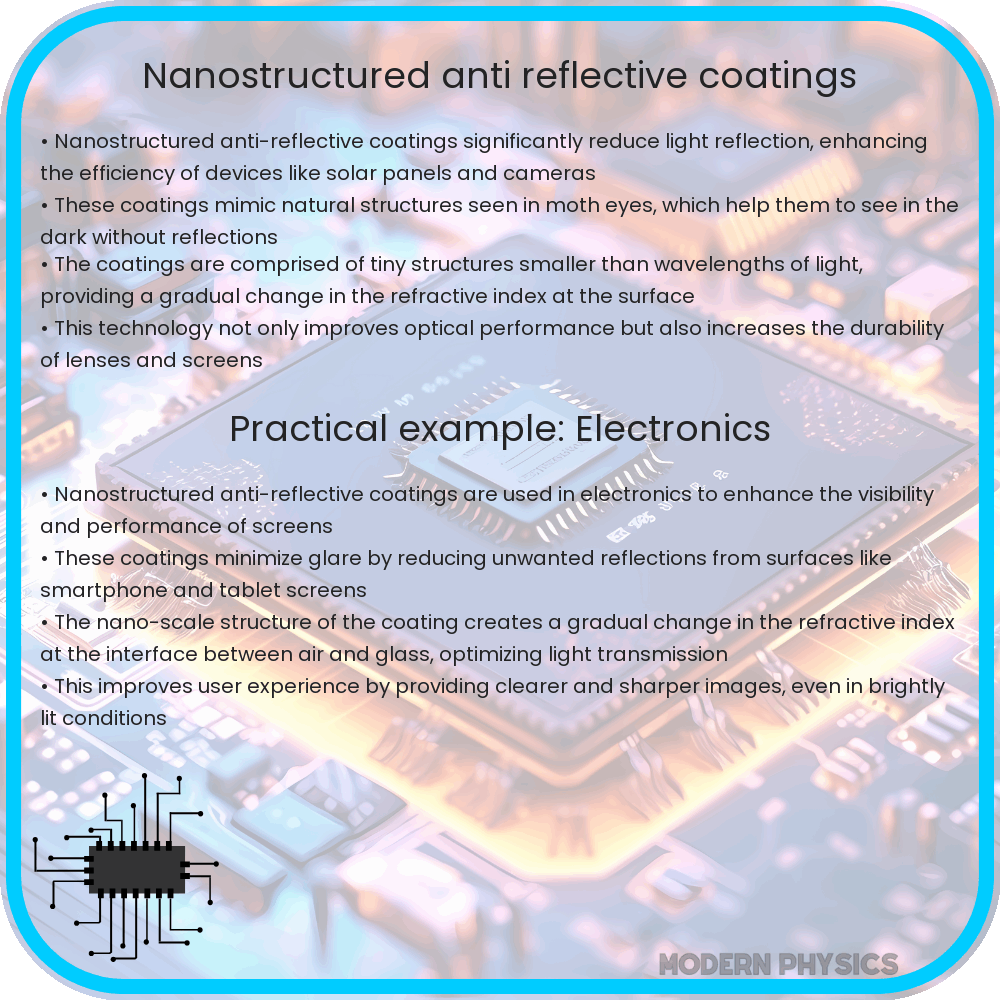
- Anti-Reflective Coatings: Used on lenses and screens, these coatings reduce the light that bounces off surfaces, thereby decreasing glare and enhancing the clarity of the image seen through or displayed.
- High Contrast Coatings: Often applied to digital display screens, these coatings help in achieving sharper color differentiation and deeper blacks, which enhance overall visual quality.
Enhanced Durability
Durability is another critical aspect improved by nanostructured coatings. These coatings can significantly enhance the wear and tear capacity of materials, making them ideal for use in harsh environments. Here’s how nanostructured coatings contribute to increased durability:
- Corrosion Resistance: For metal components, nano coatings can provide a barrier that protects against rust and corrosion caused by exposure to the environment.
- Scratch Resistance: Surface treatments with nano coatings can prevent scratches and abrasions on delicate surfaces like glass and polished metal.
- UV Protection: Coatings designed to deflect ultraviolet (UV) rays can prevent deterioration and fading in materials frequently exposed to sunlight.
This technology not only extends the life of the product but also maintains its aesthetic and functional qualities over time.
Future Prospects and Current Challenges
The potential of nanostructured coatings is vast, offering exciting possibilities for future innovations. Research continues to focus on developing coatings that are more environmentally friendly and cost-effective. However, there are challenges to be addressed:
- Manufacturing Scale: Scaling up the production of nano-coatings to industrial levels without compromising quality remains a technical challenge.
- Long-Term Stability: Ensuring that nano-coatings remain effective over the life of the product requires ongoing research into durable materials and degradation processes.
- Regulatory Compliance: As with any new technology, nanostructured coatings must meet regulatory standards, which can vary widely across different regions and applications.
Advancements in nanotechnology and better understanding of nanomaterials are expected to overcome these hurdles and enhance the practical application of nanostructured coatings in the future.
Conclusion
Nanostructured coatings represent a revolutionary step in materials science, promising to enhance both the performance and longevity of various products across multiple industries. From improving visibility and clarity in optical devices to offering protection against environmental damages, these advanced materials offer tangible benefits that can transform everyday items into high-performance assets. As research progresses and production processes improve with technological advancements, the scope of nanostructured coatings continues to expand, paving the way for more innovative and sustainable applications. The continued exploration and development within this field not only promise to enhance the capabilities of products but also contribute significantly to various sectors including healthcare, consumer electronics, and energy. Embracing the challenges and focusing on sustainable solutions will further establish nanostructured coatings as a cornerstone of modern material science.