
Explore the importance of Earth’s geochemical cycles, including carbon, nitrogen, oxygen, and phosphorus, and how human activities impact their balance and dynamics.
Geochemical Cycles: The Backbone of Earth’s System
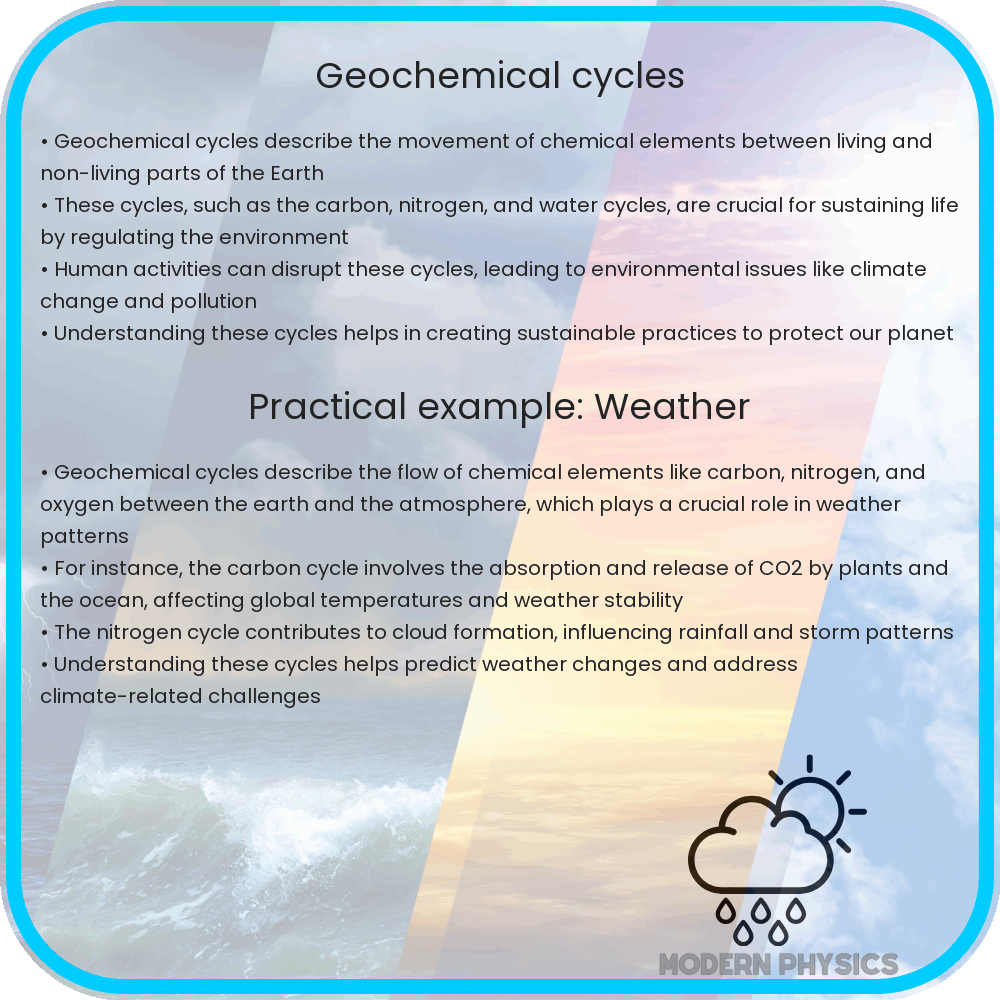
Geochemical cycles represent a fundamental concept in understanding Earth’s system, encompassing the continuous movement of chemical elements such as carbon, nitrogen, oxygen, and phosphorus through the Earth’s atmosphere, hydrosphere, lithosphere, and biosphere. These cycles are pivotal in maintaining the balance and dynamics of Earth’s environment, influencing climate, soil fertility, and the overall health of our planet’s ecosystems.
Key Geochemical Cycles
- Carbon Cycle: Central to life on Earth, the carbon cycle involves the movement of carbon between the atmosphere, oceans, soil, and living organisms. Carbon dioxide (CO2) in the atmosphere is absorbed by plants for photosynthesis, converting it into organic matter. This carbon is then transferred through the food chain and released back into the atmosphere through respiration, decomposition, and combustion of fossil fuels.
- Nitrogen Cycle: Nitrogen is essential for the synthesis of proteins and nucleic acids. The nitrogen cycle describes the conversion of atmospheric nitrogen (N2) into usable forms for living organisms through processes such as nitrogen fixation, nitrification, and denitrification. This cycle plays a critical role in soil fertility and agricultural productivity.
- Oxygen Cycle: The oxygen cycle is closely linked with the carbon cycle and involves the processes that generate and use oxygen gas (O2). Photosynthesis by plants and certain microorganisms produces oxygen, which is then consumed by living organisms during respiration.
- Phosphorus Cycle: Unlike other major cycles, the phosphorus cycle does not include a significant atmospheric component. Phosphorus moves through the lithosphere, hydrosphere, and biosphere, mainly in the form of phosphates (PO43-). It is vital for the formation of DNA and ATP, making it essential for all life forms.
Importance of Geochemical Cycles
Geochemical cycles are integral to the Earth’s system, ensuring the availability of essential nutrients in forms that can be assimilated by various organisms. Disruptions to these cycles, often caused by human activities such as deforestation, pollution, and the burning of fossil fuels, can lead to significant environmental challenges, including climate change, biodiversity loss, and nutrient pollution. Understanding and preserving the balance of these cycles is crucial for sustaining life on our planet and ensuring the health of future generations.
Human Impact and the Need for Sustainability
The increasing human footprint on the planet has led to significant disruptions in geochemical cycles, necessitating a global effort towards sustainable practices. The excessive release of CO2 due to fossil fuel combustion has accelerated the greenhouse effect, contributing to global warming and climate change. Similarly, industrial and agricultural activities have increased the levels of nitrogen and phosphorus in the environment, causing eutrophication in water bodies and altering ecosystems. These disruptions highlight the urgent need for sustainable resource management to mitigate human impact on these vital cycles.
Strategies for Sustainability
- Reducing Carbon Footprint: Transitioning to renewable energy sources, increasing energy efficiency, and adopting carbon capture technologies can significantly reduce the amount of CO2 released into the atmosphere.
- Sustainable Agriculture: Implementing practices such as crop rotation, reduced use of chemical fertilizers, and promoting natural nitrogen fixers can help maintain the nitrogen and phosphorus cycles while reducing environmental impact.
- Conservation Efforts: Protecting forests, wetlands, and other critical ecosystems can help preserve natural geochemical cycles, ensuring the continued availability of essential nutrients and mitigating climate change impacts.
- Public Awareness and Education: Increasing awareness about the importance of geochemical cycles and the impact of human activities can motivate individuals and communities to adopt more sustainable practices.
Conclusion
Geochemical cycles are the linchpins that support life on Earth, intricately weaving together the atmosphere, lithosphere, hydrosphere, and biosphere into a cohesive, self-regulating system. The balance of these cycles is essential for maintaining the environment’s health, supporting biodiversity, and ensuring the availability of essential resources for all life forms. However, the increasing human impact through industrialization, agriculture, and urbanization poses significant threats to these natural processes. It is imperative that societies across the globe adopt sustainable practices to preserve these critical cycles. Through concerted efforts in reducing our carbon footprint, implementing sustainable agricultural practices, conserving natural habitats, and fostering global awareness, we can mitigate human impacts and ensure the stability of Earth’s geochemical cycles for future generations.