
Explore the revolutionary flexible display technology, highlighting its resilience, manufacturing processes, and myriad applications in consumer electronics and beyond.
Understanding Flexible Display Technology
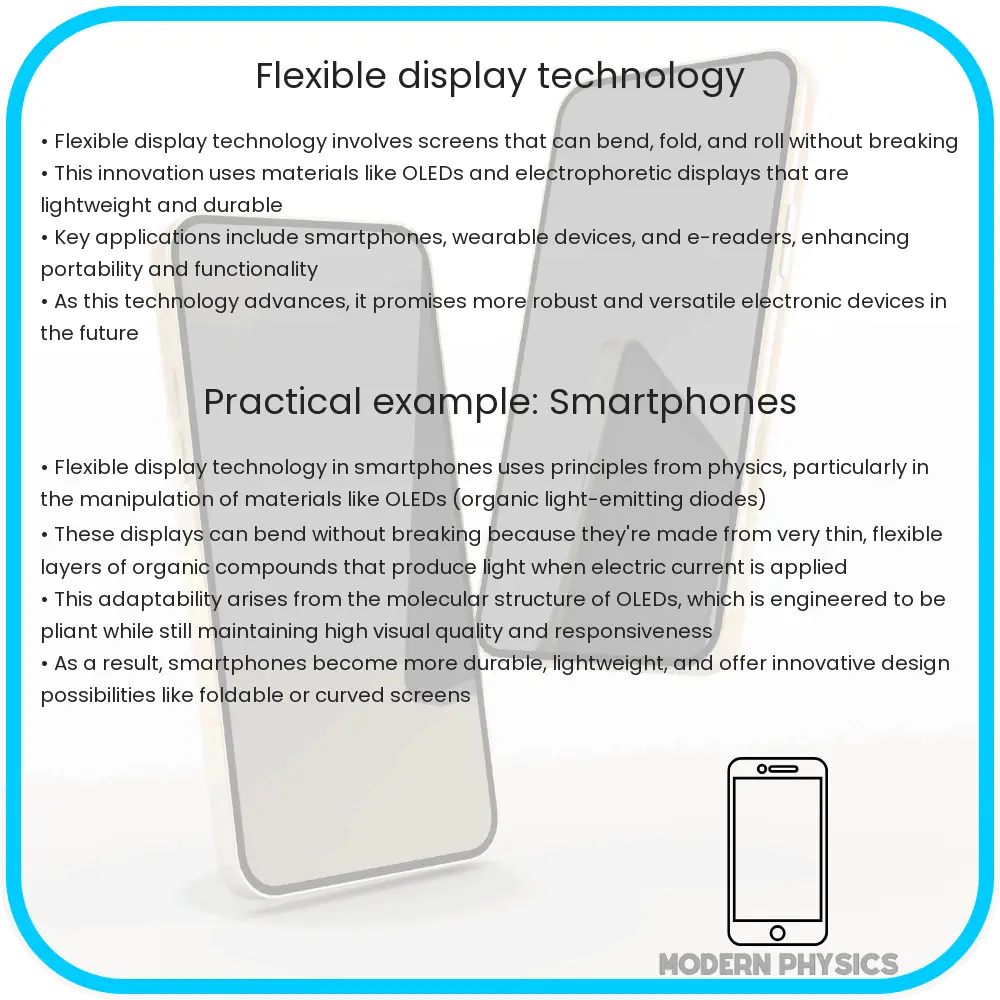
Flexible display technology is transforming the world of electronics, driving innovations in devices ranging from smartphones to smartwatches and beyond. These cutting-edge displays are not just feats of visual technology; they also showcase remarkable flexibility and durability, standing up to the challenges of modern usage and varied environments. Let’s explore how these displays are made, why they are so resilient, and the innovations they bring to the tech world.
The Basics of Flexible Display Technology
Flexible displays are primarily built using Organic Light Emitting Diodes (OLEDs) or Electronic Paper Displays (EPDs). OLEDs are used predominantly in high-end smartphones and TVs, offering superb color contrast and deep blacks. EPDs, commonly seen in e-readers, provide excellent visibility in direct sunlight and require very little power. What distinguishes these displays from traditional screens is their substrate—the surface upon which the display is built. Unlike rigid glass, flexible displays use a plastic or polyimide film, which allows them to bend, roll, and even fold without breaking.
Durability in Flexible Displays
Durability is a crucial element in the design and manufacture of flexible displays. Manufacturers have to ensure that these screens are not just flexible, but also tough enough to withstand everyday use. Advances in material science have led to the development of substrates and coatings that prevent scratches and damage from frequent bending. For instance, the application of a thin, transparent ceramic coating can enhance scratch resistance while maintaining flexibility.
Flexibility and its Advancements
The level of flexibility in a display is determined by several factors, including the thickness of the substrate and the nature of the organic materials used in the OLED or EPD. Innovations in polymer research have led to substrates that can be thinner than a human hair, providing unprecedented flexibility while ensuring integrity and functionality of the display components. This high degree of bendability has made possible new device designs, such as foldable smartphones and wearable technology that can conform to various parts of the body.
Innovation Driven by Flexible Display Technology
Fueled by continuous improvements in flexibility and durability, flexible display technology is paving the way for numerous applications beyond consumer electronics. For example, the automotive industry is experimenting with curved display panels that conform to the contours of car interiors, offering a futuristic aesthetic and improved visibility of vehicle diagnostics. Similarly, in the field of medicine, flexible displays are being integrated into medical devices to provide doctors with customizable, real-time diagnostic tools that can bend around surfaces or limbs.
Furthermore, the inherent thinness and light weight of flexible displays lend themselves to innovations in smart clothing and even in smart home appliances, where displays can be seamlessly integrated into fabrics and household surfaces.
The horizon of flexible display technology is constantly expanding, as researchers continue to push the boundaries of what’s possible. Each advancement not only enhances the functionality of displays but also opens up exciting new avenues for integrating technology into our daily lives in a seamless and intuitive way.
Environmental Impact and Sustainability Efforts
As the demand for flexible display technology grows, so does the concern for its environmental impact. The production processes for materials like polyimide films and OLED components involve substances that can be harmful if not managed properly. However, the industry is making strides towards sustainability. Recycling methods and greener production techniques are being developed to reduce waste and decrease the environmental footprint of manufacturing flexible displays. Efforts include using organic materials that are less harmful to the environment and improving the energy efficiency of the manufacturing processes.
The Future Potential of Flexible Display Technology
The potential applications for flexible display technology continue to grow. Beyond just consumer electronics, these displays could transform entire industries, such as advertising, where billboards and signs can literally wrap around surfaces, creating immersive advertising spaces. Additionally, the field of education could benefit from this technology through interactive, flexible teaching aids that engage students in ways previously not possible. The adaptability of flexible displays makes them an excellent candidate for these and many other future applications.
As technology continues to evolve, so too will the capabilities and uses of flexible displays. Innovations like enhanced touch sensitivity, improved energy efficiency, and integration with other cutting-edge technologies such as augmented reality are all on the horizon, promising to further enrich our interaction with the digital world.
Conclusion
Flexible display technology is much more than a novel feature in today’s gadgets; it represents a significant leap forward in the evolution of display technology. From increasing the durability and flexibility of the screens to opening up new applications in various fields, this technology is setting the stage for future devices that will continue to blend more seamlessly with our daily lives. As we look forward, the continued integration of flexible displays will likely usher in a new era of innovation in design and functionality, making the digital experiences of tomorrow more immersive than ever.