
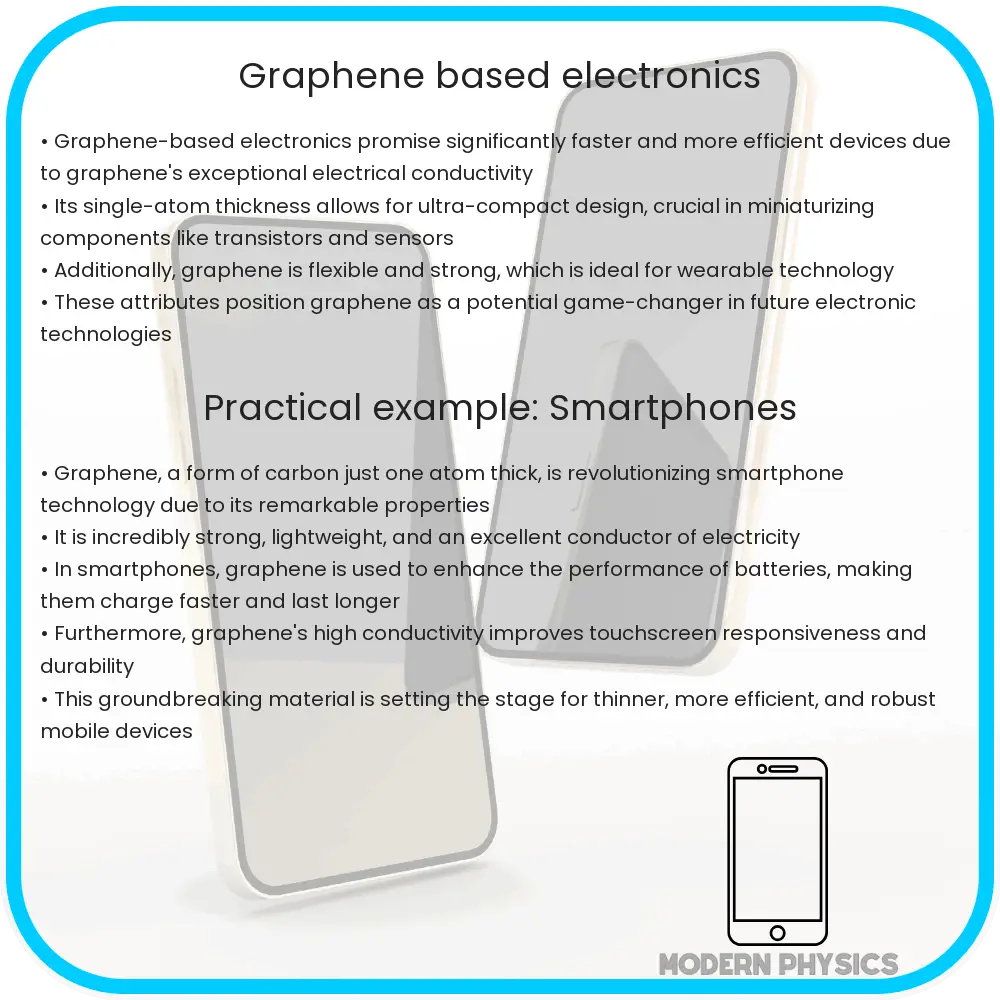
Graphene electronics leverage the exceptional conductivity, strength, and flexibility of graphene to revolutionize electronic devices.
Introduction to Graphene Electronics
Graphene, a single layer of carbon atoms arranged in a two-dimensional honeycomb lattice, has captured the interest of scientists and engineers due to its exceptional properties. Among the many potential applications, graphene electronics stand out due to graphene’s remarkable electrical conductivity, mechanical strength, and flexibility. This article explores how these characteristics can revolutionize electronic devices.
Durability of Graphene
Graphene is celebrated not only for its electrical properties but also for its astonishing durability. Its intrinsic strength is about 100 times greater than that of steel by weight. This makes graphene-based electronics extremely durable, able to withstand physical stress that would normally damage conventional electronic materials. As such, devices like flexible displays, wearables, and even structural sensors in civil engineering can benefit enormously from the integration of graphene.
Conductivity of Graphene
Graphene’s conductivity is perhaps its most groundbreaking aspect in the field of electronics. Electrons move through graphene with almost no resistance at room temperature, meaning it can conduct electricity more efficiently than traditional materials like copper. This property is quantified by its high electron mobility, which can exceed 15,000 cm2V-1s-1, making it a prime candidate for high-speed electronic components and advanced computing systems.
- Reduced Energy Loss: Graphene’s superior conductivity ensures minimal energy loss, which is crucial for power transmission lines and efficient circuits.
- Heat Management: Despite its great conductivity, graphene also has unique thermal management abilities, helping devices dissipate heat effectively, thus enhancing performance and longevity.
Flexibility of Graphene
Another profound advantage of graphene is its flexibility. Unlike conventional rigid electronic materials, graphene can be bent, twisted, and stretched without losing its conductive properties. This opens up new avenues for the development of flexible electronic circuits, wearable technology, and even implantable medical devices that can conform to the natural shapes and movements of the human body.
The integration of graphene into electronic components not only makes them more compact but also potentially more cost-effective and environmentally friendly. The material’s thinness and light weight contribute to the reduction of raw material usage and overall device heft, which could significantly reduce the environmental impact of production and disposal.
Applications in Modern Electronics
The unique properties of graphene can be leveraged in various high-tech applications:
- Flexible Displays: Graphene’s flexibility and conductivity make it ideal for use in flexible smartphone screens, wearable electronic displays, and other adaptable screen technologies.
- High-Speed Processors: Due to its high electron mobility, graphene can enhance the performance of processors, allowing for faster and more efficient computing capabilities.
- Sensors: Graphene can be implemented in sensors that require high sensitivity and durability, including environmental sensors and medical diagnostics.
These applications are just the tip of the iceberg, as ongoing research continues to uncover new potentials for graphene in electronics and other fields.
In conclusion, graphene electronics offer a transformative potential for the future of technology, combining durability, conductivity, and flexibility in ways that could redefine what is possible in electronic design. The next section will further discuss the challenges and future prospects of graphene in the electronics industry.
Challenges and Future Prospects
Despite its numerous advantages, the widespread adoption of graphene in electronics still faces several challenges. One of the main issues is the scalability of high-quality graphene production. Current manufacturing methods are either too costly or unable to produce graphene at the scale needed for commercial applications. Researchers are actively working on developing more cost-effective and scalable production techniques to make graphene electronics commercially viable.
Another challenge lies in the integration of graphene with other materials used in electronic devices. Graphene’s properties can be significantly altered when combined with other materials, which can affect the performance of the end product. Understanding these interactions and developing compatible materials will be crucial for the successful application of graphene in electronics.
Furthermore, there are regulatory and environmental considerations that need to be addressed. As graphene electronics enter the market, ensuring that these products are safe and environmentally friendly will become increasingly important. Regulatory bodies will need to develop standards and guidelines to manage the introduction and disposal of graphene-based electronics.
Looking Ahead
The future of graphene in electronics looks promising. As research progresses, we can expect breakthroughs that solve current production and integration challenges. With continued innovation, graphene could lead to electronics that are more efficient, durable, and environmentally friendly than ever before.
Moreover, the potential applications of graphene extend beyond just electronics. Its properties are being explored in areas such as energy storage, water purification, and even aerospace engineering. This versatility makes graphene a material of great interest for a variety of industries, promising revolutionary changes across many sectors.
Conclusion
Graphene’s journey from a scientific curiosity to a cornerstone of future technology is full of potential. Its extraordinary strength, high conductivity, and flexibility make it ideal for next-generation electronic devices and beyond. While challenges remain in production and integration, the ongoing advancements in research are paving the way for wider adoption of graphene in various applications. Embracing these innovations could significantly enhance the capabilities and sustainability of future technologies, making the dream of ultra-efficient and flexible electronics a closer reality.