
Learn about flexible electronics, lightweight and durable devices designed to fit various applications and withstand bending and stretching.
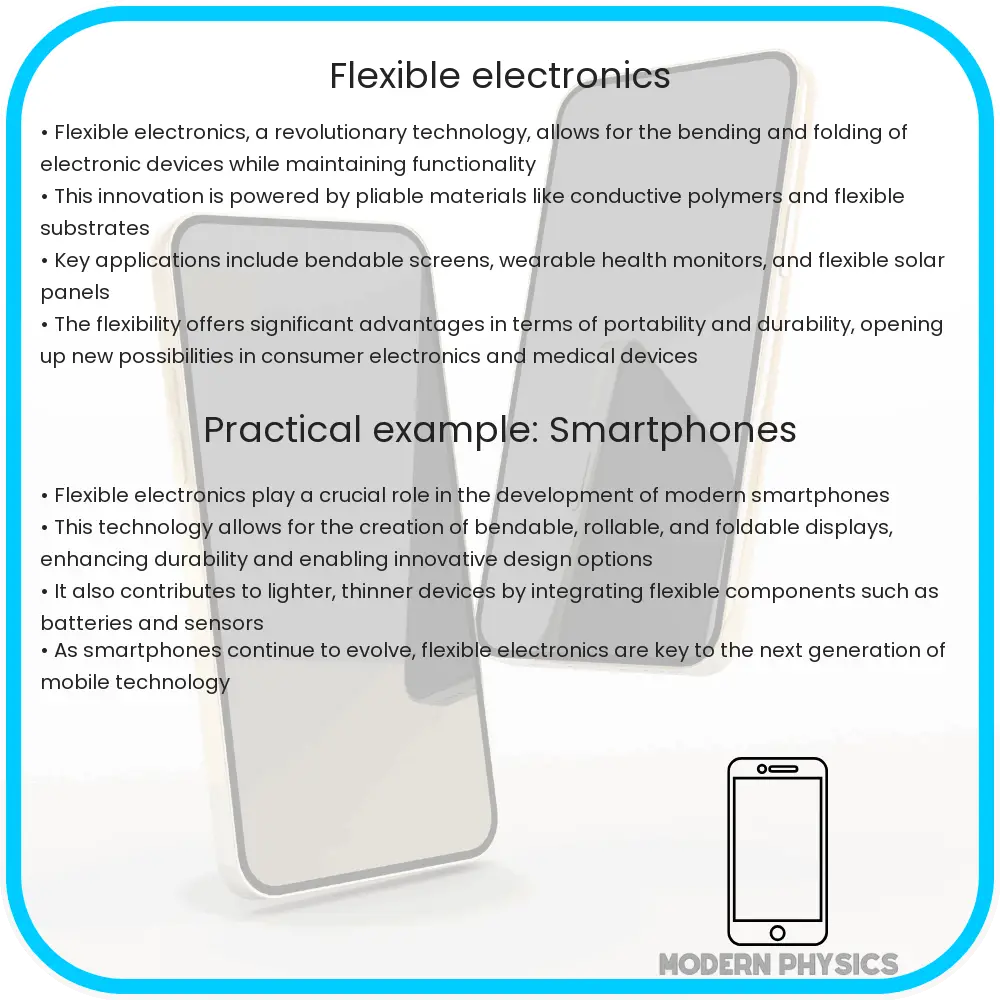
Introduction to Flexible Electronics
Flexible electronics, a revolutionary branch of materials science, combines electronic devices with bendable substrates, often plastic. These devices are lightweight, durable, and can be designed to fit the three-dimensional profiles of various applications. This domain is not just a technological innovation; it ushers in transformative changes to numerous industries including consumer electronics, healthcare, automotive, and more.
Durability of Flexible Electronics
The durability of flexible electronics is one of their most appealing features. Traditional electronic devices, which are rigid and fragile, contrast starkly with flexible devices designed to withstand bending, twisting, and stretching. This resilience stems from both the physical properties of the materials used and the innovative structural designs that distribute stress. Materials commonly employed include polyimide, polyester, and other polymers that offer both flexibility and strength.
Innovation in Flexible Electronics
At the core of flexible electronics innovation is the development of new materials and fabrication techniques. Conductive inks, for instance, can be printed onto flexible substrates at low temperatures, preserving the integrity of the plastic materials. Organic light-emitting diodes (OLEDs) and organic photovoltaics are examples of technologies adapted to flexibility, which do not only conform to curved surfaces but can also be manufactured using roll-to-roll processes, similar to printing a newspaper.
Applications of Flexible Electronics
Flexible electronics are breaking ground across various fields:
- Wearable Technology: From fitness trackers to advanced medical sensors, flexible electronics are integral in developing devices that conform comfortably to the human body, enhancing both functionality and user experience.
- Smart Textiles: Integrating circuitry into fabric allows for the creation of clothing that can monitor health metrics or change its properties based on environmental conditions.
- Flexible Displays: These displays can be used in everything from foldable smartphones to roll-up televisions, pushing the boundaries of traditional rigid screens.
- Bio-Integrated Devices: Flexible electronics can also be used in medical implants that require compatibility with body tissues, featuring low risk of rejection and high-efficiency performance.
As the market for flexible electronics grows, the potential for further innovative applications expands, promising an exciting future for this flexible technology. In the upcoming sections, we will explore the challenges faced during manufacturing, the environmental impact of these devices, and the future scope of this dynamic field.
Manufacturing Challenges
Despite their growing popularity, manufacturing flexible electronics poses unique challenges. The flexibility that is vital to their application creates difficulties during the production process. Handling, cutting, and placing thin, flexible materials without causing damage demands precise control mechanisms and advanced equipment. Additionally, ensuring uniformity of electrical properties across a flexible substrate requires meticulous quality control processes to maintain high performance levels.
Environmental Impact
The environmental impact of flexible electronics is also a critical consideration. While these devices promise lower energy consumption and reduced material use, their manufacture and disposal present environmental challenges. Issues such as recycling or degradation of polymer-based materials are significant. Research into more sustainable materials and environmentally friendly manufacturing processes is essential to fully realize the benefits of flexible electronics in a sustainable manner.
The Future of Flexible Electronics
Looking ahead, the future of flexible electronics holds tremendous promise. Continuous advancements in material science and engineering are expected to overcome current limitations, leading to even more sophisticated applications. Innovations like biodegradable electronics and improved energy harvesting capabilities could pave the way for even broader utilization of flexible technologies. Industry experts are optimistic about the integration of flexible electronics in more comprehensive smart systems that communicate seamlessly in an interconnected world.
Conclusion
The advent of flexible electronics marks a significant shift in the materials science and electronics industries, demonstrating vast improvements in usability, durability, and application diversity. From transforming wearable tech to advancing smart home solutions, these adaptable devices continue to broaden the horizons of technology. Despite the challenges in manufacturing and environmental concerns, the ongoing research and development are paving the way for more resilient and eco-friendly flexible electronic products. Embracing these innovations could drive us towards a more flexible, efficient, and connected future.