
Explore the benefits and applications of Wood Polymer Nanocomposites, innovative materials combining the aesthetics of wood with the resilience of polymers.
Introduction to Wood Polymer Nanocomposites
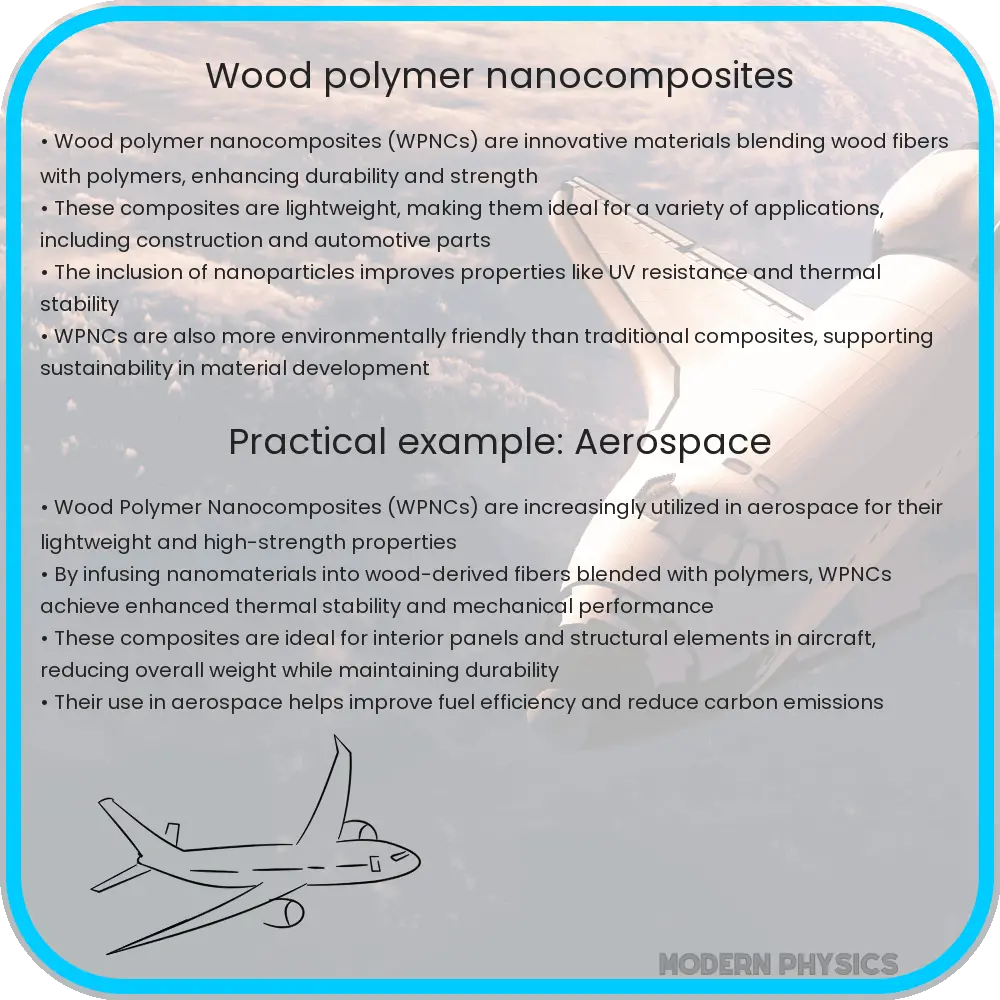
Wood Polymer Nanocomposites (WPNs) are innovative materials that combine the natural aesthetics and favorable mechanical properties of wood with the durability and resilience of polymers. Engineered at the nanoscale, these composites exhibit enhanced characteristics compared to traditional composites, making them suitable for a range of applications in construction, automotive, and even in advanced electronics. Understanding the science behind their durability, efficiency, and innovative applications helps us appreciate how WPNs are shaping the future of material engineering.
Durability of Wood Polymer Nanocomposites
One of the primary advantages of Wood Polymer Nanocomposites is their increased durability. The incorporation of nanoparticles into the polymer matrix significantly improves the composite’s resistance to environmental factors such as moisture, UV light, and temperature fluctuations. These nanoparticles, often silica, titanium dioxide, or zinc oxide, act as a protective barrier, reducing the degradation of the wood component when exposed to harsh conditions. This enhancement in durability makes WPNs particularly suitable for outdoor applications, where longevity and low maintenance are crucial.
- Improved moisture resistance reduces the risk of fungal decay and swelling in WPNs.
- Enhanced UV protection prevents the color and structural integrity of the wood from deteriorating.
- Increased thermal stability allows WPNs to withstand fluctuations in temperature without significant deformation.
Efficiency of Wood Polymer Nanocomposites
Efficiency in Wood Polymer Nanocomposites is multifaceted, comprising not only the material’s performance but also its production and long-term sustainability. The effective combination of wood fibers and polymer matrix can lead to a significant reduction in weight compared to traditional materials, which contributes to energy savings during transportation and application. Furthermore, the use of renewable wood and potentially recyclable polymers can minimize environmental impact, aligning with green manufacturing principles.
Moreover, the process of creating WPNs often allows for the integration of waste materials from other industrial processes, promoting a circular economy. The nano-enhancement of these composites means that less material is needed to achieve desired properties, such as strength and toughness, thereby improving resource efficiency.
- Reduction in material weight leads to lower energy consumption in transportation and application phases.
- Integration of industrial waste products in the production process reduces environmental footprint.
- Use of renewable and recyclable materials supports sustainable development goals.
Innovative Applications of Wood Polymer Nanocomposites
The enhanced properties of Wood Polymer Nanocomposites open up avenues for innovation in various fields. In the construction industry, WPNs are used for decking, railing, and fencing, providing durable and aesthetically pleasing options. Moreover, their resistance to wear and minimal maintenance requirements make them suitable for high-traffic areas.
In the automotive sector, the lightweight nature of WPNs contributes to overall vehicle weight reduction, enhancing fuel efficiency and reducing emissions. Additionally, the potential for these materials to be used in electronic casings, thanks to their insulative properties combined with thermal stability, offers exciting prospects in the field of electronic devices.
- Use in outdoor furniture and structural applications due to high durability and aesthetic appeal.
- Application in automotive interior components for weight reduction and increased fuel efficiency.
- Potential use in electronic device casings where thermal insulation and lightweight properties are valuable.
Challenges and Future Directions in Wood Polymer Nanocomposites
Despite the numerous benefits of Wood Polymer Nanocomposites, there are challenges that need to be addressed to further expand their applications. One of the primary issues is the complexity of the manufacturing process, which can affect scalability and cost-effectiveness. Research is ongoing to simplify the production techniques and make them more economically viable. Another concern is the compatibility between the wood fibers and polymers, which can impact the overall performance of the composites. Advances in chemical treatments and surface modifications are being explored to enhance this interfacial bonding.
- Innovations in processing technologies to improve cost-effectiveness and scalability.
- Enhanced chemical treatments to improve compatibility between wood and polymer components.
- Development of new nanoparticle types and configurations to further enhance properties.
Looking forward, the potential for incorporating biodegradable polymers could pave the way for even more environmentally friendly Wood Polymer Nanocomposites. Additionally, the exploration of other renewable materials as substitutes for wood fibers may broaden the application range of WPNs while maintaining sustainability.
Conclusion
Wood Polymer Nanocomposites represent a significant advancement in material science, combining the natural advantages of wood with the high performance of polymers. Their increased durability, efficiency in production, and innovative applications across various industries make them a valuable contributor to the future of sustainable materials. While challenges such as manufacturing complexity and material compatibility exist, ongoing research and technological developments promise to enhance their properties and reduce production costs. Embracing these materials not only supports environmental sustainability but also pushes the boundaries of what can be achieved in modern engineering and design. Universally, the continued innovation and application of Wood Polymer Nanocomposites hold the potential to revolutionize industries and contribute to a greener, more efficient world.