
Explore thermostat efficiency in thermodynamics: Learn about energy savings, smart tech integration, and precision control for a sustainable future.
Thermostat Efficiency in Classical Thermodynamics
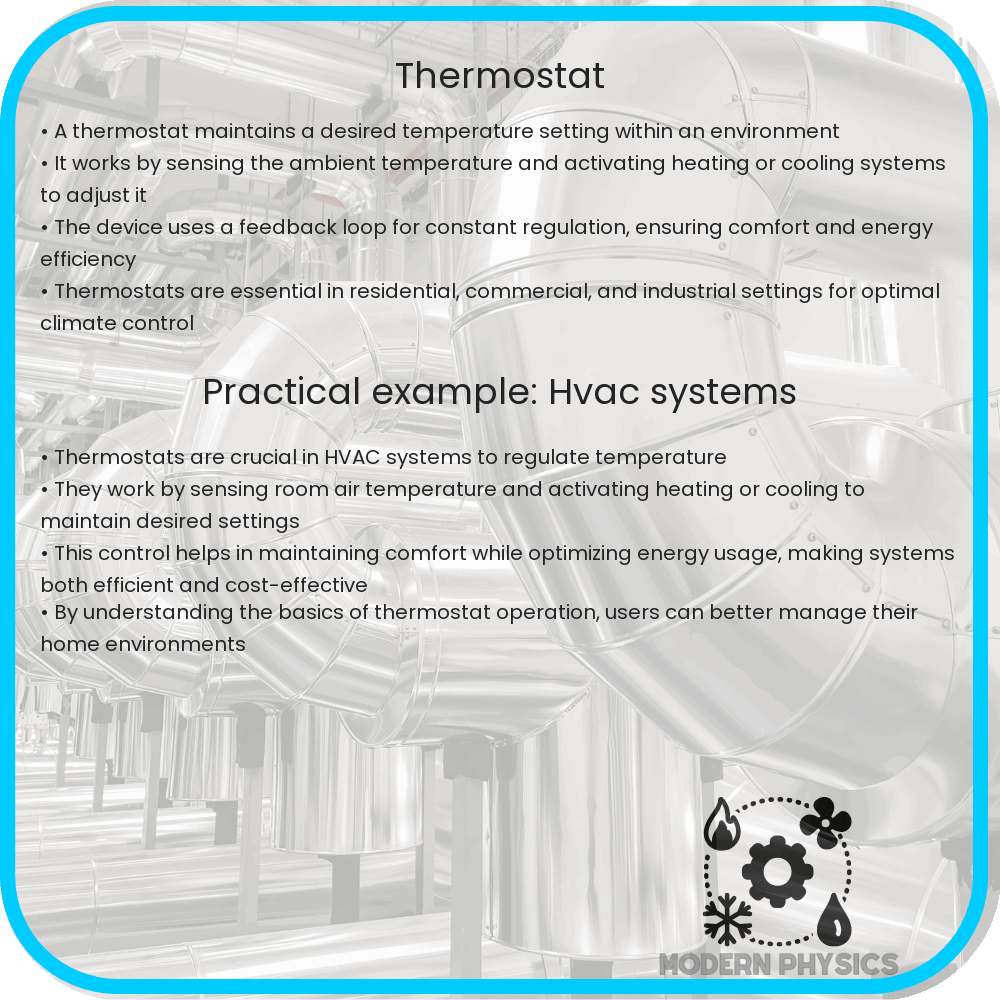
Thermostats are a pivotal component in the realm of classical thermodynamics, playing a crucial role in regulating temperature within various environments. The core principle of a thermostat’s operation lies in its ability to maintain a desired temperature, ensuring energy efficiency and precision control. This is particularly significant in the context of energy conservation and cost savings.
Energy Savings through Advanced Thermostat Technology
The evolution of thermostat technology has been marked by a shift towards digital and smart thermostats. These devices offer enhanced features such as programmability, remote control, and learning capabilities. Programmable thermostats allow users to set temperature schedules, aligning energy usage with occupancy patterns. This results in substantial energy savings, as the heating or cooling systems are not operating unnecessarily when the space is unoccupied.
Smart thermostats take this a step further by learning the user’s preferences and adjusting the temperature accordingly, often integrating with other smart home systems for holistic energy management. The impact of these advancements on energy consumption is profound. According to studies, smart thermostats can lead to an average reduction in heating and cooling energy usage by about 10-12% and 15% respectively.
Precision Control and Impact on System Efficiency
Precision in temperature control is not just a matter of comfort but also crucial for the efficiency of heating, ventilation, and air conditioning (HVAC) systems. Thermostats with higher precision sensors and control algorithms can maintain the temperature within a tighter range. This precision minimizes the frequency of cycling the HVAC system on and off, reducing wear and tear, and prolonging the system’s life. Additionally, maintaining a consistent temperature is beneficial for the occupants’ health and well-being, especially in sensitive environments like hospitals and laboratories.
Modern thermostats often include features like zoning, which allows different areas of a space to be heated or cooled to different temperatures. This is particularly beneficial in larger buildings where different rooms may have varying thermal characteristics and usage patterns.
Integration of Thermostats with Renewable Energy Sources
The integration of thermostats with renewable energy sources represents a significant leap forward in energy efficiency. Smart thermostats can be synchronized with solar panels or wind turbines, optimizing the use of renewable energy. When surplus energy is available, the thermostat can increase heating or cooling, storing thermal energy for later use. This not only maximizes the use of renewable energy but also reduces reliance on the grid, further enhancing energy savings.
Environmental Impact and Sustainability
Thermostat efficiency directly correlates with a reduction in greenhouse gas emissions. By optimizing energy usage, thermostats contribute to a decrease in fossil fuel consumption. This is especially crucial in the context of global efforts to combat climate change. Moreover, efficient thermostat use reduces the overall energy demand, which can be a significant factor in sustainable urban planning and development.
Future Prospects in Thermostat Technology
The future of thermostat technology is likely to witness further advancements in AI and machine learning. These developments could enable even more precise control over temperature and energy usage, adapting not only to the preferences of the occupants but also to external factors like weather conditions and energy prices. The integration of IoT (Internet of Things) technology promises a more interconnected and automated approach to temperature regulation, paving the way for smarter, more efficient buildings.
Conclusion
In conclusion, the role of thermostats in classical thermodynamics and energy management cannot be overstated. With advancements in technology, thermostats have evolved from simple temperature regulators to sophisticated devices capable of significant energy savings and precision control. The integration of smart thermostats with renewable energy sources and IoT signifies a major step towards sustainable living and environmental conservation. As we move forward, the continuous improvement of thermostat technology will play a vital role in our journey towards a more energy-efficient and sustainable future.