
Understanding the versatile, durable, and innovative role of thermoplastics in materials science and engineering.
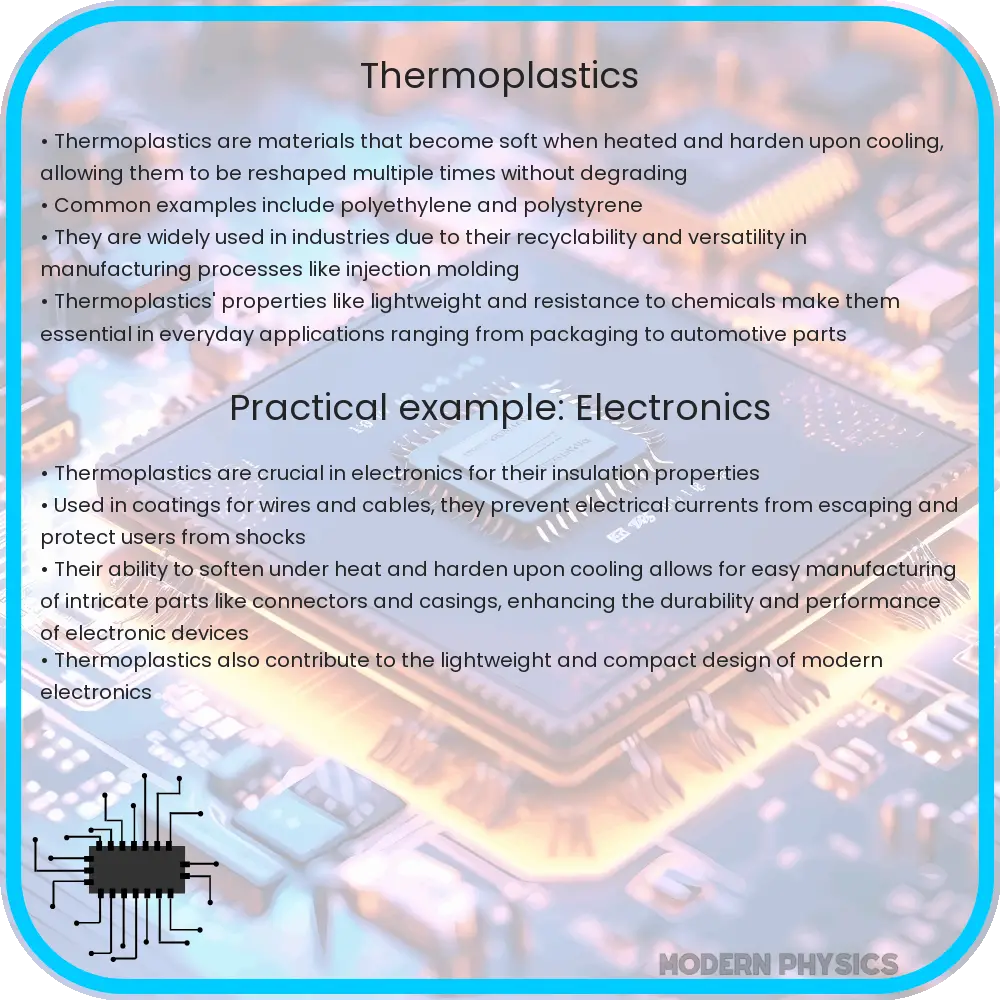
Thermoplastics: Versatility, Durability and Innovation in Materials Science
Thermoplastics represent a key category of polymers that have become integral to modern materials science and engineering practices. Unlike their counterparts—thermosetting plastics—thermoplastics soften when heated and harden upon cooling, a property that allows them to be reshaped and recycled multiple times without significant degradation. This characteristic has paved the way for wide-ranging applications in various industries including automotive, aerospace, electronics, and consumer goods.
The Science Behind Thermoplastics
The fundamental property distinguishing thermoplastics is their ability to transform under temperature influences, attributable to their polymer chain structures. Thermoplastics consist of linear or branched polymer chains without significant cross-linking, facilitating ease of molding and reforming. When heated to their specific glass transition or melting temperature, the molecular chains gain mobility, allowing the material to be molded; when cooled, they return to a solid state.
Examples of commonly used thermoplastics include polyethylene (PE), polypropylene (PP), polyvinyl chloride (PVC), and polystyrene (PS), each with unique properties and transition temperatures, tailored for specific applications. For instance, PE is celebrated for its toughness and is often used in packaging, while PVC’s rigidity and fire retardation properties make it ideal for construction materials.
Advantages of Thermoplastics
- Recyclability: Due to their ability to be reheated and remolded, thermoplastics are highly recyclable. This makes them environmentally preferable in applications where material recovery and sustainability are a priority.
- Durability: Many thermoplastics offer superior resistance to impact, corrosion, and chemicals, which extends the lifetime of products made from these materials.
- Cost-Effectiveness: The ease of production and ability to be reshaped without loss of performance make thermoplastics economically favorable, especially for mass production.
Innovative Applications of Thermoplastics
In the field of innovation, thermoplastics are continuously being engineered to enhance performance and functionality. Some notable advancements include the development of high-performance thermoplastics such as polyether ether ketone (PEEK), which exhibits high thermal stability, mechanical strength, and chemical resistance. PEEK and similar plastics are widely used in demanding environments like aircraft engines and medical implants.
Another exciting area of innovation involves blending thermoplastics with other materials to create composites. These composites can provide enhanced properties such as increased strength-to-weight ratio or improved thermal insulation. For instance, carbon fiber-reinforced thermoplastics (CFRTP) are used in sports equipment and luxury cars for their remarkable strength and lightweight properties.
Moreover, the advent of additive manufacturing, commonly known as 3D printing, has opened new avenues for the use of thermoplastics. The ability to rapidly prototype intricate designs and achieve customized manufacturing solutions using thermoplastics fundamentally changes product development cycles in various industries.
As we continue to delve into the applications and advancements of thermoplastics, it becomes clear that their role in materials science is not only current but also crucial for the future of engineering and manufacturing. Their adaptability and range of uses empower innovation across multiple domains, establishing thermoplastics as a cornerstone of modern material applications.
Challenges and Solutions in Thermoplastic Use
Despite the many benefits, thermoplastics also face certain challenges, particularly in relation to environmental sustainability. The production and disposal processes of thermoplastics can lead to significant environmental impact, primarily due to the non-biodegradable nature of many plastic types and the energy-intensive manufacturing processes.
To address these challenges, research is increasingly focused on developing biodegradable thermoplastics and improving recycling processes. Biodegradable options such as polylactic acid (PLA) are derived from renewable resources like corn starch, offering a more sustainable alternative that breaks down naturally in the environment. Additionally, enhancements in recycling technologies ensure that thermoplastics can be reused more efficiently, thereby reducing both waste and demand for raw materials.
Further innovations include the use of nanotechnology to improve the properties of thermoplastics. Nanocomposites, which incorporate nanoparticles into the polymer matrix, are being developed to enhance traits such as conductivity, strength, and thermal stability, while still maintaining recyclability and reusability.
Conclusion
Thermoplastics have truly revolutionized the field of materials science with their versatile and dynamic nature. From routine household items to sophisticated aerospace components, these materials offer a broad spectrum of applications due to their unique properties of moldability, recyclability, and durability. The ongoing developments in biodegradable thermoplastics and advanced composite materials further enhance their appeal and utility, aligning with global sustainability goals.
As we advance, the role of thermoplastics is set to become even more pivotal. Continued research and innovation will likely unlock new potentials, improving environmental footprint and performance characteristics. By embracing these advancements, industries across the board can leverage the full benefits of thermoplastics, driving forward a future where material science not only meets the demands of the present but also responsibly shapes the world of tomorrow.