
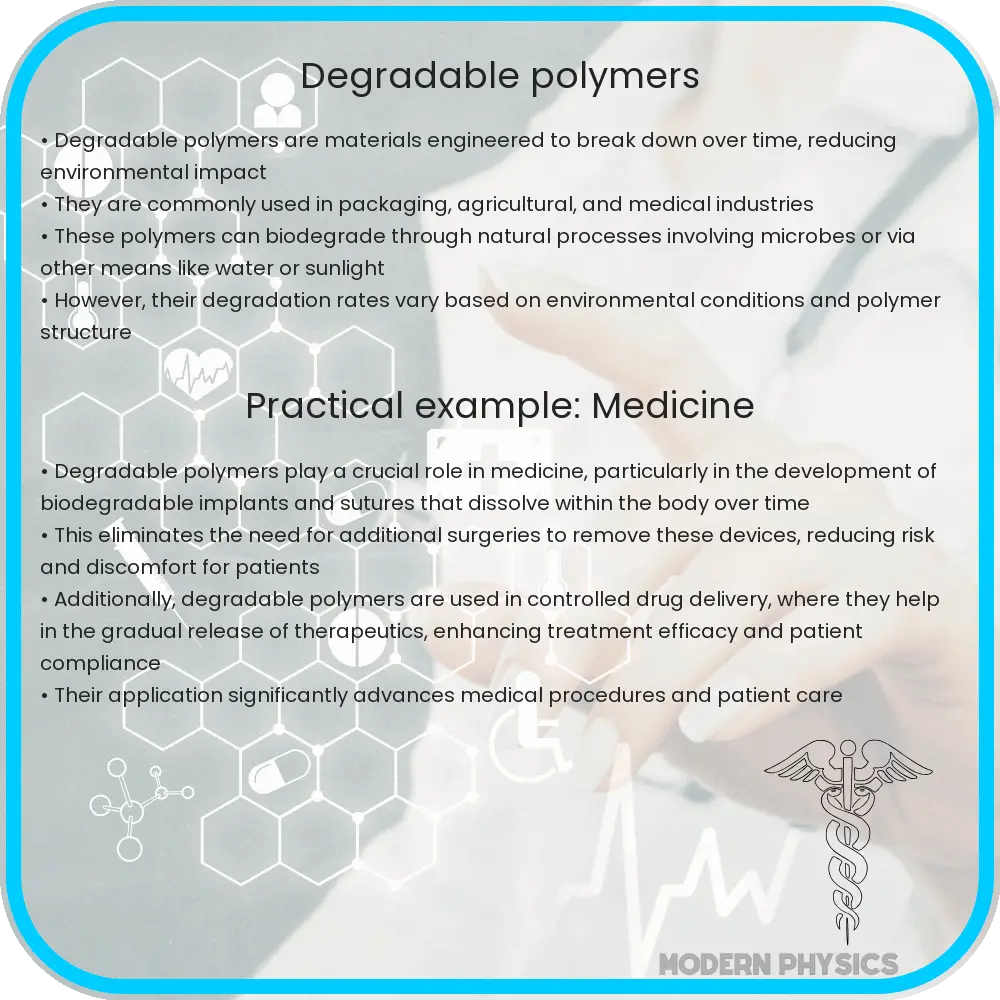
Degradable polymers are eco-friendly plastics designed to break down under specific environmental conditions, helping reduce waste and pollution.
Introduction to Degradable Polymers
As the world becomes increasingly aware of environmental issues, the demand for sustainable materials has escalated. Degradable polymers have emerged as a frontrunner in the quest for eco-friendly products. These materials are designed to break down after their useful life, reducing waste and pollution.
What are Degradable Polymers?
Degradable polymers are a type of plastic designed to degrade under specific environmental conditions. Unlike traditional plastics, which may persist in the environment for hundreds of years, degradable polymers can break down into water, carbon dioxide, and biomass within a much shorter time frame. There are three main types of degradable polymers:
- Biodegradable Polymers: These materials are broken down by the action of living organisms, usually microbes, in an environment like soil or compost.
- Oxo-biodegradable Polymers: These degrade through oxidation, a process that is hastened by exposure to heat or UV light, followed by biodegradation.
- Photodegradable Polymers: These are specifically designed to break down when exposed to sunlight.
Applications of Degradable Polymers
The applications of degradable polymers are diverse and span various industries. Here are some of the key applications:
- Packaging: Packaging materials made from biodegradable polymers such as PLA (polylactic acid) are used for food packaging, where they can degrade into harmless products after disposal.
- Agriculture: Mulch films made of degradable polymers are used to enhance crop yield while reducing the necessity for manual removal, as they degrade naturally.
- Medical: Biodegradable polymers are used in medical applications such as sutures, implants, and drug delivery systems. These materials are designed to degrade inside the human body, eliminating the need for surgical removal.
Benefits of Degradable Polymers
The use of degradable polymers offers several environmental benefits. First and foremost, they help reduce the accumulation of plastic waste in the environment. Since these materials break down into natural substances, they contribute far less to pollution compared to traditional plastics. Additionally, degradable polymers often come from renewable resources, further reducing their environmental impact.
From an economic perspective, degradable polymers can also foster new markets and create job opportunities in the green technology sector. Innovative applications in packaging, agriculture, and healthcare continue to drive market growth and innovation. However, while degradable polymers embody significant potential, they are not without challenges.
Challenges of Using Degradable Polymers
Despite their benefits, there are significant challenges associated with the widespread adoption of degradable polymers. One of the primary issues is cost. The production of degradable polymers often requires more complex processes and more expensive raw materials compared to conventional plastics. This makes them less competitive price-wise and can deter companies and consumers from choosing these eco-friendly options.
Additionally, the degradation rates of these polymers can vary widely depending on environmental conditions such as temperature, humidity, and presence of microbes. This variability makes it difficult to predict exactly how long it will take for these materials to break down, complicating waste management strategies.
There is also a concern regarding the complete breakdown of these materials. In some cases, degradable polymers may fragment into microplastics before they biodegrade completely, potentially contributing to microplastic pollution. Therefore, further research and development are necessary to enhance the biodegradability and ensure that these polymers break down fully in a reasonable timeframe.
Future Prospects
The future of degradable polymers looks promising as research and technological advancements continue to address the existing challenges. Innovations in catalyst and enzyme technology could lower production costs and increase the efficiency of degradation processes. Moreover, government policies and regulations promoting the use of sustainable materials can play a crucial role in boosting the market for degradable polymers.
As awareness of environmental issues grows, consumer demand for sustainable products is expected to rise, potentially leading to greater adoption of degradable polymers across industries. The development of standard testing and certification processes for these materials will further help in assuring consumers of their environmental benefits and safety.
Conclusion
While degradable polymers are not a complete solution to the plastic waste problem, they offer a valuable step in the right direction. By balancing the functionality of plastics with environmental responsibility, degradable polymers represent a pioneering class of materials that can significantly mitigate the impact of waste on our planet. As we face growing pressure to preserve our environmental resources, the role of degradable polymers becomes increasingly critical.
In conclusion, embracing degradable polymers involves a comprehensive approach, including technological innovation, economic considerations, and regulatory support. By continuing to develop and promote these materials, we can contribute to a more sustainable future, benefiting both the environment and the economy. This joint effort between scientists, businesses, policymakers, and consumers will pave the way for broader adoption and optimal use of degradable polymers.