
The agricultural boundary layer is a microclimate zone above farm fields, crucial for crop production and environmental interactions.
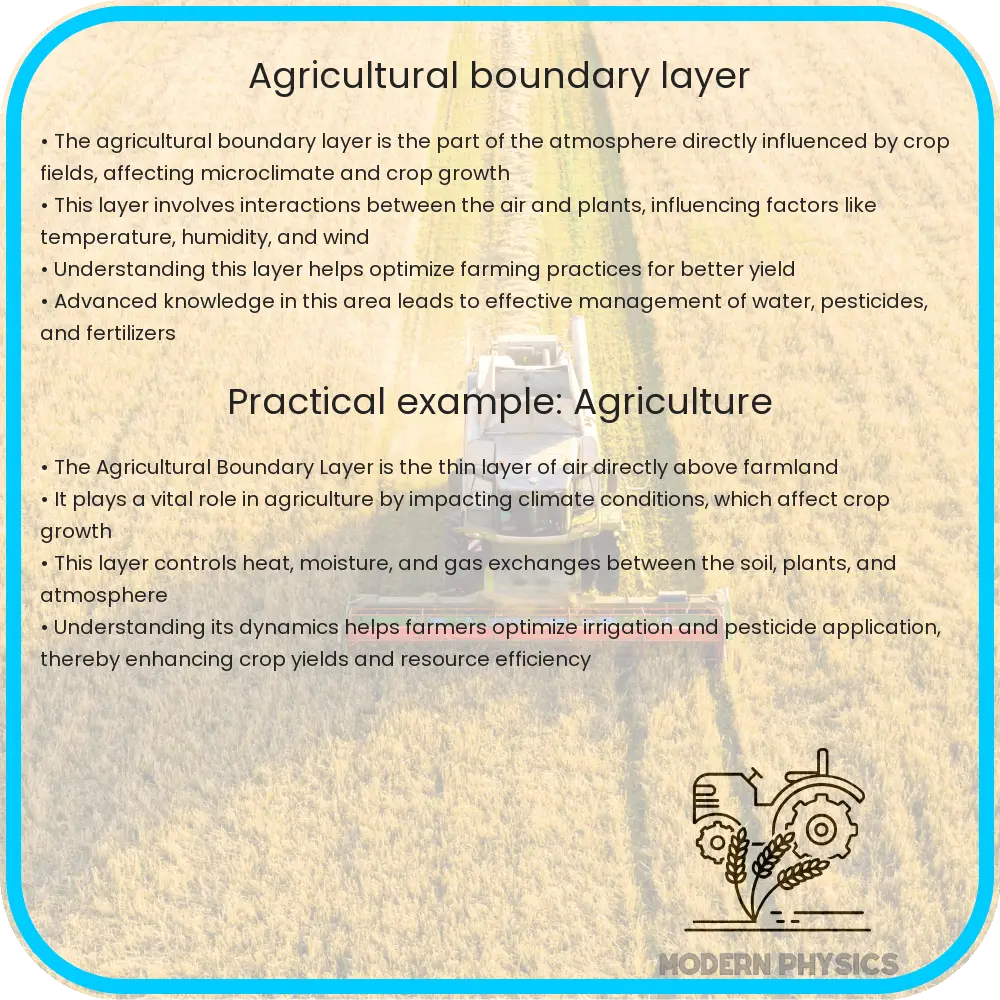
Agricultural Boundary Layer: Key Processes & Impacts in Agri Physics
The agricultural boundary layer (ABL) refers to the microclimate layer directly above the surface of agricultural fields. This layer is influenced by numerous physical processes and has a significant impact on crop production, plant health, and climate interactions. An understanding of ABL is crucial for improving agricultural sustainability and efficiency. Here, we will explore the key processes and impacts related to the ABL in the context of agricultural physics.
Understanding the Agricultural Boundary Layer
The agricultural boundary layer is the part of the atmosphere that interacts directly with the surface of crops and the soil. Typically extending a few meters above the ground, the ABL is shaped by the exchange of momentum, heat, and mass between the air and the land surface. Let’s break down these components:
- Momentum exchange: The friction between air movements (wind) and the plant surfaces influences the overall air flow patterns within the ABL. Rougher surfaces, such as dense crops, enhance friction and reduce wind speeds, affecting temperature and humidity levels.
- Heat exchange: This involves the transfer of heat between the soil, plants, and air. Solar radiation plays a critical role, with surfaces absorbing sunlight and warming the adjacent air layers. Conversely, heat is also lost through processes like evaporation and thermal radiation.
- Mass exchange: This includes the transfer of water vapor, carbon dioxide, and other gases between the ground surfaces and the atmosphere. It is critical for processes such as photosynthesis and evapotranspiration.
Factors Affecting the Agricultural Boundary Layer
Several factors influence the behavior and characteristics of the ABL:
- Surface properties: The type of crops, soil moisture, and ground roughness can alter the physical interactions in the ABL. For example, well-watered fields can lead to higher humidity levels and cooler temperatures.
- Meteorological conditions: Wind speed, air temperature, and solar radiation directly affect the structure of the ABL. These conditions can change significantly throughout the day and across seasons, impacting the layer’s dynamics.
- Agricultural practices: Farming methods such as irrigation, tillage, and crop rotation can influence the ABL by modifying surface roughness and soil conditions.
Impacts of the Agricultural Boundary Layer on Crop Growth
The ABL plays a crucial role in determining the microclimate that directly affects crop growth and productivity. Several impacts include:
- Temperature regulation: By influencing the air temperature around plant leaves, the ABL can affect photosynthesis rates and plant metabolism.
- Humidity control: Moisture levels within the ABL influence plant transpiration rates and water use efficiency. Proper management of the ABL can help optimize water use in agriculture.
- Gas exchange: The concentration of carbon dioxide within the ABL impacts photosynthesis efficiency. Higher concentrations can potentially increase crop yields under optimal conditions.
The dynamics of the agricultural boundary layer are complex, involving both physical processes and biological factors. By studying and manipulating the ABL, farmers and agronomists can improve agricultural practices, enhance crop yields, and reduce environmental impacts. In the following sections, we will delve deeper into the modeling of the ABL and explore practical applications and management strategies that leverage our understanding of this important atmospheric layer.
Modeling the Agricultural Boundary Layer
To effectively manage the ABL, scientists and engineers use various modeling techniques to predict how changes in agricultural practices impact the boundary layer. These models incorporate data related to weather conditions, soil properties, and crop types. By simulating different scenarios, researchers can identify strategies that optimize crop growth while minimizing adverse environmental effects.
- Numerical weather prediction models: These models help forecast how changes in the ABL will affect local weather patterns, which in turn influence crop growth and water requirements.
- Computational fluid dynamics (CFD) models: CFD is used to simulate air flow within the ABL. This helps in understanding how wind patterns are modified by terrain and crop structures.
- Ecophysiological models: These combine knowledge of plant physiology with environmental physics to predict how crops will respond to their microclimate, including temperature and carbon dioxide fluctuations.
Practical Applications and Management Strategies
Understanding and managing the ABL is not just about theoretical models; it translates into practical strategies that can be applied on the ground. These include:
- Agroforestry: Integrating trees and shrubs with crops can modify the ABL by altering surface roughness and enhancing moisture retention.
- Cover cropping: This method can influence the temperature and humidity of the ABL by covering the soil, which helps in reducing moisture loss and protects against erosion.
- Variable rate irrigation: Advanced irrigation systems that adjust the amount of water based on the real-time needs of the ABL can lead to more efficient water use and better crop yields.
Through these practical applications, farmers can leverage their understanding of the ABL to make informed decisions that enhance both yield and sustainability.
Conclusion
The agricultural boundary layer is a pivotal factor in the complex interplay between the atmosphere and terrestrial ecosystems directly influencing agricultural outputs. By dissecting the mechanics of momentum, heat, and mass exchange within this layer, agriculturists can devise strategies that enhance crop protection, optimize resource use, and adapt to changing climatic conditions. Advanced modeling techniques and practical management strategies enable better prediction and efficient manipulation of the ABL, promoting sustainable agricultural practices that are responsive to environmental changes. As we continue to face global challenges like climate change and food security, the role of ABL understanding and management in agriculture becomes more crucial than ever, proposing a proactive approach to future farming methods.
Therefore, embracing the intricate dynamics of the agricultural boundary layer not only aids in maximizing crop productivity but also contributes substantially towards sustainable farming practices, ultimately supporting a resilient agricultural sector.