
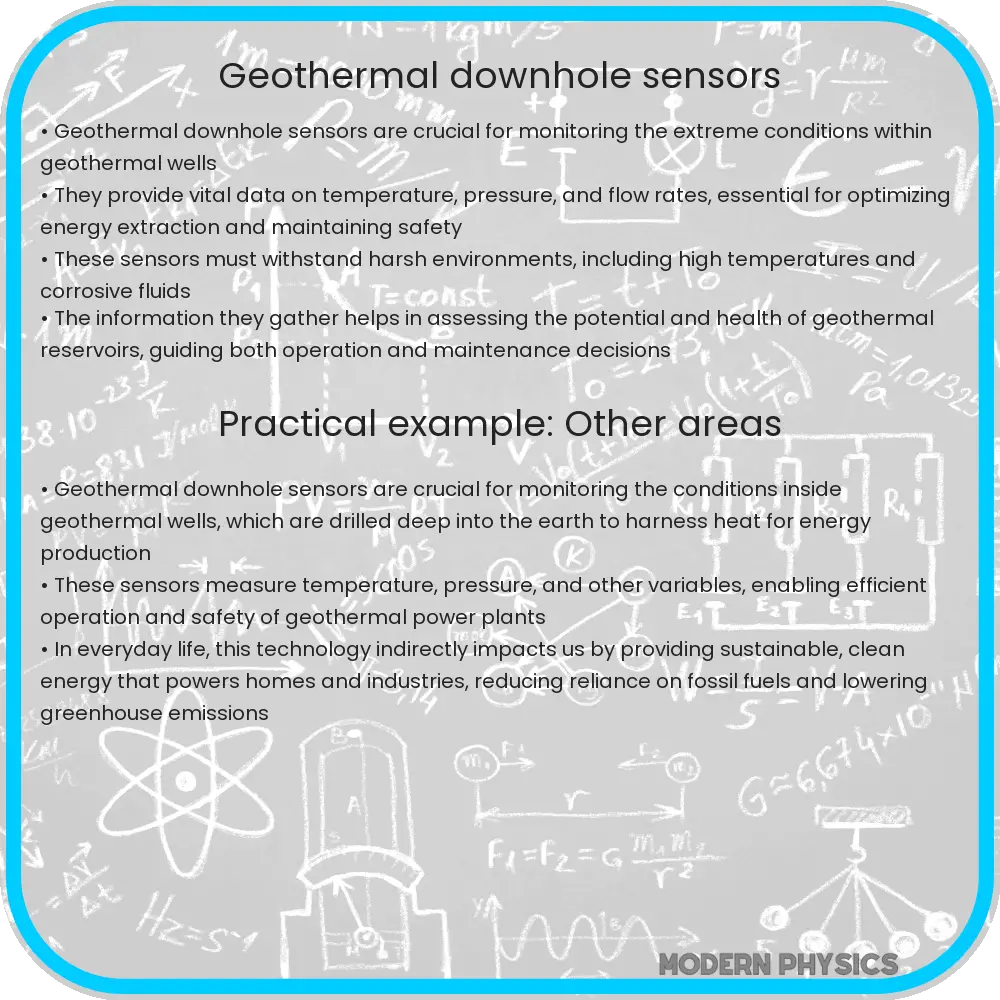
Geothermal downhole sensors: specialized instruments used to monitor environmental conditions like temperature and pressure in geothermal wells, crucial for optimizing energy extraction and maintaining well integrity.
Introduction to Geothermal Downhole Sensors
Geothermal energy represents a substantial part of the global push towards sustainable, renewable sources of power. To harness this energy efficiently, it is crucial to understand and monitor the conditions within geothermal wells. This is where geothermal downhole sensors come into play. These sensors are designed to withstand extreme conditions to provide critical data that ensure the safety, efficiency, and longevity of geothermal energy extraction operations.
What are Geothermal Downhole Sensors?
Geothermal downhole sensors are specialized instruments placed deep within geothermal wells to monitor various environmental parameters. These include temperature, pressure, seismic activity, and fluid properties. The data collected by these sensors not only help in optimizing the energy extraction process but also play a crucial role in the maintenance and management of the wells.
Accuracy of Geothermal Downhole Sensors
The accuracy of downhole sensors in geothermal settings is paramount. High fidelity in the readings can significantly influence the decision-making process regarding the operational settings of the well and the safety measures necessary to prevent hazardous incidents. Advanced sensors now utilize sophisticated technologies such as Quartz and Silicon Carbide (SiC) to ensure that their readings remain precise even under extreme conditions encountered in geothermal wells that commonly exceed temperatures of 300°C (572°F) and pressures multiple times that of atmospheric pressure.
Durability Challenges
The durability of geothermal downhole sensors is tested by the harsh environment of geothermal wells. With conditions including extremely high temperatures and pressures, as well as the corrosiveness of geothermal fluids, the sensors must be crafted from materials that can endure without degradation over time. Materials such as stainless steel, high-grade titanium, and sapphire are often used to construct the sensor components to achieve this longevity.
In addition to high-quality materials, sensor design plays a critical role in durability. The encapsulation techniques, for example, contribute significantly to the resistance against corrosive environments, thus preserving the sensor’s functionality and accuracy.
Depth Capabilities of Geothermal Downhole Sensors
Depth is a critical factor for downhole sensors in geothermal applications. The deeper the sensor can operate reliably, the more valuable the information it can provide, as it gives a closer insight into the earth’s subsurface conditions. Most modern geothermal sensors are capable of functioning at depths of up to 10,000 meters, although the majority of geothermal wells are not deeper than 3,000 meters. To ensure efficient functionality at these depths, sensors must be equipped with features that protect them against collapsing under high pressure and ensure signal integrity is maintained despite the increased distance.
Integration with Renewable Energy Systems
Geothermal downhole sensors not only serve their direct purpose of monitoring and data collection but also play a pivotal role in integrating geothermal systems with other renewable energy sources. By providing real-time data, these sensors allow for the adjustment of operations in response to the availability of other renewable sources like solar and wind energy. This adaptability helps in creating a more stable and consistent energy supply, thereby enhancing the overall efficiency of the renewable energy grid.
Future Developments and Innovations
The future of geothermal downhole sensors looks promising with continuous advancements in sensor technology. Emerging innovations such as the integration of artificial intelligence (AI) and machine learning algorithms are expected to enhance the predictive capabilities of these sensors, allowing for anticipatory adjustments and maintenance. This could lead to even more effective management of geothermal resources, minimizing downtime and boosting energy output.
Further, research into new materials and technology aims to extend the operational limits of these sensors, potentially unlocking new geothermal sites that were previously considered unreachable due to extreme subsurface conditions.
Conclusion
Geothermal downhole sensors are essential tools for tapping into the earth’s natural heat for sustainable energy production. Their ability to withstand and operate in extreme conditions makes them indispensable for the safe and efficient exploitation of geothermal resources. With advancements in technology, the accuracy, durability, and depth capabilities of these sensors are continuously improving, widening the scope of geothermal energy applications. As these sensors evolve, they not only promise to enhance the productivity of existing wells but also to enable expansion into new geothermal frontiers. The ongoing development and refinement of geothermal downhole sensors are crucial for realizing the full potential of geothermal energy as a reliable and powerful component of the global renewable energy mix.