
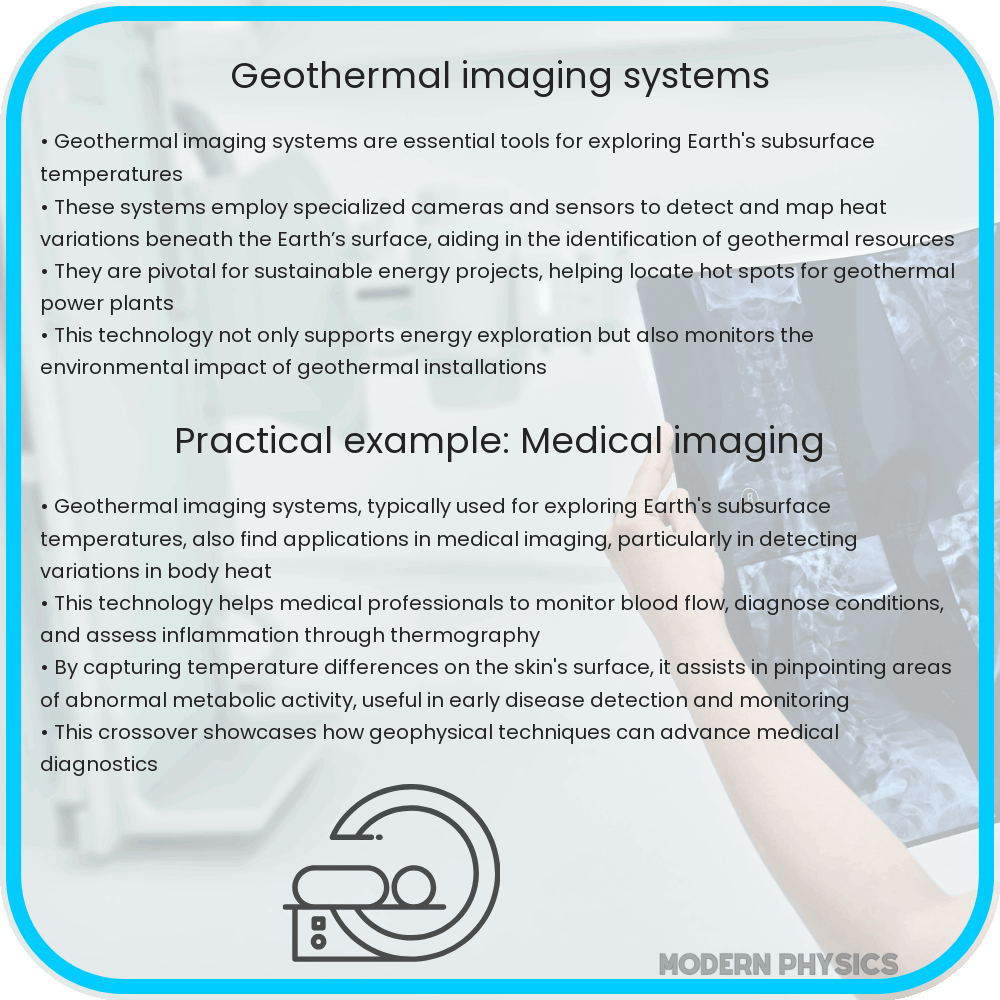
Geothermal imaging systems are key technologies for visualizing and managing underground geothermal resources to optimize and sustain energy extraction.
Understanding Geothermal Imaging Systems
Geothermal imaging systems are crucial in harnessing the power of geothermal energy, a renewable resource generated and stored in the Earth’s crust. These systems enable the accurate visualization of subsurface geothermal resources, helping engineers and scientists to strategically plan extraction methods and manage resources efficiently.
Accuracy of Geothermal Imaging Systems
Geothermal imaging employs a variety of technologies, most notably seismic and electromagnetic methods, to provide detailed maps of underground formations. The accuracy of these systems is paramount and is influenced by several factors:
- Resolution: The finer the detail that the imaging system can resolve, the better engineers can understand the geological formations. High resolution aids in detecting smaller features that could indicate valuable geothermal resources.
- Sensor sensitivity: The sensors used in geothermal imaging techniques greatly affect accuracy. More sensitive sensors can detect subtle changes in the Earth’s magnetic and gravitational fields, leading to improved imaging results.
- Data processing techniques: Advanced algorithms are used to interpret the data collected by imaging systems. The sophistication of these algorithms directly corresponds to the accuracy of the images produced, helping to reduce noise and clarify results.
Depth Capabilities of Geothermal Imaging Systems
The depth to which a geothermal imaging system can penetrate depends significantly on the technology utilized:
- Seismic methods: These involve sending shock waves into the ground and measuring the reflected waves. Seismic imaging is effective down to several kilometers, which is adequate for most geothermal applications.
- Electromagnetic methods: These detect the natural or artificially induced magnetic fields in the sub-surface materials. While these systems generally have shallower penetration than seismic methods, they are crucial for detecting near-surface anomalies, which can indicate geothermal activity.
Each method has its strengths, and often, a combination of both is employed to achieve a comprehensive understanding of the geothermal potential at various depths.
Applications of Geothermal Imaging Systems
Geothermal imaging systems are employed in a variety of applications across the globe:
- Resource exploration: These systems are fundamental in exploring geothermal resources. By identifying hotspots deep within the Earth, developers can place geothermal plants optimally to exploit these resources efficiently.
- Environmental monitoring: Regular imaging allows for the monitoring of changes in geothermal sites, thereby assessing environmental impacts and ensuring sustainable exploitation of the resources.
- Research and development: Academics and researchers use geothermal imaging to study geological formations and processes. This research helps in understanding geothermal processes better and in developing newer, more efficient technologies for resource extraction.
These diverse applications demonstrate the wide-ranging impact of geothermal imaging technology in both commercial and scientific spheres. By allowing precise exploration and sustainable management, these systems play a crucial role in the development of geothermal energy as a major renewable resource.
Challenges in Geothermal Imaging
Despite the benefits, geothermal imaging faces several critical challenges:
- Technical complexity: The application of seismic and electromagnetic techniques involves intricate setup and data analysis, requiring highly skilled personnel.
- Cost factors: Deploying advanced geothermal imaging systems is often expensive, with costs escalating further for deep or difficult terrains.
- Environmental impact: Large-scale geothermal exploration can potentially impact the local ecosystems through the use of intrusive technology and infrastructure development.
Addressing these challenges requires continuous technological advancements and careful planning to balance environmental, economic, and technical demands.
Future Prospects in Geothermal Imaging
Looking ahead, the future of geothermal imaging seems promising thanks to several technological and methodological advancements:
- AI and Machine Learning: Integrating AI algorithms can help in enhancing the processing and interpretation of seismic and electromagnetic data, reducing costs and increasing the accuracy of imaging.
- Improved Sensor Technology: Developing more sensitive and durable sensors can help in achieving better imaging results, even in previously inaccessible areas.
- Sustainability Initiatives: Increased focus on reducing the environmental footprint of geothermal imaging and extraction is pushing the industry towards more sustainable practices.
With these advancements, geothermal imaging is set to become more accurate, cost-effective, and environmentally friendly, making it a key player in global renewable energy strategies.
Conclusion
Geothermal imaging systems serve a critical role in the development of renewable energy resources by providing valuable insights into the Earth’s subsurface. Through the use of seismic and electromagnetic methods, these systems enable efficient exploration and management of geothermal energy. Despite facing significant challenges such as high costs and technical complexities, advances in technology and an increasing focus on sustainability are paving the way for more efficient and environmentally considerate geothermal imaging practices. As we continue to advance our technological capabilities and aim for a greener future, geothermal imaging stands as a beacon of innovation and potential in the renewable energy landscape.