
Explore the physics of plant growth, covering key physical factors like light, temperature, and water, plus techniques and optimization methods for enhancing agricultural productivity.
Introduction to Plant Growth Physics
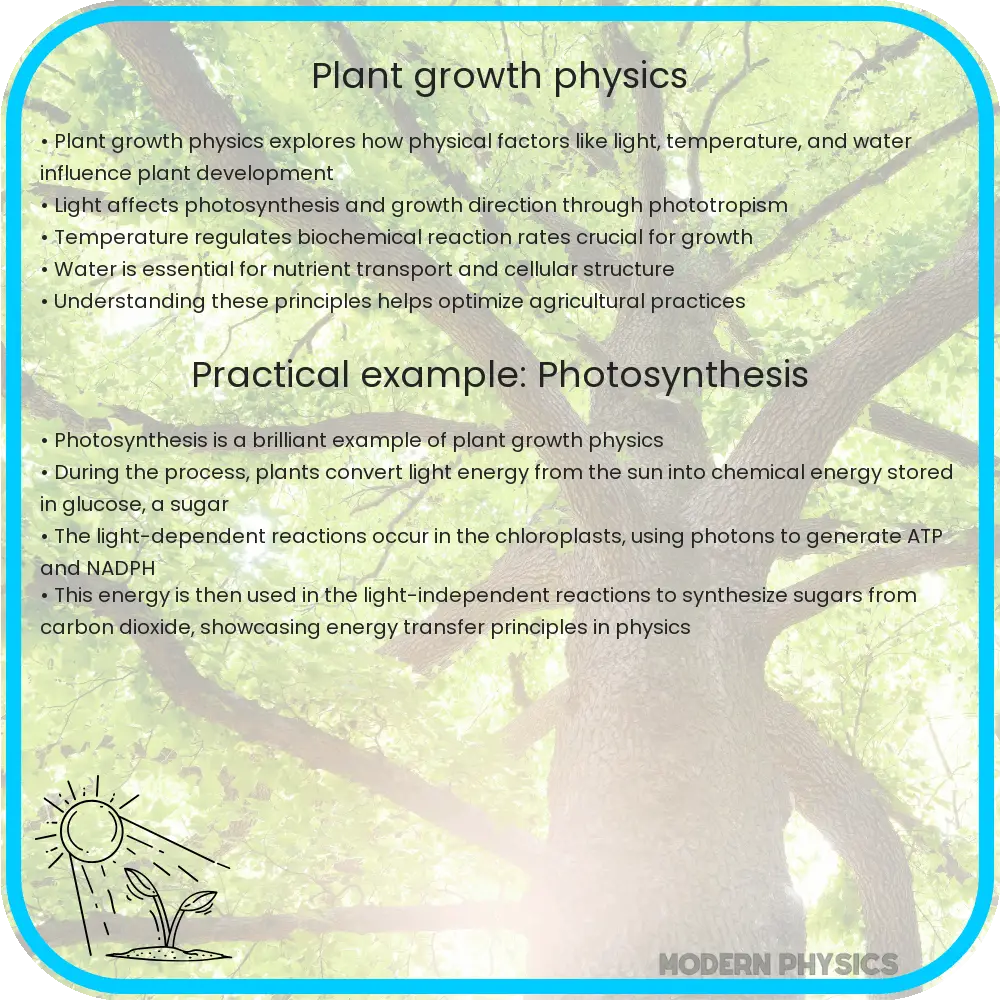
Understanding how plants grow is not only crucial for agriculture and food supply but also fascinating from a physics standpoint. The physical processes involved in plant growth encompass various environmental factors and biological mechanisms, all of which can be optimized to enhance growth and productivity. This article explores the key physical factors influencing plant growth, techniques for augmentation, and methods of optimization.
Key Physical Factors Affecting Plant Growth
Several environmental and physical parameters significantly impact the growth of plants. These include:
- Light: Photosynthesis, the process by which plants convert light energy into chemical energy, is heavily dependent on light intensity, quality, and duration. The angle of light incidence can affect the rate of photosynthesis.
- Temperature: Each plant species has an optimum temperature range for growth. Deviations from this range can slow down metabolic processes or even cause damage to the plant’s cellular structures.
- Water: Water acts as a solvent and medium for transporting nutrients within the plant. The cohesion-tension theory explains how water molecules move upwards against gravity through the xylem due to cohesion (attraction between water molecules) and tension (created by transpiration).
- Gravity: Gravitropism is the orientation of plant growth in response to gravity. Roots grow downwards (positive gravitropism), while shoots grow upwards (negative gravitropism), guided by the redistribution of auxins, a class of growth hormones.
- Soil Composition: The physical composition of soil, including its texture and structure, affects water retention, aeration, and the availability of nutrients, all crucial for plant development.
Techniques to Enhance Plant Growth
To support optimum plant growth, several engineered techniques and methodologies can be implemented:
- Controlled Environment Agriculture (CEA): Techniques such as hydroponics, aquaponics, and aeroponics, where plants are grown in a controlled environment without soil, allow precise control over nutrients, water, and light.
- Light Optimization: Artificial lighting solutions, like LED grow lights, can be tuned to specific wavelengths that are optimal for photosynthesis. This is especially beneficial in regions with low natural sunlight.
- Climate Control: Greenhouses and indoor farming control the ambient temperature, protecting plants from extremes and facilitating year-round cultivation.
- Water Management Techniques: Drip irrigation and moisture sensors help in providing plants with sufficient water without overuse, thus conserving water and ensuring optimal growth.
Optimization of Plant Growth
Optimizing the growth of plants involves integrating various physical parameters and techniques to achieve the best possible outcomes. This can be approached through:
- Mathematical Modeling: Using models to simulate different environmental conditions and their effects on plant growth can help in understanding potential outcomes without real-time testing. This includes predicting how changes in variables like light, temperature, and humidity affect growth rates and yield.
- Sensor Technology: Advanced sensors can monitor soil conditions, plant health, and environmental factors in real-time, allowing for dynamic adjustments to cultivation practices based on data-driven insights.
- Genetic Adjustments: While not purely physical, selecting or genetically modifying plants to better suit specific environments can be an effective strategy for optimization. This can involve modifying plants to improve photosynthetic efficiency or reduce water needs.
The application of physics in plant growth not only enhances our understanding but also contributes significantly to agricultural productivity and sustainability. By exploring the interactions between physical factors and plant biology, researchers and farmers can devise innovative solutions to optimize growth conditions and improve crop yields. The following sections will delve deeper into specific optimization strategies and examples of successful applications in agriculture.
Specific Optimization Strategies in Agriculture
Optimization strategies are implemented widely in modern agriculture to maximize efficiency and productivity while considering environmental factors. These strategies include:
- Precision Farming: Utilizes GPS and IoT (Internet of Things) technologies to deliver precise amounts of water, fertilizers, and pesticides, tailored to the needs of each plant or section of a field.
- Plant Breeding: Traditional and modern breeding techniques are used to develop new plant varieties that are more resilient to pests, diseases, and extreme weather conditions.
- Simulation Software: Advanced agricultural simulation software can help farmers and researchers visualize plant growth under various conditions, enabling better decision-making.
- Renewable Energy Integration: Utilizing renewable energy sources such as solar or wind power to fuel farming operations reduces dependence on non-renewable energy and minimizes the carbon footprint of agricultural practices.
Case Studies: Success Stories in Plant Growth Optimization
To better understand the impact of these techniques, we can examine several success stories:
- The Netherlands’ Greenhouses: Known as a leader in greenhouse technology, the Netherlands employs state-of-the-art climate control and lighting systems that increase yield and reduce resource use.
- Vertical Farms in Singapore: With limited land, Singapore has turned to vertical farming technologies which use hydroponics and advanced lighting to stack crops in layers, significantly increasing productivity per square foot.
- Water Conservation in Israel: Israel’s implementation of drip irrigation technology has revolutionized water use in arid regions, allowing for the cultivation of crops with minimal water waste.
Conclusion
The science of plant growth is a fascinating field where physics and modern technology intersect to create robust and sustainable agricultural systems. By understanding the physical principles behind plant growth such as light, water, soil composition, and gravity, scientists and farmers are able to optimize these conditions to significantly improve plant productivity. With the integration of advanced techniques like Controlled Environment Agriculture, precision farming, and modern irrigation practices, agriculture is moving towards more efficient and sustainable practices. These efforts not only cater to increasing global food demands but also prepare the agricultural sector for challenges brought by climate change and population growth.
As research and technology advance, the potential to further enhance plant growth and agricultural productivity will continue to grow, leading to more innovative solutions that could redefine traditional farming practices. This continuous improvement is essential not only for food security but also for the conservation of our planet’s environmental health.