
Alkaline fuel cells (AFCs) are highly efficient fuel cells using alkaline electrolytes like potassium hydroxide for electricity generation, with applications in space and terrestrial uses.
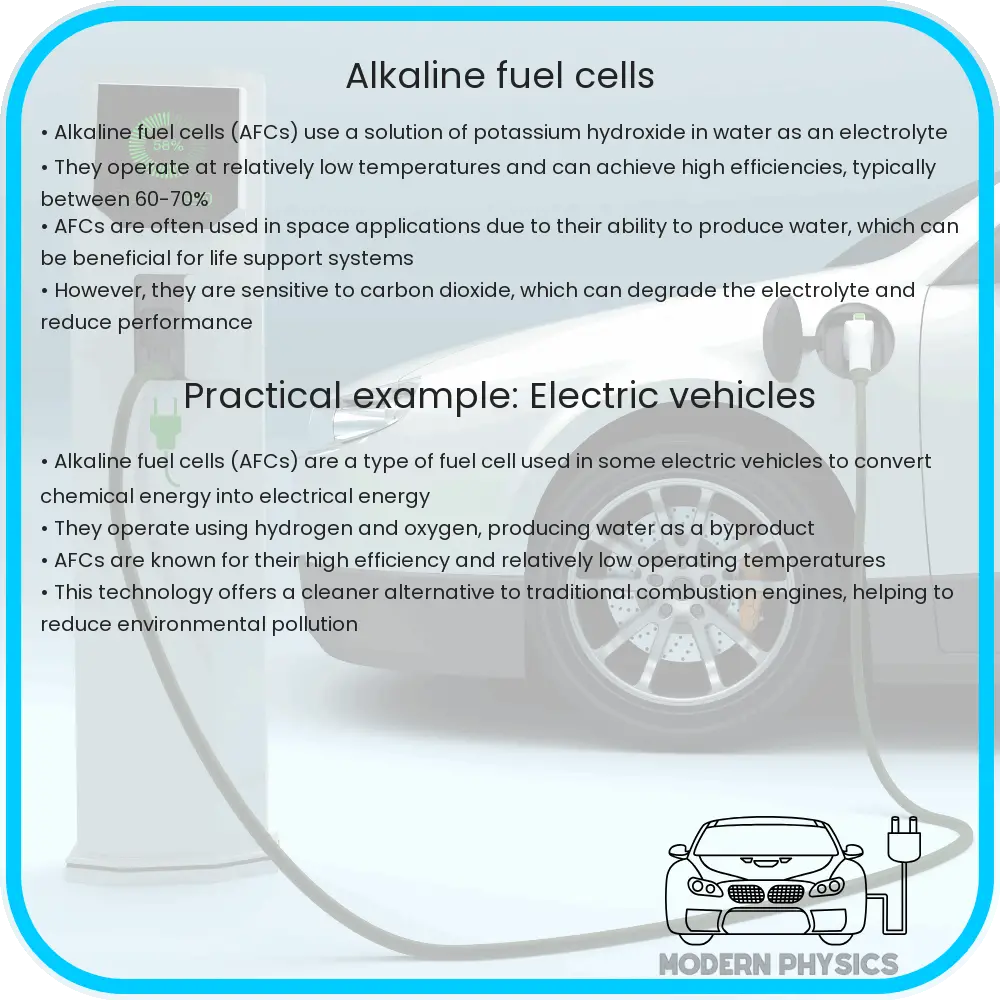
Understanding Alkaline Fuel Cells: Efficiency, Innovation, and Applications
Alkaline fuel cells (AFCs), a class of fuel cells that rely on alkaline electrolytes such as potassium hydroxide, are known for their high efficiency in generating electricity. This powerful technology has been utilized in space missions and is increasingly being adapted for various terrestrial applications.
How Alkaline Fuel Cells Work
AFCs operate by converting hydrogen and oxygen into water, a process that produces electricity, heat, and water vapor. The core elements of an AFC include the anode, cathode, and the electrolyte. At the anode, hydrogen molecules are split into protons and electrons. The generated electrons travel through an external circuit to the cathode, providing electrical power. Meanwhile, the protons migrate through the alkaline electrolyte to the cathode, where they react with oxygen to form water.
Efficiency of Alkaline Fuel Cells
One of the primary advantages of AFCs is their efficiency. AFCs can reach efficiency levels up to 60%, which is significantly higher than some other types of fuel cells. This high level of efficiency is due to the rate at which the chemical reactions occur within the cell, enhanced by the use of alkaline electrolytes. Interestingly, the efficiency can further increase to about 70% when the heat generated is also utilized through a process called cogeneration.
Innovations in Alkaline Fuel Cell Technology
In recent years, considerable advancements have been made in AFC technology. Innovations include improvements in the materials used for electrodes, enhanced electrolyte formulations, and novel approaches to managing the hydration of the electrolyte and the removal of the product water. These innovations have not only improved the overall performance and lifespan of AFCs but have also reduced costs, paving the way for broader commercial and residential use.
Applications of Alkaline Fuel Cells
AFCs are versatile in their applications, extending far beyond their original use in space missions. Today, they are used in:
- Power generation: AFCs provide reliable, efficient power for residential, commercial, and industrial settings.
- Transportation: Applications in buses, trains, and other public transport systems portray AFCs as a viable alternative to traditional internal combustion engines, with the benefit of zero emissions.
- Portable power: Due to their relatively simple scaling, AFCs are also ideal for portable electronic devices, delivering cleaner energy for a wide range of portable applications.
Moreover, AFCs play a significant role in supporting renewable energy sources. They are capable of storing excess energy generated from renewable sources such as wind or solar, and then releasing it during periods of low generation. This ability makes AFCs an invaluable component in the push towards sustainable energy ecosystems.
The growing interest in sustainable and efficient energy solutions has increased the focus on alkaline fuel cells. As we continue to witness innovations in this technology, the applications and impact of AFCs are expected to expand dramatically, potentially reshaping energy strategies on a global scale.
Challenges and Future Prospects
Despite the significant advantages of AFCs, there are challenges that need addressing to fully exploit their potential. One primary concern is the management of carbon dioxide as it reacts with the potassium hydroxide electrolyte, forming potassium carbonate that can degrade the cell’s performance. Researchers are working on developing more robust systems that can minimize or neutralize the effects of carbon dioxide interference.
Furthermore, the durability and stability of AFCs under varying operational conditions need improvement. Continuous efforts in materials science and engineering are expected to yield more resilient components that prolong the lifespan and enhance the reliability of these fuel cells.
Environmental Impact
Alkaline fuel cells offer a green technology alternative, supporting a reduction in carbon emissions. By replacing fossil fuel-dependent technologies, AFCs help mitigate the impact of climate change. Additionally, the only byproduct of AFC operation is water, making it one of the cleanest energy technologies available. As regulatory frameworks continue to favor environmentally friendly solutions, AFCs are likely to gain even more traction.
Educational and Societal Implications
The integration of AFC technology in educational programs can inspire the next generation of engineers and scientists. Schools and universities are beginning to include renewable energy technologies in their curriculums, highlighting the importance of AFCs in future energy solutions. This education can lead to wider societal acceptance and potentially, innovation driven by young minds motivated to tackle energy challenges.
Conclusion
Alkaline fuel cells represent a remarkable blend of efficiency, innovation, and environmental compatibility. With ongoing advances in technology and materials, coupled with an increasing shift towards sustainable energy practices, AFCs are poised to play a crucial role in the energy landscape of the future. Overcoming current challenges and further enhancing the technology will enable broader applications, from powering homes to transforming transportation. As we advance, the role of AFCs is not just to provide energy, but to do so in a way that complements and supports the global commitment to a healthier, sustainable planet. The journey of AFCs from space missions to widespread terrestrial use underscores their versatility and the vast potential they hold for a cleaner, greener future.