
Explore the art of lens design in photography, covering clarity, precision, tech advancements, and future trends for stunning image capture.
The Art of Photographic Lens Design: Balancing Clarity, Precision, and Aesthetics
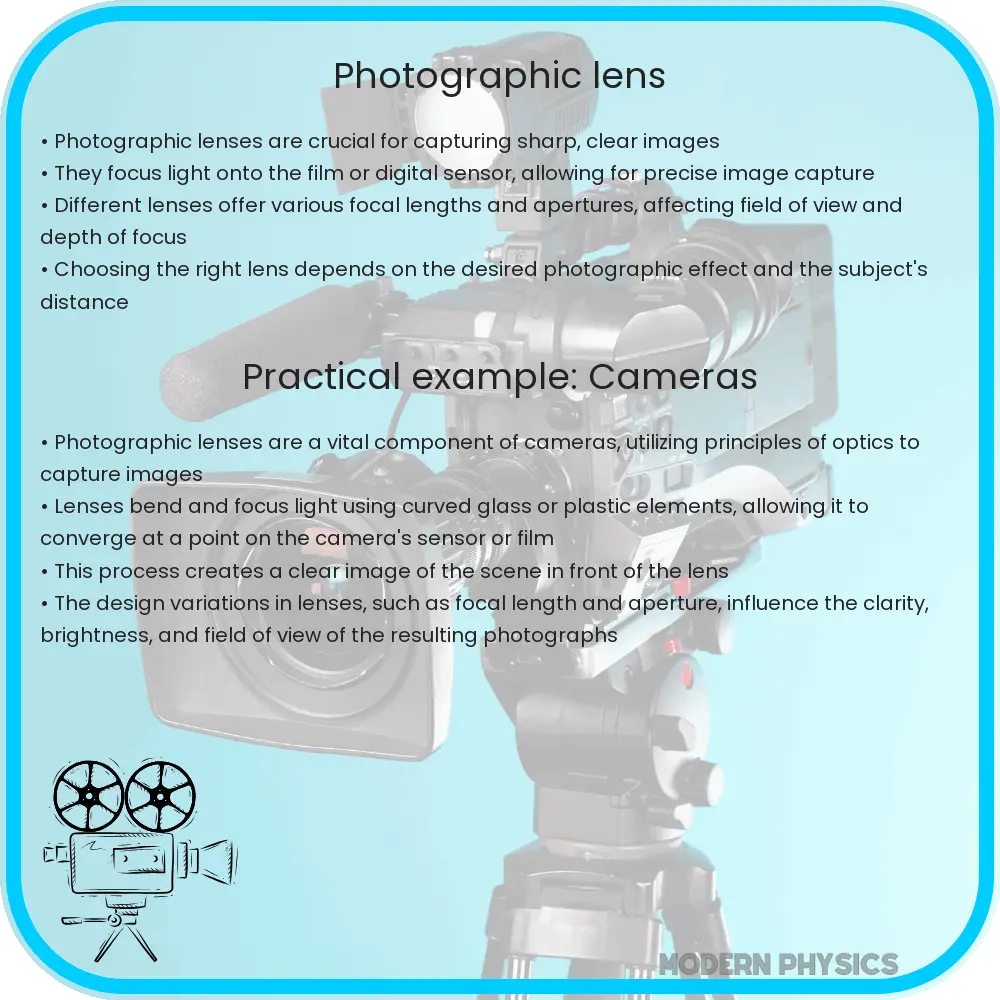
The world of photography is inextricably linked to the evolution and sophistication of camera lenses. These intricate components are pivotal in capturing images that are not only visually stunning but also rich in detail and accuracy. The design of photographic lenses is a delicate balance of clarity, precision, and aesthetic considerations, making it an art as much as a science.
Understanding Lens Clarity
Clarity in photographic lenses refers to the ability of the lens to reproduce a scene with sharp definition and contrast. High clarity ensures that fine details are captured, and the image appears crisp to the viewer. This attribute is largely influenced by the refractive index of the lens material. Lenses are typically made from optical glass or plastic, with each material having its unique refractive properties. A higher refractive index, often achieved through the addition of elements like Barium (Ba) or Lanthanum (La), enhances the lens’s ability to bend light more effectively, thereby improving clarity.
Importance of Precision in Lens Design
Precision in lens manufacturing is critical. Even the slightest imperfection can lead to image distortion, chromatic aberration, or blurriness. Advanced manufacturing techniques, such as computer-controlled grinding and polishing, are employed to achieve surfaces that are accurate to fractions of a wavelength of light. Additionally, the precise alignment of lens elements within the barrel is crucial for optimal performance. The use of aspherical lens elements—a deviation from the traditional spherical shape—helps in correcting spherical aberrations and allows for more compact lens designs.
Aesthetic Considerations in Lens Crafting
While technical excellence is paramount, aesthetic considerations also play a significant role in lens design. The visual and tactile appeal of a lens, its ergonomics, and the overall build quality contribute to the photographer’s experience. Designers often have to make trade-offs between size, weight, and optical performance to cater to different photographic styles and user preferences.
In conclusion, the design of photographic lenses is a complex interplay of scientific principles and aesthetic considerations. It demands not only technical expertise but also an understanding of the photographer’s needs and the evolving trends in photography.
Technological Advancements in Lens Design
The relentless pursuit of excellence in lens design has been bolstered by technological advancements. Coating technologies, for instance, have revolutionized lens performance. Anti-reflective coatings, made from materials like magnesium fluoride (MgF2), greatly reduce lens flare and ghosting, enhancing image contrast and color fidelity. Moreover, recent developments in nano-coatings are pushing these benefits further, offering improved light transmission and resistance to water and oil.
Integration of Electronics in Modern Lenses
Modern lenses are not just about optics; they also incorporate sophisticated electronics. Features like image stabilization, powered by gyroscopic sensors, compensate for camera shake, enabling clearer pictures at slower shutter speeds. Autofocus systems, driven by ultrasonic or linear motors, have become faster and more accurate, crucial for capturing sharp images in fast-paced environments.
Environmental and Durability Concerns
Today’s lens designs also factor in environmental resilience and durability. Weather-sealing, using rubber gaskets and seals, protects against dust and moisture, essential for photographers working in challenging conditions. The use of robust materials, such as aerospace-grade aluminum or carbon fiber, ensures durability without significantly increasing weight.
Future Trends and Innovations
Looking ahead, the future of lens design is poised for groundbreaking innovations. Adaptive optics, a concept borrowed from astronomy, could find its way into photographic lenses, allowing real-time correction of atmospheric distortion. Additionally, computational photography is likely to play a more significant role, with lenses designed to work seamlessly with software algorithms for enhanced image processing and correction.
Conclusion
The art and science of photographic lens design are evolving at an unprecedented pace, driven by technological advances and a deep understanding of photographers’ needs. From the meticulous crafting of lens elements for unmatched clarity and precision to the integration of cutting-edge electronics and coatings, every aspect of lens design contributes to the magic of capturing a moment in its true essence. As photographers continue to push the boundaries of creativity, lens manufacturers respond with innovations that redefine the possibilities of photography. The future of lens design, bright and full of potential, promises to continue this legacy of excellence, blending technology and artistry to capture the world in ever more stunning ways.