
Photochromic materials are substances that change color in response to light intensity and wavelength, used in sunglasses, windows, and smart textiles.
Understanding Photochromic Materials: The Basics
Photochromic materials are fascinating substances that change color in response to light. These materials have the unique ability to adapt their properties based on the intensity and wavelength of light they are exposed to. This property makes them particularly useful for applications such as sunglasses, windshields, and increasingly, in smart textiles and displays.
How Photochromic Materials Work
At the heart of photochromic technology lies a chemical reaction. Photochromic materials contain molecules that undergo a reversible transformation when they absorb light. Typically, these materials are composed of compounds like silver halides or organic molecules such as naphthopyrans and spirooxazines. When exposed to ultraviolet (UV) light, these compounds change structure, a process that alters their absorption properties and consequently changes the color of the material.
The transformation is reversible; once the light source is removed, the molecules gradually return to their original state, causing the material to revert to its original color. The entire cycle from color change to reversal can happen in just a few seconds to minutes, depending on the specific material.
Applications of Photochromic Materials
Photochromic materials have a range of applications that leverage their ability to change color dynamically:
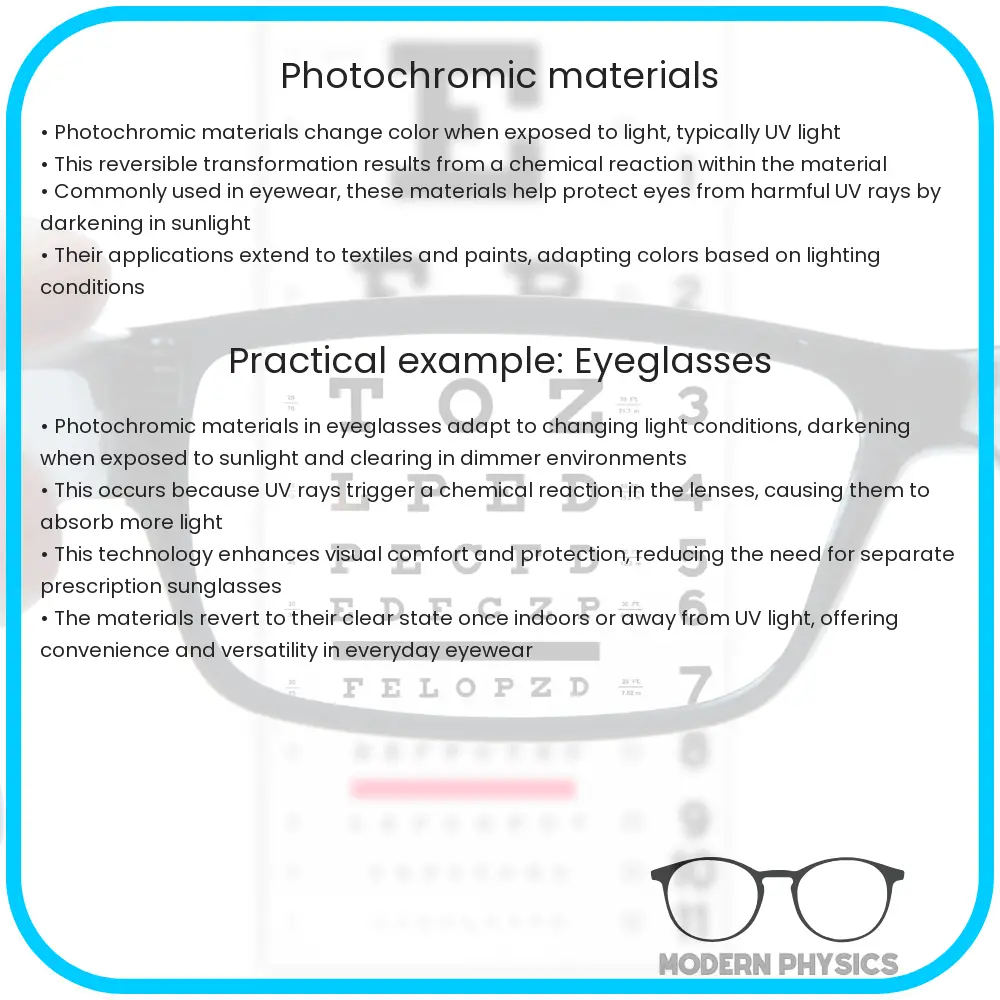
- Sunglasses and Eyewear: Photochromic lenses are popular in eyewear, adapting to changes in sunlight and providing protection against UV rays. The lenses darken on sunny days and clear up in lower light conditions, enhancing visual comfort and protection.
- Windows and Skylights: Smart windows equipped with photochromic coatings can regulate the amount of sunlight entering a building, reducing the need for artificial cooling and heating. This can lead to significant energy savings and improve indoor comfort.
- Textiles: Smart textiles incorporating photochromic materials can change color based on sunlight exposure, adding aesthetic value or functional qualities such as UV protection.
The versatility of photochromic materials extends beyond these common uses, touching areas such as data storage, security printing, and even in medical diagnostics, where they are employed in various sensor applications.
Kinetics of Photochromic Reactions
The speed and effectiveness of the color change in photochromic materials depend heavily on the kinetics of the chemical reactions involved. These kinetics are influenced by factors such as the intensity of light, the concentration of photochromic molecules in the material, and environmental conditions like temperature.
Typically, the reaction can be represented by a simple model:
\[ \text{Inactive form} \xrightarrow{\text{UV light}} \text{Active form} \xrightarrow{\text{Visible light/No light}} \text{Inactive form} \]
This model highlights the two-way reversible nature of the photochromic process. Adjusting the chemical structure of the photochromic molecules can enhance their sensitivity and durability, which are crucial for practical applications.
Challenges and Innovations in Photochromic Technology
Despite their potential, photochromic materials face challenges that limit their broader application. One major issue is the fatigue resistance or the ability of the material to undergo multiple cycles of color changes without degradation. Continuous exposure to UV light can degrade the photoactive compounds, reducing their efficiency and lifespan.
Another challenge lies in the speed of the reaction. While some commercial applications such as sunglasses can tolerate gradual changes, other applications like displays require faster response times. Recent innovations focus on developing materials that balance speed, efficiency, and stability to broaden the practical applications of photochromic technologies.
Future Outlook and Research Directions
As research progresses, the potential of photochromic materials continues to expand. Future developments are aimed at creating more robust materials that can handle more extensive cycles of color changes with minimal degradation. Researchers are also exploring the integration of photochromic materials with other technologies, such as nanotechnology and flexible electronics, to enable new applications in wearable tech and interactive displays.
Advancements in computational chemistry and material sciences could lead to better predictions of material behaviors and more efficient synthesis processes. This could open the door to custom-designed photochromic materials tailored for specific applications, enhancing both performance and consumer appeal.
Environmental Impact and Sustainability
In addition to their technological applications, there is growing interest in the environmental impact of photochromic materials. As the demand for these materials increases, so does the need to consider their life cycle — from production to disposal. Sustainable development in the field of photochromic technology would involve the use of eco-friendly materials and processes that minimize harmful byproducts and promote recycling and reusability.
Such considerations are crucial for ensuring that the advancement of photochromic technologies aligns with global sustainability goals, making them a responsible choice for future technological developments.
Conclusion
Photochromic materials represent a fascinating intersection of chemistry, physics, and engineering. With their ability to react to light changes, they offer innovative solutions across various sectors including consumer products, environmental control, and health monitoring. Despite facing some challenges like cycling fatigue and reaction speed, ongoing research and technological innovations continue to improve their performance and expand their practical uses.
By addressing environmental impacts and focusing on sustainable practices, the future of photochromic technology not only looks bright but also responsible. With continued research and development, these materials are set to revolutionize the way we interact with our environment, enhancing everyday life with smarter, more adaptive products.