
Vanadium dioxide thermochromics enhance energy efficiency by enabling smart windows to auto-adjust tint based on temperature changes.
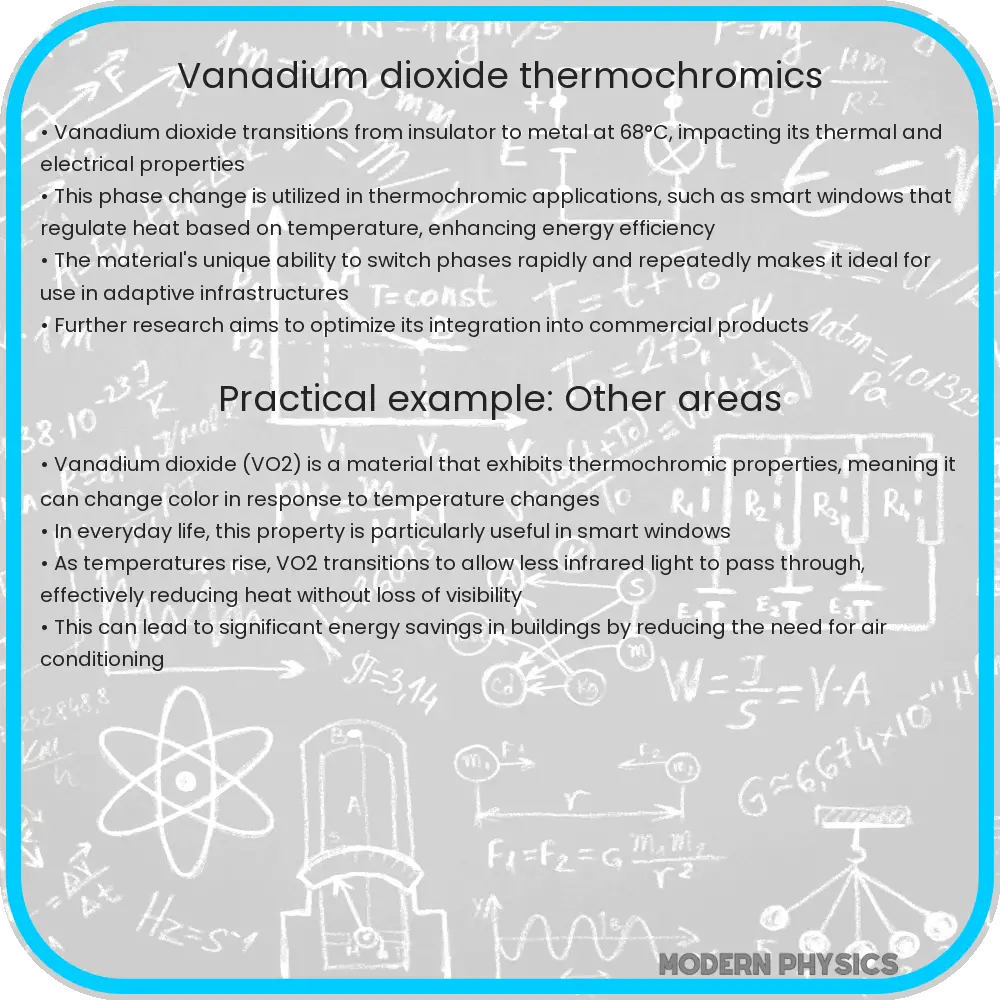
Exploring Vanadium Dioxide Thermochromics: A Leap Towards Energy-Efficient Smart Windows
In the quest for more energy-efficient buildings, vanadium dioxide (VO2) has emerged as a key material in the development of smart windows. These windows have the potential to dramatically cut energy costs and consumption, owing to their unique ability to react to temperature changes. This article explores how vanadium dioxide thermochromics are revolutionizing the concept of smart windows and paving the way for innovative, energy-saving solutions in construction.
What is Vanadium Dioxide?
Vanadium dioxide is a compound with unique properties that make it highly interesting for applications in materials science and engineering. At around 68°C (154°F), VO2 undergoes a remarkable phase transition, shifting from an insulator to a metal. More interestingly, in this phase, it can allow infrared (IR) light to pass through at lower temperatures and reflect it at higher temperatures. This quality is particularly advantageous for smart window applications, where controlling light and heat transmission is essential.
How Does Thermochromic Smart Window Work?
Smart windows equipped with thermochromic technology leverage the phase transition properties of VO2. These windows can automatically adjust their tint based on the ambient temperature, thus regulating the amount of heat and light that enters a building. The fundamental workings are as follows:
- Low temperatures: At cooler temperatures, VO2 remains in its insulating phase, allowing IR light to enter, which helps in warming the interiors naturally.
- High temperatures: As the temperature rises, VO2 transforms into its metallic phase, reflecting the IR radiation and hence reducing the heat entering the building, keeping interiors cooler.
The automatic switching capacity of thermochromic smart windows not only enhances indoor comfort but also significantly reduces reliance on heating, ventilation, and air conditioning (HVAC) systems, leading to substantial energy savings.
The Impact on Energy Efficiency
The installation of thermochromic smart windows can lead to a remarkable reduction in energy consumption. By optimizing the amount of heat that enters or is blocked from a space, buildings can minimize the use of artificial heating and cooling. This not only reduces energy costs but also lowers the carbon footprint of the building, contributing to a more sustainable environment. Studies have shown that such smart windows can save up to 20% on heating and cooling costs, making them a promising solution for both residential and commercial properties.
The adaptive nature of VO2-based smart windows could redefine architectural designs, offering a synergy between aesthetic appeal and energy efficiency. Architects and builders now have the potential to design structures that integrate environmental responsiveness directly into the building’s external interfaces.
Challenges and Innovations
Despite the advantages, the widespread adoption of VO2-based smart windows faces several challenges. One of the main issues is the cost and complexity of manufacturing VO2 with the desired quality and in sufficient quantities. Furthermore, the transition temperature of 68°C (154°F) is higher than most ambient temperatures, which limits the practical usability of pure VO2 thermochromic windows in cooler climates.
To overcome these challenges, researchers are focusing on doping VO2 with other materials to lower the phase transition temperature. Innovations in nanotechnology and materials science are also paving the way for more efficient and cost-effective production methods, which could soon make VO2-based smart windows a feasible option for mass use.
Future Outlook and Market Potential
As technology progresses, the potential market for VO2-based smart windows is expected to expand. With ongoing research aimed at improving efficiency and reducing production costs, these windows are becoming an increasingly viable option for energy management in modern architecture. The push towards more environmentally friendly building practices also supports the growth of the smart windows market, driving demand for innovative solutions like those offered by vanadium dioxide thermochromics.
Additionally, the incorporation of smart windows into building regulations and green certification standards can further boost their market adoption. As more builders and developers aim for sustainability certifications, integrating advanced materials such as VO2 into their projects could become a norm. This shift would not only benefit the environment but also create new opportunities in the construction and materials science sectors.
Conclusion
In conclusion, vanadium dioxide thermochromics represent a significant step forward in the pursuit of energy-efficient building solutions. With their unique temperature-responsive properties, VO2-based smart windows offer a practical way to reduce energy consumption and enhance indoor comfort without sacrificing architectural aesthetics. While challenges such as high production costs and the need for a lower transition temperature remain, ongoing innovations and research are making these smart windows more accessible and effective.
Ultimately, as we continue to face global challenges related to energy consumption and climate change, materials like VO2 stand at the forefront of sustainable construction technology. By embracing such innovations, the future of architecture and building design looks not only more efficient but also more adaptable to our planet’s evolving needs.