
Explore the advancements in oxide electronics, focusing on their durability, efficiency, and innovative applications in modern technology.
Oxide Electronics: Pioneering the Future
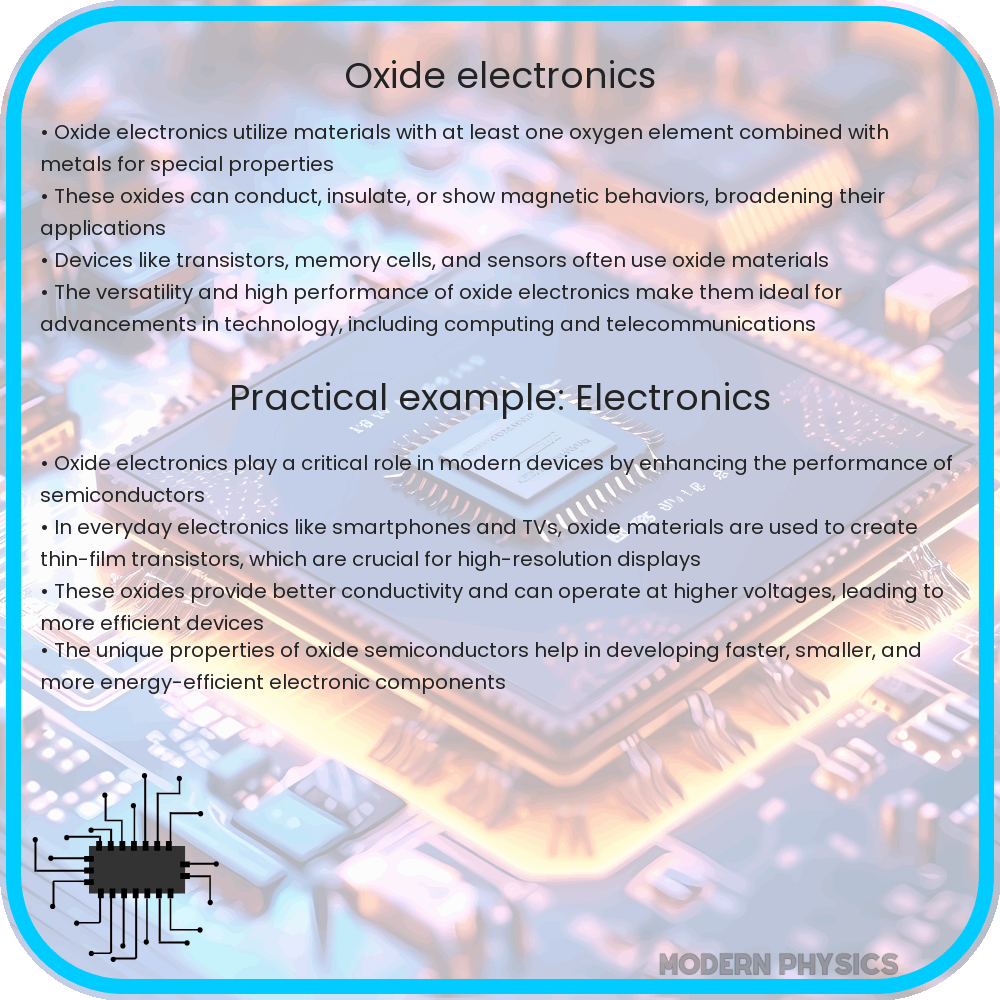
Oxide electronics represent a burgeoning field that stands at the intersection of innovation, efficiency, and durability. Through the integration of oxide materials into electronic components, this technology is paving the way for advancements in a myriad of applications, from transparent electronics to high-efficiency power devices. The core of oxide electronics lies in the unique properties of metal oxides, which include transparency, high electron mobility, and robustness, making them ideal for next-generation electronic devices.
Understanding the Foundation
At the heart of oxide electronics are materials such as indium tin oxide (ITO), zinc oxide (ZnO), and gallium oxide (Ga2O3). These materials are known for their exceptional electrical, optical, and material properties. For instance, ITO is widely used in touch screens and solar cells due to its excellent conductivity and transparency. Similarly, ZnO is utilized in varistors and gas sensors because of its semiconducting properties and environmental stability. Gallium oxide, with its wide bandgap, holds promise for high-voltage power electronics, potentially revolutionizing energy conversion and efficiency.
Enhancing Durability and Efficiency
The integration of oxide semiconductors in electronics has led to devices that not only exhibit enhanced performance but also possess increased durability. These materials can withstand extreme conditions such as high temperatures and radiation, which is critical for space applications and harsh industrial environments. Moreover, the efficiency of oxide-based devices is superior to their silicon counterparts, particularly in power electronics, where energy conversion with minimal loss is paramount.
Fostering Innovation
Oxide electronics is a field ripe with innovation. The development of transparent electronic devices, such as displays and wearable technology, is just one example of how these materials are being used to create groundbreaking products. Furthermore, the research into novel oxide materials and their combinations is ongoing, promising to unlock even greater efficiencies and functionalities. This relentless pursuit of innovation is not only enhancing the capabilities of electronic devices but also contributing to the sustainability and energy efficiency of future technologies.
Oxide Electronics: Pioneering the Future of Technology
Oxide electronics represent a transformative leap in the materials science domain, offering unprecedented improvements in durability, efficiency, and innovation. This class of materials, primarily based on metal oxides, is revolutionizing the way we think about and interact with electronic devices.
Durability and Reliability
One of the standout features of oxide electronics is their exceptional durability. Metal oxides such as indium tin oxide (ITO) and zinc oxide (ZnO) are known for their robustness and resistance to wear and tear. This makes them ideal for use in harsh environments, where traditional semiconductor materials might fail. For instance, the application of 2O3 (alumina) in protective coatings showcases the material’s ability to withstand high temperatures and corrosive environments, ensuring the longevity of electronic components.
Enhanced Efficiency
Efficiency is another hallmark of oxide electronics. These materials often exhibit superior electrical, optical, and thermal properties. For example, ITO is widely used in touchscreens and solar cells due to its excellent transparency and electrical conductivity. Similarly, materials like copper oxide (Cu2O) are being explored for their potential in photovoltaic cells, promising to harness solar energy more effectively than ever before.
Innovation and Applications
Oxide electronics are at the forefront of technological innovation, finding applications in a broad range of fields. From flexible electronics and transparent conductors to advanced sensors and energy-efficient lighting, the possibilities are vast. The development of thin-film transistors (TFTs) based on amorphous oxide semiconductors is a notable example, offering high performance for next-generation displays and smart devices.
Conclusion
The realm of oxide electronics is a burgeoning field that holds the key to future advancements in technology. By combining durability, efficiency, and a capacity for groundbreaking applications, oxide materials are setting new benchmarks for electronic devices. As research and development continue to unlock their potential, we can expect to see oxide electronics play a pivotal role in shaping the technological landscape of tomorrow. The integration of these materials into everyday technology not only promises enhanced performance but also opens the door to sustainable and energy-efficient solutions, marking a significant step forward in the evolution of electronics.