
Explore the benefits of Optical Mark Recognition (OMR) technology, covering its accuracy, speed, integration challenges, and future trends in data processing.
Understanding Optical Mark Recognition (OMR)
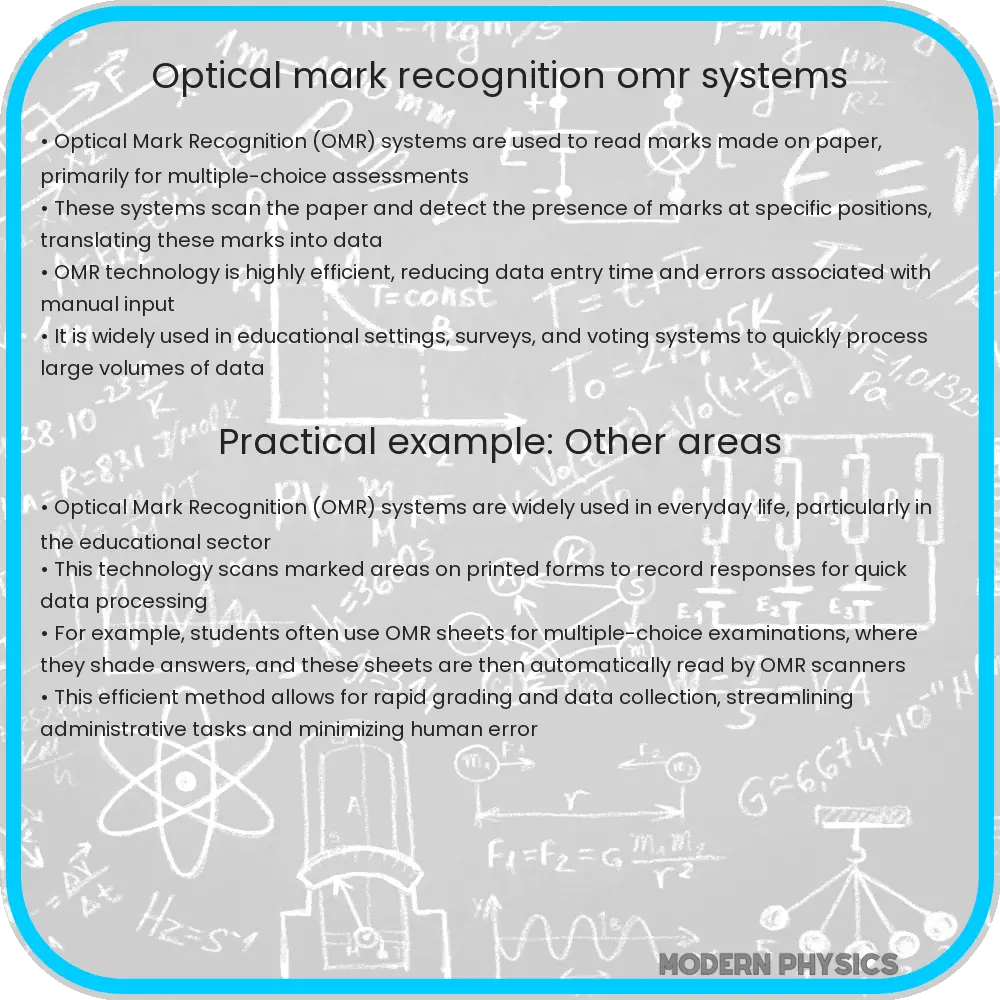
Optical Mark Recognition (OMR) is a digital processing technology used to detect marks made on physical documents. It is widely used in educational institutions for grading exams, surveys, and in various industries for data entry and processing. OMR technology scans a printed form and reads predefined positions where marks are expected, allowing for the rapid digitalization of data from paper forms.
Accuracy of OMR
The accuracy of OMR systems is one of their most significant advantages. These systems can achieve near-perfect accuracy rates, often surpassing 99%, provided the forms are properly designed and filled out correctly. The accuracy is influenced by the quality of the scanner, the design of the OMR form, and the clarity of the marks. To maintain high accuracy, it is crucial to follow best practices in form design and ensure that respondents understand how to mark their responses correctly.
Speed of OMR
OMR technology significantly reduces the time required for data collection and processing. Traditional data entry methods are labor-intensive and prone to human error, but OMR systems can process thousands of forms per hour. This rapid processing capability makes OMR an ideal solution for handling large volumes of data efficiently, especially during peak times such as exam seasons or survey collection periods.
Integration with Other Systems
Integrating OMR systems with other software and databases enhances their utility and flexibility. This integration allows for seamless data transfer to other applications, enabling advanced data analysis, reporting, and management. Many OMR systems offer APIs or support standard data formats such as CSV, XML, and JSON, facilitating easy integration with learning management systems (LMS), customer relationship management (CRM) systems, and other business intelligence tools.
Such integration capabilities ensure that OMR technology can adapt to various workflows and requirements, making it a versatile tool for data collection and analysis across different sectors.
Challenges and Solutions in OMR Implementation
While OMR technology offers numerous benefits, its implementation comes with challenges. One common issue is the need for precise form design and user instructions to ensure high accuracy levels. Poorly designed forms can lead to misinterpretation of marks, while unclear instructions may result in incorrectly filled forms. To mitigate these issues, it’s essential to follow best practices in form design, such as clear marking areas and providing comprehensive instructions for respondents.
Another challenge is the initial cost of setting up OMR technology, which may include the expense of scanners and software. However, the long-term benefits such as reduced labor costs and increased processing speed often justify the initial investment. Additionally, ongoing advancements in OMR technology are making it more accessible and cost-effective for smaller organizations.
Future Trends in OMR Technology
The future of OMR technology looks promising, with continuous improvements and innovations enhancing its capabilities. Advances in artificial intelligence (AI) and machine learning (ML) are expected to further increase the accuracy and efficiency of OMR systems. These technologies can help in better recognition of ambiguous marks and in processing forms that are slightly damaged or not perfectly aligned. Furthermore, cloud-based OMR solutions are becoming more prevalent, offering scalable, flexible, and accessible options for users worldwide.
Integration with mobile devices is another trend gaining traction. Mobile OMR applications allow for on-the-go data collection and processing, broadening the scope of OMR applications to include field surveys, attendance tracking, and more. This mobile integration signifies a shift towards more dynamic and versatile data collection methods.
Conclusion
Optical Mark Recognition (OMR) technology stands as a pivotal tool in the realm of data collection and analysis, offering unmatched accuracy, speed, and integration capabilities. Despite the challenges in implementation, the advantages it provides make it an indispensable asset for educational institutions, businesses, and various industries. With ongoing advancements and the integration of cutting-edge technologies, OMR is set to become even more versatile and efficient, further solidifying its role in modern data processing. As organizations continue to seek efficient, reliable, and scalable solutions for data management, OMR technology will undoubtedly remain at the forefront of this endeavor, driving efficiency and innovation in data collection processes.