
Delve into the transformative impact of nanostructured energy devices on energy storage and conversion, enhancing efficiency and sustainability.
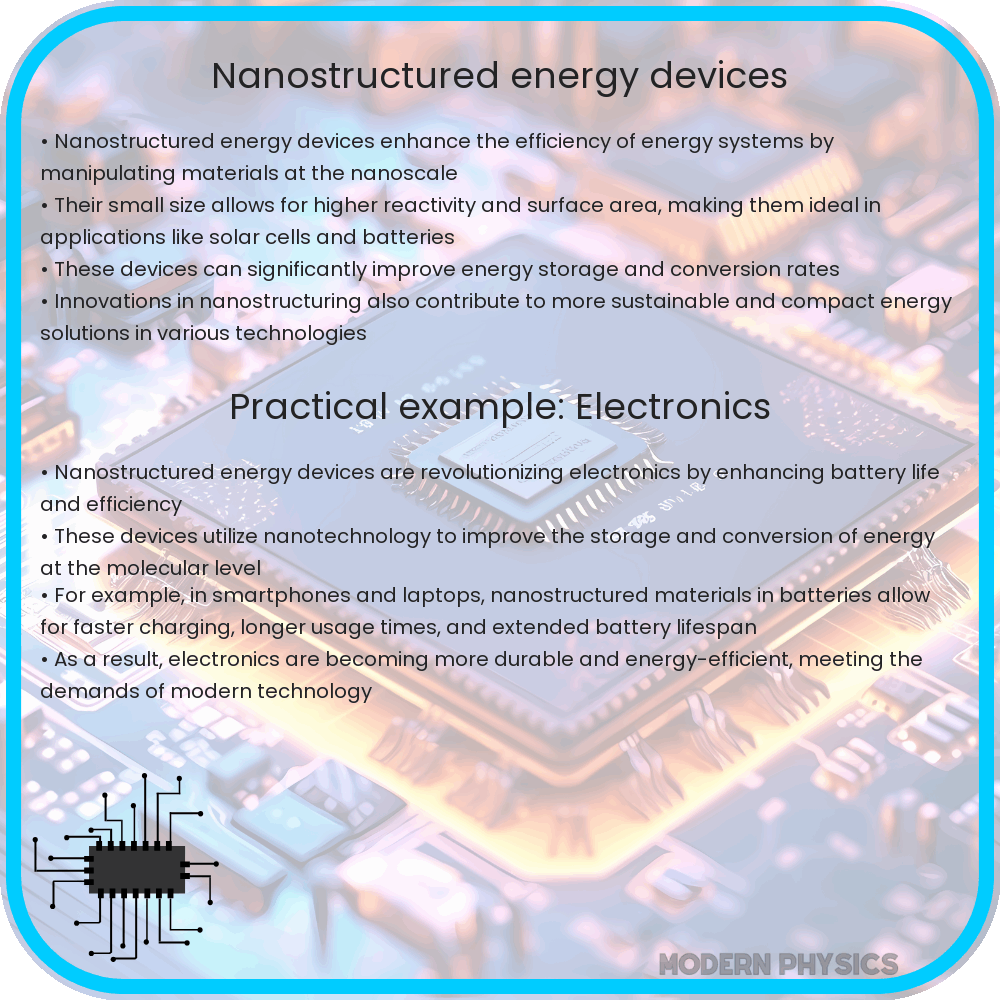
The Revolutionary World of Nanostructured Energy Devices
In our ongoing quest for more efficient, durable, and advanced energy solutions, the emergence of nanostructured energy devices represents a significant breakthrough in the field of materials science and engineering. These devices, characterized by their nanometer-scale structures, offer unique properties that can be leveraged to improve energy storage and conversion systems. This article explores how these tiny yet powerful structures are paving the way towards a more sustainable and energy-efficient future.
Understanding Nanostructures
At the heart of nanostructured energy devices are materials structured on a scale of approximately 1 to 100 nanometers (nm). To put that into perspective, a nanometer is a billionth of a meter, vastly smaller than the thickness of a human hair. At this scale, materials exhibit properties that differ significantly from their bulk counterparts, including increased surface area and quantum effects, which are pivotal for enhanced energy interactions.
Types of Nanostructured Energy Devices
- Nanobatteries: Batteries featuring electrodes made of nanostructured materials can offer higher energy capacities and faster charging times compared to conventional batteries.
- Nanosupercapacitors: These are similar to regular supercapacitors but utilize nanostructured materials to increase the surface area available for electron storage, resulting in higher capacitance and quicker energy discharge rates.
- Nanostructured Solar Cells: These solar cells use nano-sized photovoltaic materials designed to maximize light absorption and convert more sunlight into electricity, thereby increasing their efficiency.
- Thermoelectric Devices: Nanostructured materials in thermoelectrics can improve the conversion efficiency of heat directly into electricity by manipulating the flow of heat at the nanoscale.
Advantages of Nanostructured Energy Devices
The nanostructuring of materials comes with several key benefits that directly impact the performance of energy devices:
- Increased Surface Area: The drastically increased surface area of nanomaterials provides more space for chemical reactions and charge storage, which is beneficial for batteries and supercapacitors.
- Enhanced Electrical Properties: Nanostructuring can alter the electrical properties of materials, allowing for better conductivity and control over electron flow.
- Improved Durability: Materials engineered at the nanoscale can exhibit improved mechanical properties, which contribute to the longevity and durability of the devices.
- Efficiency in Energy Conversion: The unique properties of nanostructured materials can lead to more efficient processes in converting light, heat, or mechanical energy into electrical energy.
The integration of nanostructures into energy devices is not just a matter of enhancing performance but also plays a crucial role in the miniaturization of components. This allows for the development of smaller, more energy-efficient systems that are easy to integrate into portable devices and expand the potential for innovation in various technological fields. As researchers continue to delve deeper into the nanoscale to explore and manipulate material properties, the prospects for future energy solutions seem increasingly promising.
Challenges and Future Prospects
Despite the impressive benefits, integrating nanostructures into energy devices also presents challenges. The complexity of manufacturing at the nanoscale can lead to higher costs and technical difficulties. Ensuring stability and reproducibility in nanostructures across large-scale production is another critical issue that researchers are facing. Furthermore, there are environmental and health concerns related to the use of nanomaterials, necessitating thorough studies and regulations to ensure safety.
Looking forward, the advancement in nanostructured energy devices holds transformative potential for the renewable energy sector. Continuous research and development are crucial for overcoming current limitations and enhancing the efficiencies of these devices. Innovations in nano-fabrication techniques and improved understanding of nanomaterials’ behavior under different environmental conditions can pave the way for more robust and economically viable solutions.
Conclusion
Nanostructured energy devices are at the frontier of transforming energy storage and conversion technologies. By manipulating materials at an atomic level, scientists and engineers are able to exploit unique properties that come with nanoscale structures. These properties include increased surface area, enhanced electrical and mechanical characteristics, and superior efficiency in energy conversion. Despite facing various production and safety challenges, the future of nanostructured energy devices is bright with possibilities for significant advancements in the way we harness and utilize energy.
The shift towards nanoenhanced technologies not only translates into better performance standards and efficiencies but also aligns with the pressing global need for sustainable and environmentally friendly energy solutions. As this field continues to evolve, it may well be the key to unlocking a new era of energy innovation. For anyone interested in the cutting-edge of technology and sustainable development, nanostructured energy devices offer a fascinating glimpse into the future of engineering and materials science.