
Explore the strength, load distribution, and durability of nails in wood, covering best practices and advancements in nail technology for carpentry.
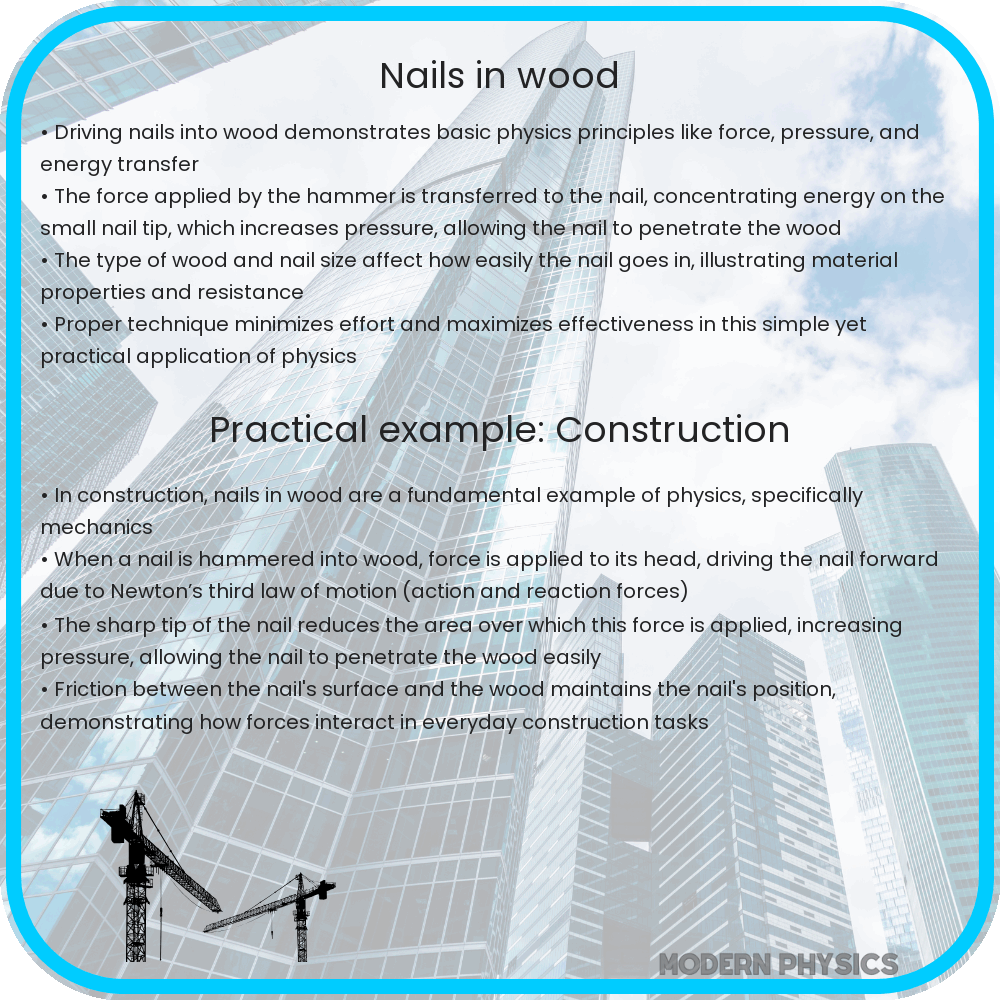
Nails in Wood: Understanding Strength, Load Distribution, and Durability
The integration of nails in wood is a fundamental aspect of carpentry and construction, playing a crucial role in ensuring structural integrity, load distribution, and longevity of wooden constructions. This article delves into the science and practicality of using nails in wood, focusing on their strength, load distribution capabilities, and durability.
Strength of Nails in Wood
One of the primary considerations when using nails in wood is their strength. The strength of a nail in wood depends on several factors, including the type of wood, the size and type of nail, and the angle at which the nail is driven. Hardwoods, such as oak and maple, offer greater resistance to nail penetration but provide a stronger hold once the nail is embedded. Softwoods, like pine, are easier to penetrate but may not hold nails as firmly.
The diameter and length of the nail also play a significant role. Larger diameter nails can bear more weight and are less likely to bend under pressure. However, they may also split the wood if not used appropriately. The length of the nail determines how deep it can penetrate into the wood, impacting its holding power.
Load Distribution
Proper load distribution is vital for the stability of a structure. Nails help distribute the load evenly across the wooden framework. When nails are driven into wood, they create a grip known as “withdrawal resistance,” which is the force required to pull the nail out of the wood. This resistance is crucial for load-bearing structures like beams and joists.
The orientation of nails also affects load distribution. For instance, nails driven perpendicular to the wood’s grain (toe-nailing) can provide better resistance against lateral forces, while those driven parallel (end-nailing) are more effective for vertical loads.
Durability
The durability of nails in wood is influenced by the environmental conditions and the type of metal used for the nails. Galvanized nails, for example, are coated with zinc to prevent rust and corrosion, making them ideal for outdoor use or in environments with high moisture levels. Stainless steel nails are another option for high-durability requirements, especially in marine environments.
Wood’s natural expansion and contraction with changes in humidity also impact the long-term durability of nailed joints. Over time, this can lead to loosening of the nails, reducing their holding power. Therefore, choosing the right type and size of nail for the specific wood and application is critical for ensuring long-lasting durability.
In the following section, we will explore the best practices for using nails in wood, including the selection of appropriate nails for different types of wood and applications, and tips to maximize strength, load distribution, and durability.
Best Practices for Using Nails in Wood
Ensuring the effectiveness of nails in wood requires adherence to certain best practices. Selecting the right type of nail for the specific application is paramount. For structural applications, framing nails are commonly used due to their thicker shanks and larger heads, which provide greater holding power. For finer carpentry, finish nails with smaller heads are preferred to minimize wood splitting and for aesthetic purposes.
Another crucial factor is the method of nailing. Pre-drilling holes, especially in hardwoods, can prevent the wood from splitting. The depth of the nail should be carefully considered; it’s generally recommended that the nail penetrates at least three times the thickness of the material being fastened for optimal holding power.
Environmental Considerations
Environmental factors can significantly affect the performance of nails in wood. In areas with high humidity or direct exposure to water, using corrosion-resistant nails like stainless steel or hot-dipped galvanized nails is advisable to prevent rust and weakening of the joint. For interior applications, standard steel nails are usually sufficient.
Temperature fluctuations can also impact the wood’s expansion and contraction, potentially loosening the nails over time. In such scenarios, using screws or other fasteners in conjunction with nails can provide additional stability.
Innovations in Nail Technology
Advancements in nail technology have led to the development of specialized nails for specific purposes. Ring-shank and screw-shank nails, for example, offer enhanced grip strength, making them ideal for roofing and flooring applications. Additionally, chemical treatments and coatings have been developed to increase the durability and corrosion resistance of nails.
Conclusion
In conclusion, the use of nails in wood is a critical component of construction and carpentry that demands careful consideration of various factors like strength, load distribution, and durability. The choice of nails depends on the type of wood, environmental conditions, and the specific application. Best practices such as selecting the appropriate nail type, pre-drilling holes, and considering environmental factors play a vital role in ensuring the structural integrity and longevity of wooden constructions. Advances in nail technology continue to enhance the effectiveness of this age-old fastening method, adapting to the evolving needs of modern construction and carpentry. Ultimately, understanding and applying these principles ensures that structures are not only robust and durable but also safe for their intended use.