
Explore the strength, versatility, and static load support of structural steel, its properties, applications in modern construction, and sustainability.
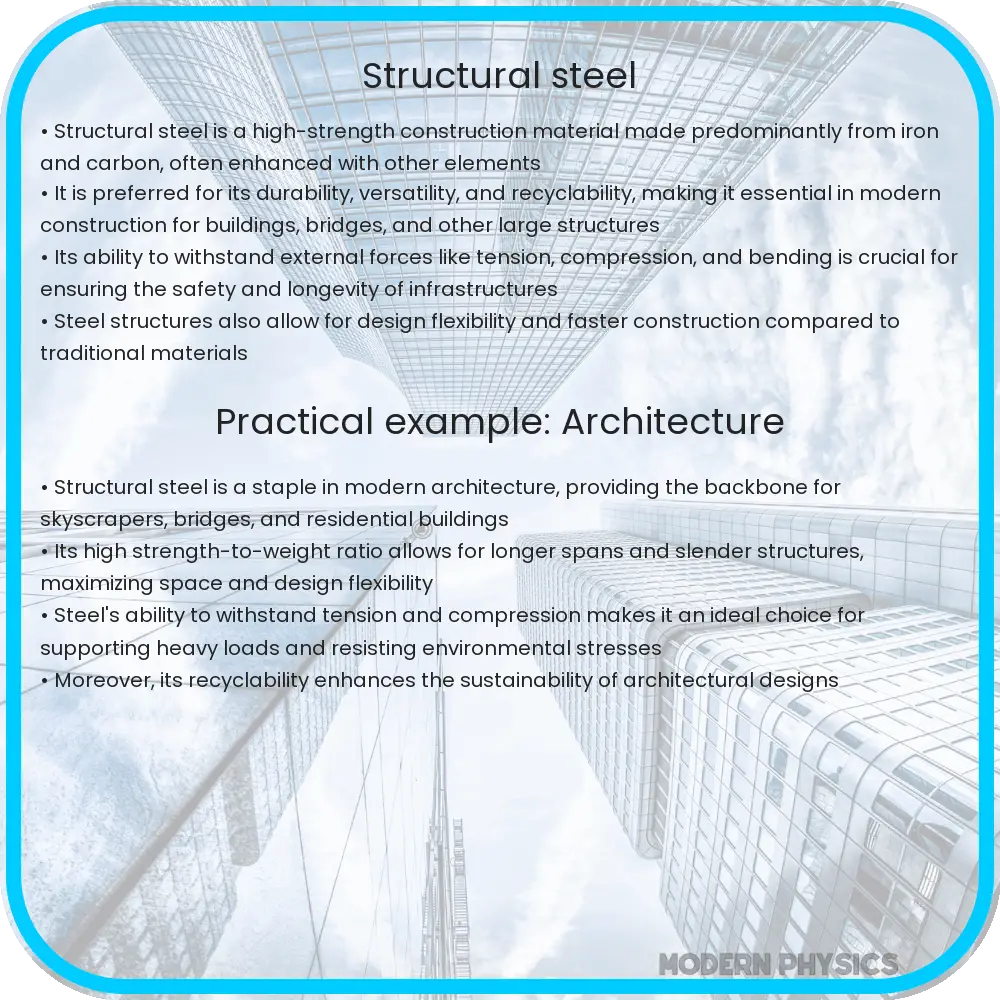
Understanding the Core Attributes of Structural Steel
Structural steel, a critical material in the construction and engineering sectors, is renowned for its strength, versatility, and ability to support static loads. Its unique properties make it an ideal choice for a wide range of applications, from skyscrapers to bridges. In this article, we delve into the aspects that make structural steel a preferred material for builders and engineers.
Unmatched Strength and Durability
The primary advantage of structural steel lies in its exceptional strength-to-weight ratio. This means that steel structures are strong without being excessively heavy, which is crucial for high-rise buildings and large bridges. The composition of structural steel, typically an alloy of iron and carbon, with small amounts of other elements like manganese, lends it a high tensile strength. This strength ensures the longevity and integrity of structures even under heavy loads and harsh environmental conditions.
Versatility in Design and Application
One of the most notable features of structural steel is its versatility. It can be molded into almost any shape, which allows architects and engineers to explore innovative and complex designs. The adaptability of structural steel is not just limited to its form; it also extends to its ability to blend with other materials like concrete and glass, offering a wide range of aesthetic possibilities. This versatility enables the creation of structures that are not only functional but also visually striking.
Superior Support for Static Loads
Structural steel is particularly effective in bearing static loads. Its ability to withstand forces like compression and tension without significant deformation is a key aspect in its application in buildings and infrastructure projects. The modulus of elasticity, a measure of a material’s ability to deform elastically and return to its original shape, is particularly high in structural steel. This property, denoted as E, is typically around 200 GPa (Gigapascals) for steel, meaning it can endure substantial stress without permanent deformation.
Environmental Considerations and Sustainability
Environmental sustainability is a growing concern in the construction industry, and structural steel addresses this issue effectively. It is one of the most recyclable materials in the world, with a high percentage of steel being reused or recycled. This recycling process reduces the environmental footprint of steel production and supports the construction industry’s move towards more sustainable practices. Furthermore, the durability of structural steel contributes to the longevity of structures, reducing the need for frequent renovations or rebuilds.
Continuing, we will explore the structural properties and specific applications of structural steel, providing a deeper understanding of its role in modern construction and engineering.
Structural Properties and Applications of Structural Steel
Structural steel stands out for its specific mechanical properties, including yield strength, which refers to the point at which steel begins to deform plastically. The yield strength of structural steel typically ranges between 250 and 550 MPa (megapascals), making it highly resistant to bending or yielding under load. Additionally, structural steel has excellent ductility, meaning it can withstand extensive deformation before failure, an essential trait for buildings in earthquake-prone areas.
Another key property of structural steel is its thermal conductivity. It is an excellent conductor of heat, which necessitates proper insulation in buildings to maintain energy efficiency. However, this property also allows for quick dissipation of heat in certain applications, reducing the risk of structural damage in fire incidents when combined with appropriate fireproofing materials.
Specific Applications in Construction and Engineering
Structural steel’s unique characteristics make it suitable for various applications. In the construction of high-rise buildings, it provides the necessary strength to support the weight of the building while maintaining flexibility to sway slightly in response to wind or seismic activity. For bridges, steel’s ability to withstand tensile and compressive forces makes it an ideal choice, especially for long-span bridges where weight is a critical factor.
Moreover, structural steel is used in industrial facilities such as factories and refineries, where large open spaces are required without internal supports. In such settings, steel trusses and beams provide the necessary support, maximizing space utility. Additionally, the automotive and shipbuilding industries extensively use structural steel for its durability and strength.
Conclusion
Structural steel is an indispensable material in the realm of construction and engineering. Its unparalleled strength-to-weight ratio, combined with exceptional durability, versatility, and ability to support static loads, makes it a cornerstone in building modern infrastructure. Its use in a wide range of applications, from skyscrapers to bridges, underlines its importance. Moreover, the environmental sustainability of steel, through its recyclability, aligns with the global shift towards more eco-friendly construction practices. The future of structural engineering continues to be shaped by innovations in steel production and application, ensuring that structural steel remains a fundamental component in building the world around us.