
Explore the precision and calibration of eyepiece micrometers, and how their optics enhance microscopy for scientific research and measurement accuracy.
Understanding Eyepiece Micrometers: Precision in Microscopy
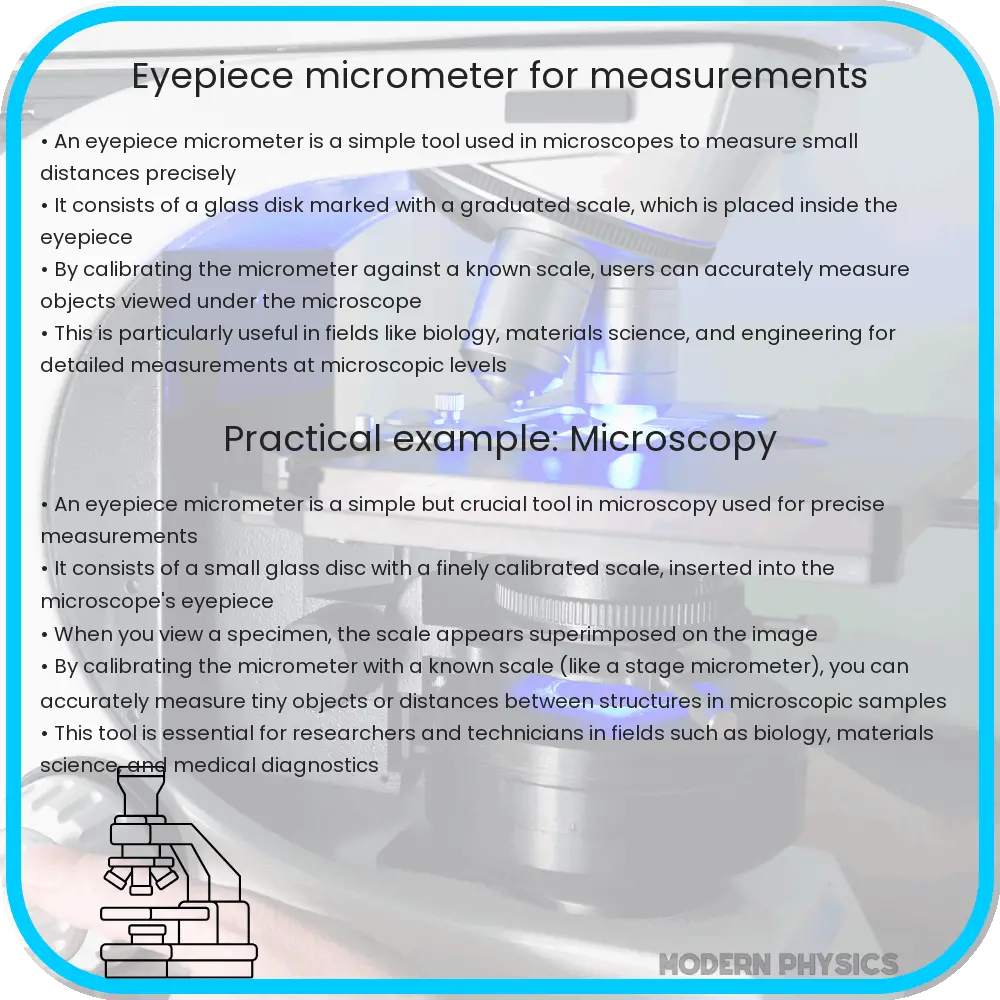
An eyepiece micrometer is a critical tool in the realm of microscopy, offering precision and accuracy for measurements at the microscopic level. This specialized reticle, inserted into the microscope’s eyepiece, enables scientists and researchers to measure the size of objects viewed under the microscope with remarkable precision. The calibration and optics of an eyepiece micrometer play pivotal roles in its functionality and reliability.
The Precision of Eyepiece Micrometers
The precision of an eyepiece micrometer is paramount, as it directly influences the accuracy of measurements taken. This precision is achieved through the meticulous design of the micrometer scale, typically etched into glass or a transparent film, which is then mounted within the eyepiece. The scale is usually measured in micrometers (μm), providing the ability to make extremely fine measurements that are crucial in fields such as biology, materials science, and engineering.
Calibration of Eyepiece Micrometers
Calibration is a critical process for ensuring the accuracy of an eyepiece micrometer. This involves setting the micrometer against a known scale or measurement standard to guarantee that it provides accurate readings. The process typically requires the use of a stage micrometer—a microscope slide with a precisely etched scale used as a reference. By aligning the scales of the eyepiece micrometer and the stage micrometer under the microscope, users can calibrate the eyepiece micrometer for accurate measurements across different magnifications.
Optics and Eyepiece Micrometers
The optical quality of the microscope eyepiece directly affects the performance of the eyepiece micrometer. High-quality optics are essential for ensuring that the micrometer scale is clearly visible and accurately superimposed over the specimen being observed. This clarity is crucial for precise measurement and analysis. Additionally, the optics must be carefully aligned to ensure that the scale appears in focus simultaneously with the specimen, avoiding parallax errors that could compromise measurement accuracy.
Understanding the precision, calibration, and optics of eyepiece micrometers is fundamental for their effective use in scientific research. These tools enable the detailed examination and measurement of microscopic entities, providing invaluable data that supports various scientific endeavors.
Advanced Applications and Considerations
Advanced applications of eyepiece micrometers extend into various scientific disciplines. In biology, they are indispensable for quantifying cell structures, while in materials science, they aid in the measurement of microstructures in metals and polymers. The precision of eyepiece micrometers also supports the calibration of other measuring instruments, demonstrating their versatility and importance beyond microscopy.
Maintaining Accuracy
Maintaining the accuracy of an eyepiece micrometer is crucial for obtaining reliable measurements. Regular calibration, proper handling, and cleaning are essential practices. Dust, fingerprints, or scratches on the micrometer scale can significantly affect measurement accuracy. Therefore, users must ensure the eyepiece micrometer and the microscope’s optics are kept clean and in good condition.
Choosing the Right Eyepiece Micrometer
Selecting an eyepiece micrometer involves considering the measurement range, scale division, and compatibility with the microscope. Researchers must choose a micrometer that suits their specific measurement needs and microscope model. Additionally, digital eyepiece micrometers are available, offering enhanced measurement capabilities, such as data storage and analysis, further extending the utility and precision of traditional eyepiece micrometers.
Conclusion
The eyepiece micrometer is a pivotal tool in the microscopic examination and measurement, providing precision that is indispensable across various scientific fields. Its accuracy hinges on proper calibration and maintenance, alongside the quality of microscope optics. With advancements in digital technology, eyepiece micrometers continue to evolve, offering greater functionality and ease of use. By understanding and applying the principles of precision, calibration, and optics, users can maximize the potential of eyepiece micrometers, enabling detailed and accurate measurements that drive scientific discovery and innovation.