
Discover the essentials of eyepiece design focusing on clarity, magnification, and comfort. Learn how to choose the perfect eyepiece for your optical needs.
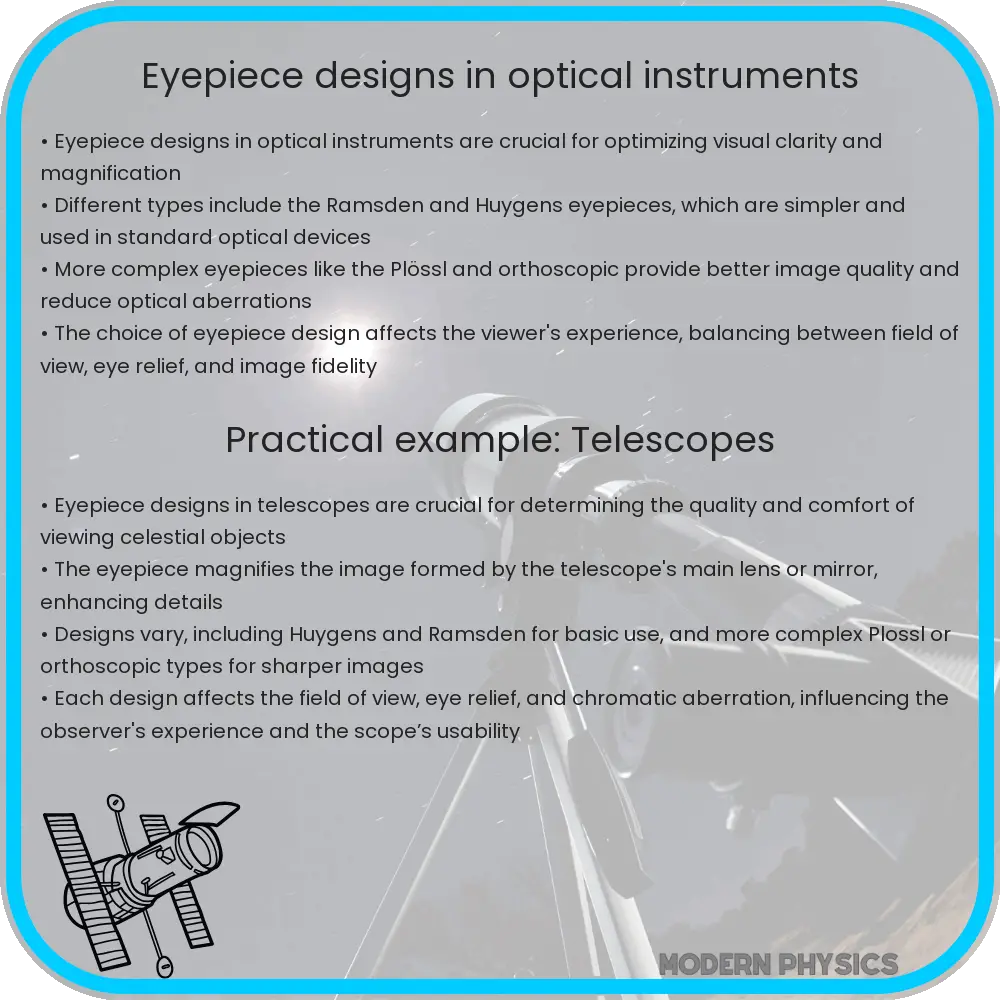
Understanding Eyepiece Designs: A Deep Dive into Clarity, Magnification, and Comfort
The world of optical instruments, be it telescopes, microscopes, or binoculars, greatly depends on the quality of their eyepieces. These critical components not only influence how we view objects at various distances but also significantly affect our comfort during prolonged observation sessions. This article explores the intricate balance between clarity, magnification, and comfort in eyepiece design, offering insights into what makes an eyepiece stand out in the realm of optical equipment.
Clarity: The Heart of Optical Performance
At the core of any eyepiece is its ability to deliver clear, crisp images. Clarity is primarily determined by the quality of the lenses and the coatings applied to them. Advanced coatings, such as multi-layer anti-reflective coatings, enhance light transmission and reduce glare, thereby improving the overall image brightness and contrast. The design and arrangement of lenses within an eyepiece also play a crucial role in minimizing optical aberrations like chromatic aberration, where light of different colors focuses at different distances, causing a halo of color around objects. Employing elements like extra-low dispersion (ED) glass can significantly mitigate this issue, leading to sharper, more accurate color reproduction.
Magnification: Zooming into Details
Magnification is a pivotal feature of eyepieces that brings distant objects into closer view. However, it’s essential to understand that higher magnification does not always equate to better quality. As magnification increases, so does the challenge of maintaining image clarity and brightness. This is because higher magnification levels can narrow the field of view and reduce the amount of light entering the eyepiece, making the image appear darker. The design of an eyepiece must carefully balance magnification with lens quality and aperture size to ensure that the increased detail does not come at the expense of overall image quality.
Comfort: The Key to Extended Observing Sessions
Comfort is an often overlooked aspect of eyepiece design that is crucial for anyone engaging in extended periods of observation. The eye relief of an eyepiece, or the distance from the last surface of an eyepiece at which the user can still see the full field of view, is a critical factor in this regard. Longer eye relief allows users to view the entire field without pressing their eyes closely to the eyepiece, which is particularly beneficial for those who wear glasses. Additionally, the design of the eyepiece housing and the quality of the eye cup can further enhance comfort, making long observing sessions more enjoyable and less straining on the eyes.
Eyepiece Designs: Enhancing Clarity, Magnification, and Comfort
The world of optical devices, particularly telescopes and microscopes, is significantly influenced by the design and quality of their eyepieces. These crucial components not only determine how well we can see the stars or microscopic entities but also how comfortably we can observe them for extended periods. This article delves into the intricacies of eyepiece designs, focusing on three critical aspects: clarity, magnification, and comfort.
Clarity: The Quest for a Perfect Image
Clarity in eyepiece design is primarily about reducing optical aberrations—unwanted distortions in the image caused by the eyepiece’s lenses. Advanced eyepiece designs, like the Plössl or the ultra-wide Nagler, employ multiple lens elements to correct these aberrations. The choice of glass material, the precision of lens shaping, and the application of special coatings all contribute to achieving a clearer, sharper image.
Magnification: Zooming in on the Details
Magnification is a function of the eyepiece’s focal length: shorter focal lengths provide higher magnification. However, increasing magnification can also amplify the effects of optical aberrations and reduce the field of view. Eyepiece designers must balance these factors, often opting for complex lens arrangements that offer high magnification while maintaining image quality. Barlow lenses can also be used in conjunction with eyepieces to increase magnification without the need for swapping out eyepieces.
Comfort: Observing Without Strain
Comfort in eyepiece design is addressed through two main features: eye relief and the field of view. Eye relief is the distance from the last surface of an eyepiece at which the viewer can still see the entire field of view. Longer eye relief is especially important for eyeglass wearers. The field of view, expressed in degrees, determines how much of the sky or specimen can be observed at one time. Wide-field eyepieces allow for more immersive observations, making them highly sought after for both astronomical and microscopic applications.
In conclusion, the design of eyepieces plays a pivotal role in the usability and performance of optical instruments. Innovations in lens technology and design strategies continue to push the boundaries of clarity, magnification, and comfort, allowing users to explore the cosmos or the microscopic world in unprecedented detail. Whether gazing at the rings of Saturn or examining the intricacies of cellular structures, the right eyepiece can significantly enhance the viewing experience, making every observation more engaging and satisfying.