
Explore how exit pupil size affects clarity, field of view, and eye relief in optical devices, and get tips for selecting the right equipment for you.
Understanding Exit Pupil Size in Optics
The concept of exit pupil size is fundamental in the realm of optical devices, such as binoculars, telescopes, and cameras, influencing clarity, field of view, and eye relief significantly. This article delves into how exit pupil size affects these aspects, providing enthusiasts and professionals alike with insights to make informed decisions about their optical equipment.
Clarity and Exit Pupil Size
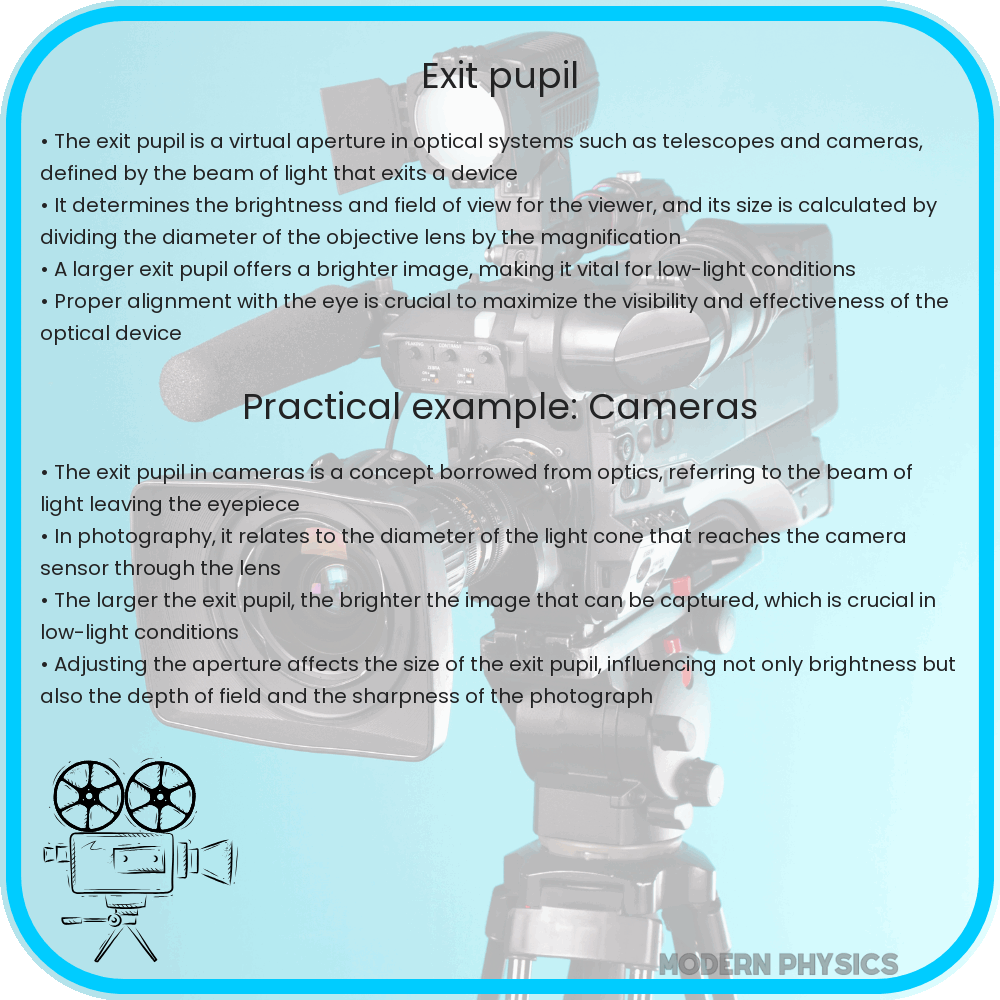
Clarity in optical devices is closely linked to the exit pupil size, which is the beam of light visible through the eyepiece when the instrument is held at arm’s length. The exit pupil size is calculated by dividing the objective lens diameter by the magnification. For instance, a 10×50 binocular has an exit pupil size of 5mm (50÷10). A larger exit pupil generally delivers brighter images in low-light conditions, enhancing clarity as it matches more closely with the user’s own pupil size, which can vary from approximately 2mm in bright light to 7mm in dark conditions.
Field of View and Exit Pupil Size
The field of view (FoV) is the extent of the observable world seen at any given moment through an optical device and is usually expressed in degrees or meters at a certain distance. While the exit pupil size does not directly affect the FoV, a larger exit pupil makes it easier to maintain a full view, especially in mobile situations or when hand-holding devices, by offering a more forgiving eye position.
Eye Relief and Exit Pupil Size
Eye relief is the distance from the last surface of an eyepiece within which the user can still see the entire field of view. It is particularly important for wearers of glasses. The relationship between exit pupil size and eye relief is indirect but vital. A larger exit pupil can afford a more comfortable viewing experience, allowing users to hold their eye slightly further from the eyepiece without losing sight of the image. However, the design of the optical system also plays a significant role in determining the optimal balance between exit pupil size and adequate eye relief.
Understanding these concepts allows users to optimize their experience with optical devices, whether for astronomical observations, wildlife viewing, or any activity requiring enhanced visual support. The interplay between exit pupil size, clarity, field of view, and eye relief underlines the importance of considering these factors when selecting optical equipment.
Selecting the Right Optical Equipment
When choosing optical equipment, it’s essential to consider the specific use case to determine the importance of exit pupil size, clarity, field of view, and eye relief. For instance, astronomers may prioritize a larger exit pupil for better low-light performance, while bird watchers might focus on a wider field of view and longer eye relief to comfortably observe for extended periods. Similarly, photographers and videographers must balance these factors based on their shooting conditions and requirements.
Practical Tips for Optimizing Optical Experience
- Assess Your Needs: Determine the primary use of the optical device to understand which features are most critical for your activities.
- Try Before You Buy: If possible, test various models to see how the exit pupil size affects your viewing experience, especially in different lighting conditions.
- Consider Eye Relief: For eyeglass wearers, ensure the device provides sufficient eye relief to see the full field of view comfortably.
- Check Field of View: A wider field of view can enhance the experience for certain activities, such as wildlife observation or sports.
Conclusion
The interconnection between exit pupil size, clarity, field of view, and eye relief in optical devices cannot be overstated. These factors collectively define the visual quality and comfort of using binoculars, telescopes, cameras, and other optics. A larger exit pupil size generally offers greater clarity in low-light conditions, a more forgiving field of view, and potentially more comfortable eye relief, yet the optimal balance depends on the user’s specific needs and applications. By understanding these concepts and how they interact, individuals can make informed choices, ensuring a fulfilling and effective use of their optical equipment. The right optical device can significantly enhance the joy and success of your visual endeavors, whether you’re exploring the stars, capturing moments, or marveling at nature’s beauty.