
Explore the essentials of binoculars: clarity, magnification, precision, and key features like optical coatings, FOV, and build quality for optimal viewing.
Understanding Binoculars: Clarity, Magnification, and Precision
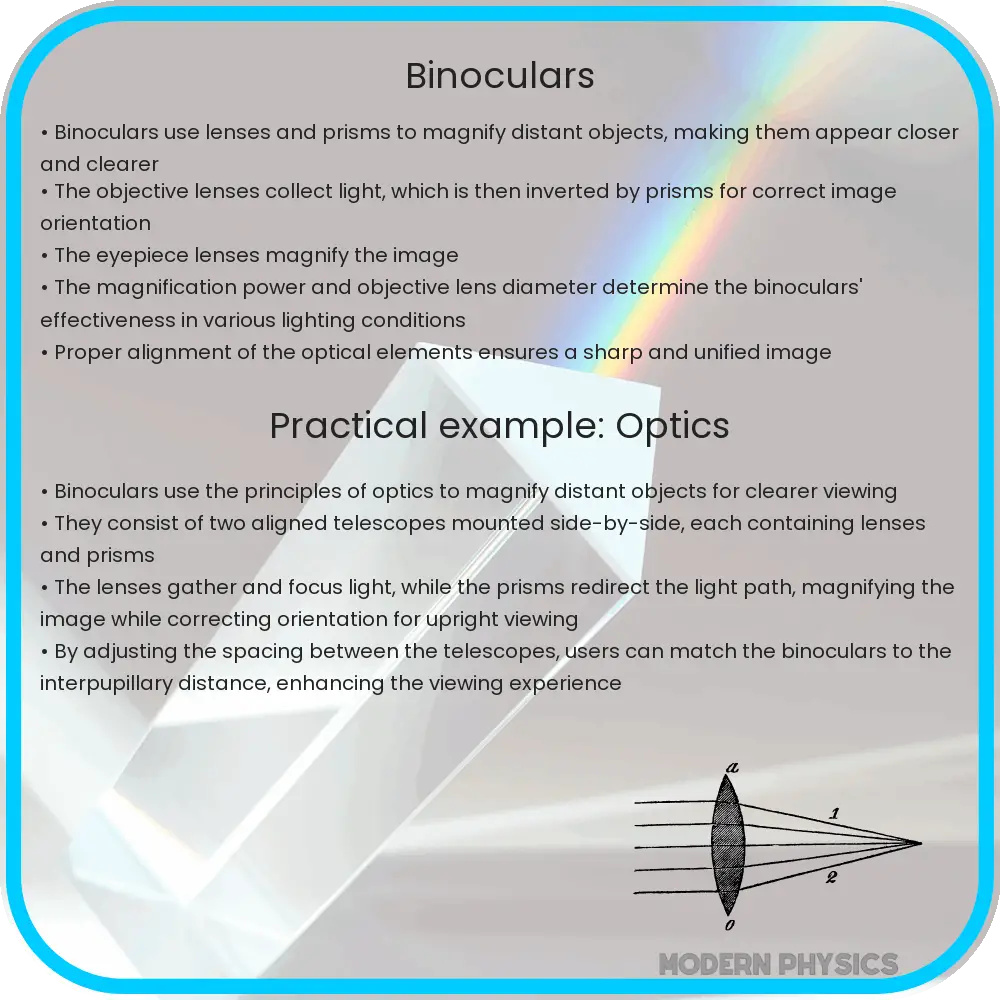
Binoculars are a fascinating optical tool that have revolutionized the way we observe the world, from bird watching to stargazing. At the heart of binoculars are three critical factors: clarity, magnification, and precision. Each plays a vital role in the overall performance and suitability of binoculars for various applications.
Clarity: The Key to Crisp Images
Clarity in binoculars refers to the sharpness and clearness of the image. This aspect largely depends on the quality of the lenses and the coatings applied to them. High-quality lenses are typically made from extra-low dispersion (ED) glass, which significantly reduces chromatic aberration—a phenomenon where different wavelengths of light are focused at different distances from the lens, causing color fringing around objects. Advanced coatings, such as anti-reflective coatings, are applied to the lenses to increase light transmission and reduce glare, thereby enhancing image clarity.
Magnification: Bringing Distant Objects Closer
Magnification is a measure of how much closer an object appears through binoculars compared to the naked eye. It is typically expressed as a number followed by an ‘x’, like 8x or 10x. While higher magnification provides a closer view, it also narrows the field of view and can make the image less stable. This is because higher magnification amplifies hand movements, making it harder to keep the image steady. For general use, a magnification between 7x and 10x is often recommended.
Precision: The Art of Fine Details
Precision in binoculars relates to the accuracy and fineness of the details in the observed image. This attribute is crucial for activities like birdwatching or marine observation, where identifying subtle features is essential. The precision of binoculars is influenced by factors such as the quality of the prisms, the precision of optical alignment, and the focusing mechanism. Porro prisms, characterized by their ‘M’ shaped design, generally offer better depth perception and a wider field of view. Roof prisms, on the other hand, are more compact and durable, but often more expensive.
Understanding these key aspects of binoculars can greatly aid in choosing the right pair for your specific needs. Whether it’s for wildlife observation, sports, or astronomical viewing, the balance between clarity, magnification, and precision will determine the effectiveness and enjoyment of your binocular experience.
Optical Coatings: Enhancing Performance
Optical coatings play a pivotal role in improving the performance of binoculars. These thin layers of material are applied to the surface of lenses and prisms to reduce reflection and increase light transmission. Coatings such as multi-coating or fully multi-coating are common in higher-quality binoculars. They ensure that more light reaches the eyes, resulting in brighter images and better contrast, which is especially important in low-light conditions.
Field of View and Eye Relief: Comfort and Coverage
The field of view (FOV) is the width of the area visible through the binoculars and is usually expressed in degrees or as the width in feet at a distance of 1,000 yards. A wider FOV is preferred for tracking fast-moving objects, like birds in flight. Eye relief, the distance from the eyepiece at which the whole FOV is visible, is another crucial aspect, especially for eyeglass wearers. Longer eye relief ensures comfortable viewing without having to remove glasses.
Build and Ergonomics: Durability and Ease of Use
The construction and design of binoculars also contribute to their overall quality. Waterproofing and fog-proofing, achieved through O-ring seals and nitrogen or argon purging, are essential for durability in various environmental conditions. The weight and grip of the binoculars, along with the smoothness of the focusing wheel, play a significant role in their ease of use and handling during prolonged periods of observation.
Conclusion
In conclusion, understanding the intricacies of binoculars is crucial for making an informed choice. Clarity, magnification, and precision are the cornerstones of a good pair of binoculars, but factors like optical coatings, field of view, eye relief, and build quality also play significant roles in their performance and suitability for different applications. Whether you are a birdwatcher, a sports enthusiast, or an amateur astronomer, selecting the right binoculars involves balancing these features according to your specific needs. By doing so, you ensure a rewarding and enjoyable viewing experience, bringing the world closer and clearer than ever before.