
Explore the advancements in endoscopy, focusing on precision imaging, medical optics, and clarity for improved diagnostics and treatments in healthcare.
Exploring the Frontier of Medical Imaging: The Role of Endoscopes
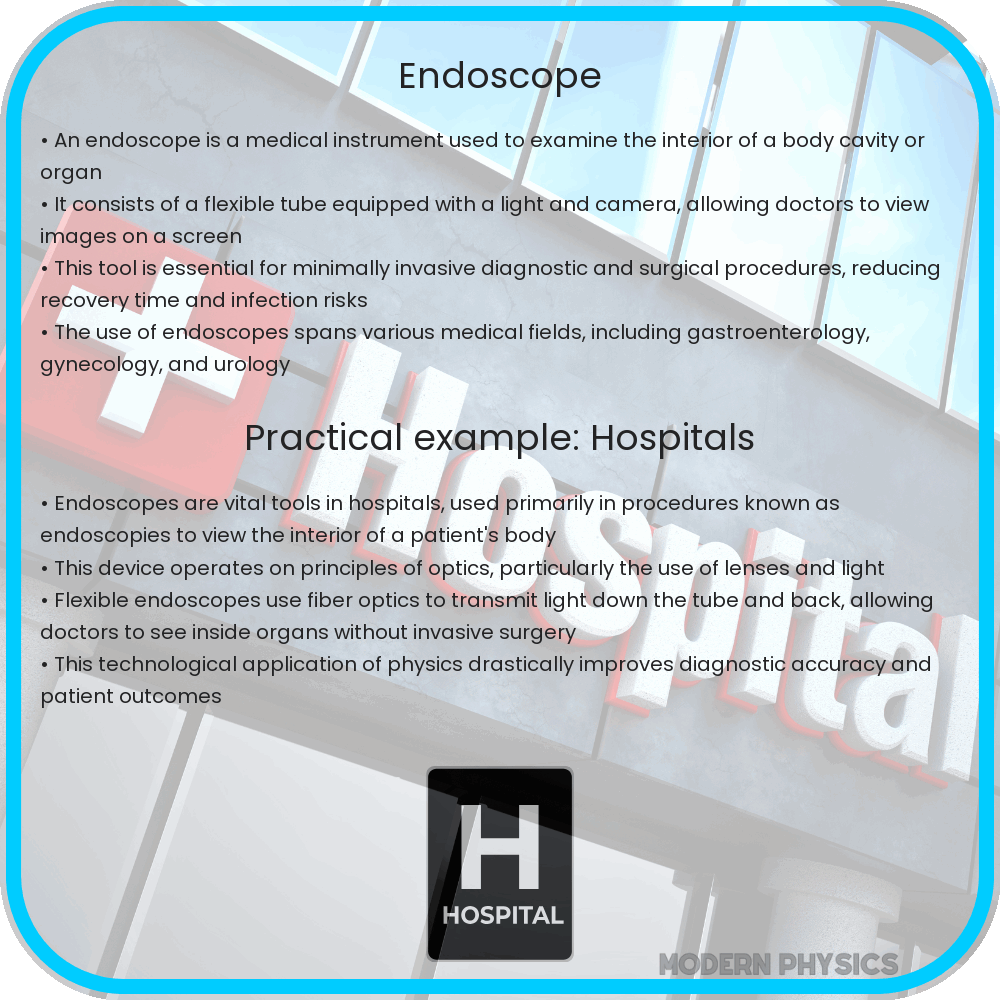
The realm of medical diagnostics and treatments has been profoundly transformed with the advancement of endoscopic technology. Endoscopes, slender tubes equipped with a light and camera, are pivotal tools that allow healthcare professionals to peer inside the human body with unprecedented clarity and precision. This innovative technology plays a critical role in diagnosing, monitoring, and treating a myriad of conditions, offering a minimally invasive alternative to traditional surgical methods.
Precision Imaging and Medical Optics
At the heart of endoscopic innovation is the evolution of precision imaging and medical optics. Modern endoscopes harness high-definition cameras and advanced optical fibers to capture detailed images of the internal anatomy. This leap in image quality is essential for accurate diagnoses and the successful execution of delicate procedures. The intricate design of medical optics, including the use of specialized lenses and lighting techniques, enhances the ability of endoscopes to illuminate and visualize internal structures with remarkable detail.
Enhancing Clarity with Cutting-Edge Technology
The clarity of the images captured during endoscopy is paramount. Recent advancements have introduced features such as digital enhancements and narrow band imaging (NBI). NBI utilizes light in the blue and green spectra, which penetrates tissue differently, to highlight vascular structures and mucosal patterns. This technology enhances the contrast of the images, aiding in the early detection of abnormalities such as pre-cancerous conditions and cancer. Furthermore, the integration of 3D imaging and robotic assistance has further refined the precision with which procedures can be performed, minimizing patient discomfort and recovery time.
The Significance of High-Quality Medical Optics
High-quality medical optics are the cornerstone of effective endoscopy. They ensure the transmission of clear, undistorted images from the body’s interior to the clinician’s monitor. The materials and coatings used in these optics are specially designed to withstand the harsh environments of sterilization processes while maintaining their precision and clarity. This durability is crucial for the longevity and reliability of endoscopic equipment in a clinical setting.
The evolution of endoscopic technology, through advancements in precision imaging, medical optics, and image clarity, represents a leap forward in medical science. It not only enhances the capability of medical professionals to diagnose and treat with greater accuracy but also significantly improves patient outcomes.
Advanced Technologies in Endoscopy: Precision Imaging and Medical Optics
Endoscopy has revolutionized the field of medical diagnostics and treatments, offering a minimally invasive glimpse into the human body’s inner workings. The core of this technological marvel lies in precision imaging, medical optics, and the clarity they provide. These elements work together to furnish healthcare professionals with high-resolution images that are critical for accurate diagnosis, treatment planning, and execution.
Medical Optics: The Eye of the Endoscope
At the heart of endoscopic technology are the advanced medical optics that guide light through the device to illuminate and capture clear images of the body’s internal structures. These optics include a series of lenses, sometimes combined with fiber optic technology, to transmit light efficiently and deliver images with remarkable clarity. The development of high-definition (HD) and ultra-high-definition (UHD) cameras has further enhanced the detail and quality of endoscopic images, allowing for a level of precision previously unattainable.
Precision Imaging: Beyond the Naked Eye
Precision imaging in endoscopy involves the use of various technologies to improve the detail and accuracy of what the clinician can see. Techniques such as Narrow Band Imaging (NBI), Confocal Laser Endomicroscopy (CLE), and Chromoendoscopy enhance the visualization of mucosal surfaces and vascular patterns, aiding in the early detection of lesions and malignancies. These imaging modalities enable the identification of subtle changes in tissue, which are crucial for early diagnosis and intervention.
Clarity: Enhancing Diagnosis and Treatment
The clarity provided by modern endoscopes is pivotal for effective diagnosis and treatment. Enhanced image quality allows for a better distinction between normal and abnormal tissues, which is essential for biopsy guidance, lesion removal, and the management of various gastrointestinal and pulmonary conditions. This clarity is achieved through a combination of advanced imaging techniques, high-quality optics, and sophisticated software algorithms that enhance the image detail and contrast.
Conclusion
The integration of precision imaging, medical optics, and enhanced clarity in endoscopy has significantly improved the capability of medical practitioners to diagnose and treat a wide range of conditions with greater accuracy and less invasiveness. These advancements not only improve patient outcomes but also pave the way for further innovations in medical technology. As endoscopic techniques continue to evolve, they promise to offer even more sophisticated tools for medical diagnosis, treatment planning, and therapeutic intervention, underscoring the importance of ongoing research and development in this critical field of medicine.