
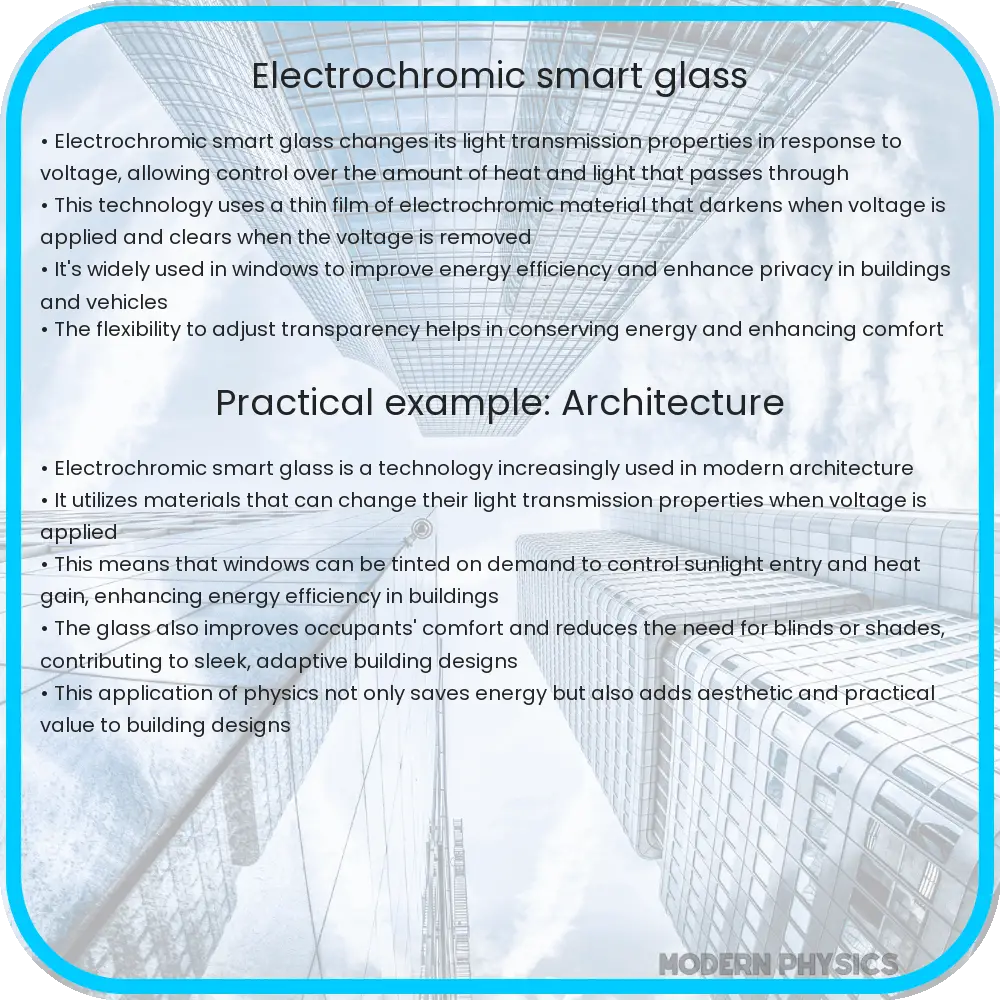
Electrochromic smart glass is an innovative material that changes optical properties in response to electrical stimuli, optimizing energy efficiency and comfort.
Introduction to Electrochromic Smart Glass
Electrochromic smart glass represents a cutting-edge innovation in the field of materials science, combining principles of chemistry and physics to offer not only energy efficiency but also enhanced aesthetic and practical applications. This type of glass has the ability to change its light transmission properties in response to electrical stimulus, making it an ideal choice for applications in buildings, vehicles, and various electronic displays.
How Electrochromic Smart Glass Works
The functionality of electrochromic smart glass hinges on the presence of electrochromic materials, which undergo a change in color or opacity when an electrical voltage is applied. The principle is simple: these materials experience an alteration in their oxidation state, leading to a change in their optical properties. For instance, when voltage is applied, ions such as lithium or hydrogen move between layers of the glass, altering its tint to reduce light transmission.
- Structure: Typically, an electrochromic device comprises several layers – two conductive layers, an ion conductor layer, and layers of electrochromic material. These are sandwiched between two sheets of glass.
- Activation: On application of voltage through an external circuit, ions transfer from one layer to another, changing the optical properties of the electrochromic layer.
- Control: By adjusting the voltage applied, the degree of tinting and therefore the transparency of the glass can be precisely controlled.
Benefits of Electrochromic Smart Glass
The adaptability of electrochromic smart glass is not just limited to its physical properties but extends into significant energy conservation. By modulating heat and light transfer, this smart glass can greatly reduce the costs and energy used in heating, ventilation, and air conditioning (HVAC) systems. Furthermore, its ability to control ultraviolet and visible light exposure protects interiors and occupants from sun damage and glare, enhancing comfort and usability.
- Energy Efficiency: Reduces the need for artificial heating and cooling, leading to lower electricity consumption.
- UV Protection: Blocks harmful UV rays, thereby protecting the skin and preventing the fading of fabrics and furnishings.
- Privacy and Security: Can be adjusted for opacity, providing privacy without the need for window coverings.
- Longevity and Durability: Designed to withstand wear and tear, maintaining performance over extensive periods with minimal maintenance.
Applications of Electrochromic Smart Glass
Electrochromic smart glass finds applications across a diverse range of fields. In the architectural sector, it is used in windows, skylights, and facades to enhance building efficiency and aesthetics. The automotive industry incorporates this technology in rear-view mirrors and windows, enhancing driver safety by adjusting light reflectance. Moreover, it is increasingly being used in consumer electronics for its ability to improve visual clarity and protect screens from light damage.
- Architectural: Windows, doors, skylights, and curtain walls.
- Automotive: Sunroofs, windows, and rear-view mirrors.
- Consumer Electronics: Display screens for smartphones, tablets, and other devices.
The integration of electrochromic smart glass is a testament to how advanced materials can play a pivotal role in environmental sustainability while enhancing user experience and comfort. This technology not only promises substantial energy savings but also opens new avenues for smart design in modern architecture and transportation.
Challenges and Future Prospects
Despite its numerous benefits, electrochromic smart glass faces several challenges that could affect its wider adoption. The cost of manufacturing and integrating these materials into commercial products is still relatively high compared to traditional glass. Furthermore, the speed of transition between transparency and opacity can vary, which may not be suitable for all applications.
- Cost: High production costs could inhibit widespread adoption, particularly in developing economies.
- Speed of Transition: The time it takes for the glass to change states may be perceived as slow in situations requiring rapid adjustments.
- Longevity Concerns: Despite general durability, the long-term reliability of electrochromic materials under continuous operation is still under scrutiny.
However, ongoing research and development are focusing on overcoming these barriers. Advances in material science and manufacturing techniques promise to lower costs and improve the performance of electrochromic devices significantly in the near future. Moreover, there is a growing interest in integrating these materials with other smart technologies, such as photovoltaic cells, to create even more energy-efficient systems.
Conclusion
Electrochromic smart glass stands at the forefront of material innovation, merging the potential of both beauty and functionality with sustainability. As the technology matures and addresses current challenges, its applications are likely to expand far beyond current uses, potentially becoming a standard in industries ranging from automotive to consumer electronics. And with greater emphasis on energy conservation and environmental impact, electrochromic smart glass offers a window into the future of sophisticated, energy-efficient design solutions.
Encouraging broader awareness and understanding of this technology will be essential to fostering its adoption. By combining the efforts of engineers, designers, architects, and policy makers, we can enhance our living and working environments while also taking careful steps towards a more sustainable world. The journey of electrochromic smart glass from innovation to ubiquity is just beginning, but its potential to transform our interaction with the spaces around us is immense.