
Learn about bioabsorbable metals, biodegradable materials in biomedical engineering that dissolve safely in the body after supporting tissue healing.
Understanding Bioabsorbable Metals
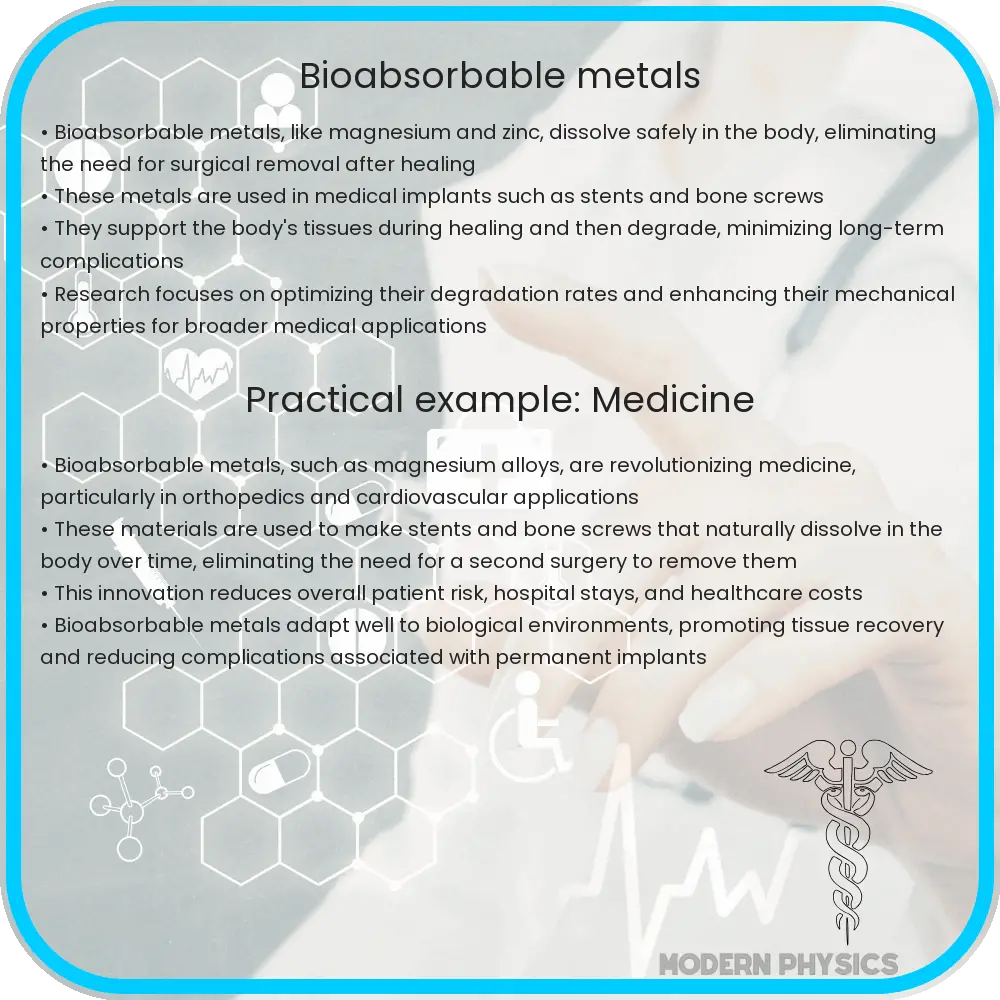
Bioabsorbable metals, also known as biodegradable or bioresorbable metals, play a pivotal role in the field of biomedical engineering. These materials are uniquely designed to provide temporary mechanical support to biological tissues and then gradually degrade and be absorbed or excreted by the human body. The fascinating aspect of bioabsorbable metals lies in their ability to combine mechanical strength with the capacity to dissolve harmlessly in physiological environments.
Biocompatibility of Bioabsorbable Metals
Biocompatibility refers to the ability of a material to perform with an appropriate host response in a specific application. For bioabsorbable metals, biocompatibility is paramount since these materials interact directly with body tissues. Metals such as magnesium, iron, and zinc are frequently utilized for these applications because of their promising biocompatibility profiles. These metals, essential to human metabolism, pose minimal risk of toxic response when incorporated in controlled amounts. Research shows that as these metals degrade, they release ions that can be naturally metabolized by the body, hence supporting tissue healing and integration.
Durability and Mechanism of Degradation
Durability in the context of bioabsorbable metals does not refer to long-term persistence but rather to the ability of these metals to maintain their mechanical integrity for the duration necessary to fulfill their medical function. The degradation rate is a critical aspect and must be precisely controlled to match the tissue healing process. Magnesium, for example, degrades upon exposure to bodily fluids through a process involving corrosion where the metal reacts with water and oxygen, forming magnesium hydroxide and hydrogen gas, which are safely absorbed and excreted by the body.
The rate of degradation can be affected by several factors, including the alloy composition, the presence of microstructural features like grain size, and the environment’s pH and electrolyte concentration. For instance, an alloy with a fine grain size may corrode faster due to a higher surface area exposed to the corrosive environment. Therefore, engineering the alloy’s microstructure can help tailor the degradation rate to match specific medical needs.
Common Uses of Bioabsorbable Metals
Bioabsorbable metals find extensive applications in medical fields where temporary support is required. One of the most common uses is in orthopedic implants such as pins, screws, and plates used to stabilize bones after fractures. Traditional metal implants generally require a second surgery for removal after the healing process, posing additional risks and discomfort for patients. Bioabsorbable metal implants, by contrast, naturally dissolve once they have fulfilled their function, eliminating the need for removal surgery.
Other innovative applications include cardiovascular stents made from bioabsorbable magnesium alloys. These stents serve to keep clogged arterial passages open for a period, promoting blood flow and supporting vessel healing, after which they degrade, leaving no permanent foreign material in the body. This approach significantly reduces the long-term complications associated with traditional permanent metal stents.
Beyond orthopedics and cardiovascular applications, research is ongoing into the use of bioabsorbable metals in areas like tissue engineering, wound healing, and drug delivery systems. Each application exploits the unique properties of these metals to improve patient outcomes and reduce overall treatment complexities.
Conclusion
Future Prospects and Challenges
The future of bioabsorbable metals in medical applications looks promising but is not without challenges. As research progresses, the focus will likely shift towards enhancing the mechanical properties and degradation rates of these metals to suit a broader range of medical conditions. Advanced manufacturing techniques like 3D printing are also being explored to create custom implants tailored to individual patient anatomy, potentially improving recovery times and outcomes.
However, challenges such as controlling the inconsistent degradation rates in different body environments, and potential inflammatory responses from degradation products, need to be addressed. Furthermore, regulatory hurdles and the high cost of extensive clinical trials remain significant barriers to the rapid commercialization of new bioabsorbable metal products.
Conclusion
Bioabsorbable metals represent a revolutionary step in the evolution of medical implants and devices. By offering strength comparable to traditional metals and naturally degrading within the body, they provide an elegant solution to the limitations posed by permanent implants. Their use in orthopedics, cardiovascular care, and potentially in numerous other medical fields underscores a significant shift towards more patient-friendly treatment methods.
As technology and materials science continue to advance, the scope and efficacy of bioabsorbable metals are expected to improve, making them even more integral to medical treatments. The journey of these fascinating materials is just beginning, and their full potential is yet to be realized. Engaging with the ongoing research and development in bioabsorbable metals is crucial for pushing the boundaries of what is possible in medical science and improving the quality of life for patients around the globe.