
Explore the efficiency, cost, and thermodynamics of Dynamic Solar Concentrators (DSCs), a breakthrough in solar energy technology.
Understanding Dynamic Solar Concentrators: A Path to Enhanced Efficiency
Solar energy, a clean and renewable source, is pivotal in the transition towards sustainable energy systems. Dynamic Solar Concentrators (DSCs) represent an innovative approach in solar technology, promising increased efficiency and reduced costs. This article delves into the workings, efficiency, cost implications, and thermodynamic aspects of DSCs, offering a comprehensive understanding of this emerging technology.
The Mechanism of Dynamic Solar Concentrators
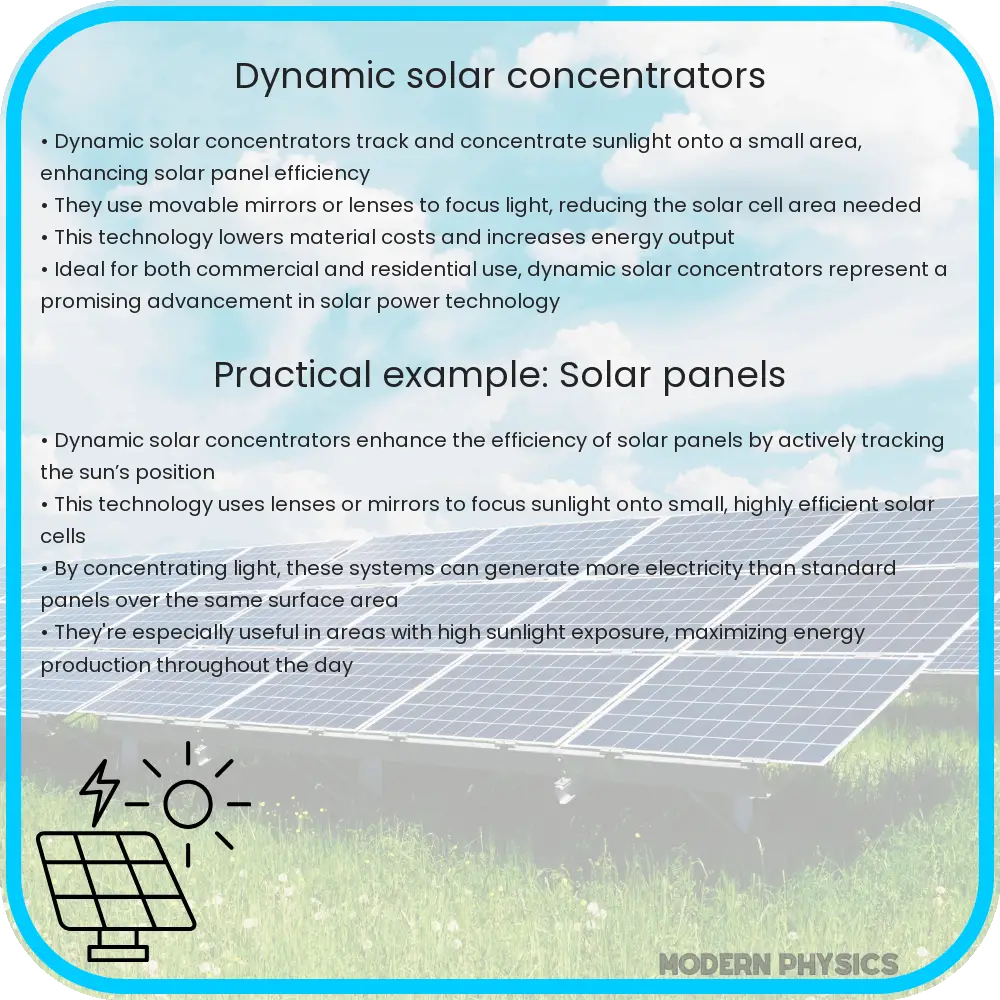
Unlike traditional photovoltaic (PV) systems, Dynamic Solar Concentrators utilize movable mirrors or lenses to focus sunlight onto a smaller, high-efficiency solar cell. This concentration of light increases the energy captured and converted into electricity. The dynamic aspect of these systems allows for the tracking of the sun’s position, ensuring maximum light concentration throughout the day.
Enhancing Efficiency with DSCs
The primary advantage of DSCs lies in their ability to significantly boost the efficiency of solar panels. By concentrating sunlight, these systems can achieve higher temperatures, facilitating more efficient energy conversion. This increased efficiency is particularly beneficial in areas with high solar irradiance, maximizing the energy output from the available sunlight.
Cost-Effectiveness of Dynamic Solar Concentrators
The initial investment in DSC technology can be higher than traditional PV systems due to the complexity of moving parts and precision optics. However, the higher efficiency leads to a greater return on investment over time. Reduced land requirements, owing to their higher energy density, also contribute to cost savings, particularly in land-scarce regions.
Thermodynamics and DSCs
The thermodynamic principles underlying DSCs are crucial for their efficiency. The concentrated sunlight increases the temperature of the solar cells, governed by the laws of thermodynamics. The challenge lies in maintaining the optimal temperature for maximum efficiency. Excessive heat can lead to inefficiency and damage, necessitating innovative cooling strategies.
Materials and Durability
The choice of materials for DSCs is essential for their long-term durability and performance. Materials that can withstand high temperatures and environmental stress, while maintaining optical precision, are preferred. Innovations in materials science continue to play a vital role in advancing DSC technology.
Advanced Cooling Systems in DSCs
Efficient cooling systems are integral to maintaining the performance of Dynamic Solar Concentrators. Advanced cooling techniques, such as liquid cooling and heat sinks, are employed to dissipate excess heat. This not only enhances the efficiency of the solar cells but also extends their lifespan by preventing thermal damage.
Environmental Impact and Sustainability
Dynamic Solar Concentrators offer a sustainable alternative to fossil fuels, significantly reducing carbon emissions. Their higher efficiency translates into less land usage compared to traditional solar farms, thus minimizing the ecological footprint. Moreover, ongoing research is focused on developing eco-friendly materials and recyclable components to bolster the sustainability of DSCs.
Integration with Existing Energy Systems
The integration of DSCs into existing energy grids poses a unique set of challenges and opportunities. Their ability to generate more power in a smaller area makes them ideal for urban environments. Smart grid technologies can optimize the distribution and utilization of the energy generated, enhancing the overall efficiency of the power system.
Future Prospects and Research Directions
The future of Dynamic Solar Concentrators is promising, with ongoing research aimed at overcoming current limitations. Areas of focus include reducing manufacturing costs, improving material durability, and integrating adaptive tracking systems. Advances in nanotechnology and photonics offer exciting possibilities for further enhancements in DSC efficiency.
Conclusion
Dynamic Solar Concentrators stand at the forefront of solar energy innovation, offering a potent combination of high efficiency, cost-effectiveness, and environmental sustainability. As technology progresses, DSCs are poised to play a crucial role in the global shift towards renewable energy sources. Their adaptability and compatibility with existing infrastructures make them a viable and attractive option for both developed and developing nations. Embracing DSC technology not only addresses the growing energy demands but also aligns with the urgent need for environmentally responsible solutions. The ongoing advancements in this field are a testament to human ingenuity and a beacon of hope for a cleaner, greener future.