
Explore the unique qualities and manufacturing of Carbon Fiber Composites, a lightweight, strong material crucial in various industries.
Introduction to Carbon Fiber Composites
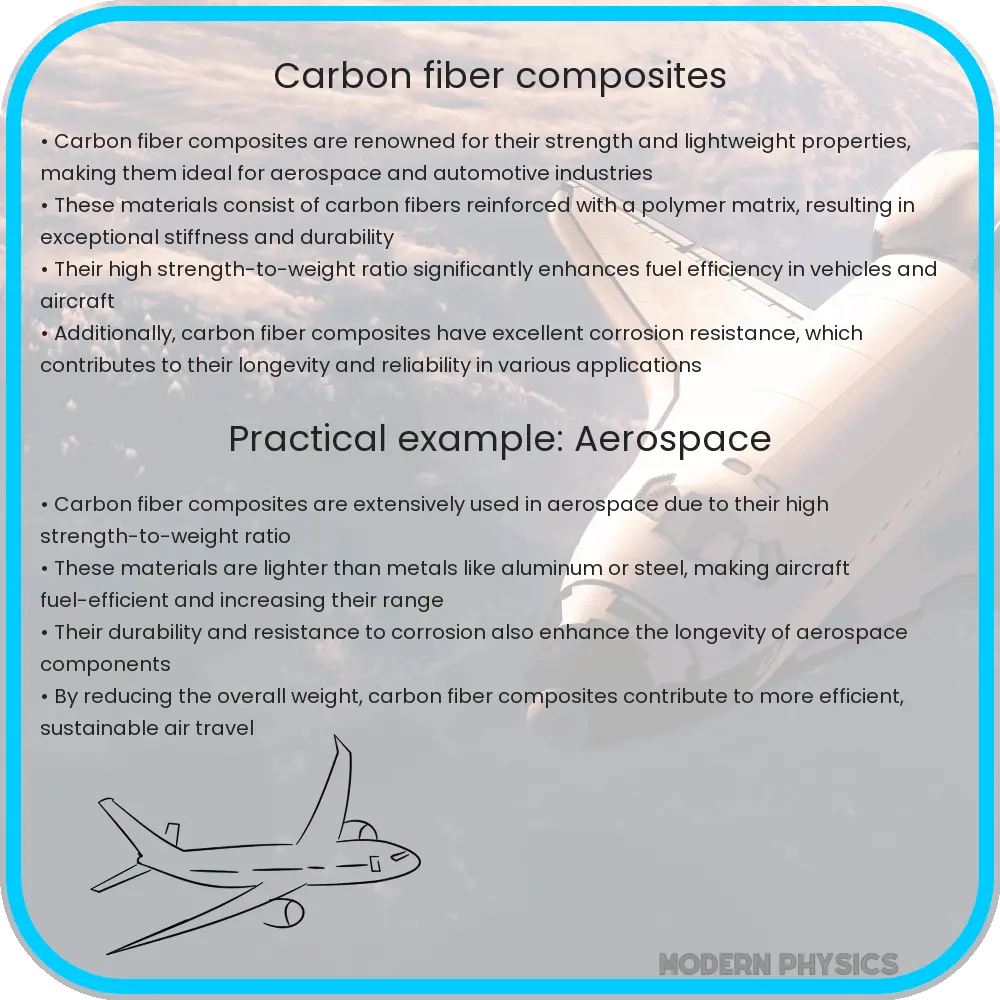
Carbon Fiber Composites are renowned in various industries for their exceptional strength, lightweight, and durability. These materials are engineered by combining carbon fiber, which itself is made of thin, strong crystalline filaments of carbon, with a polymer matrix. The result is a material that exhibits properties that are highly valuable in aerospace, automotive, sports, and many other sectors.
What Makes Carbon Fiber Composites Special?
The significance of carbon fiber composites lies in their unique qualities, which include:
- High Strength-to-Weight Ratio: Carbon fiber composites are extremely strong yet light compared to traditional materials like steel or aluminum. This makes them ideal for applications where minimizing weight is crucial without sacrificing strength.
- Corrosion Resistance: Unlike metals, carbon fiber does not rust or corrode. This property ensures longevity and reliability in harsh environmental conditions.
- Thermal Stability: These composites have a low thermal expansion coefficient, which means they can maintain their shape and size even when exposed to intense heat.
- Versatility in Design: Carbon fibers can be molded into complex shapes that are difficult to achieve with other materials. This flexibility allows for innovative designs in various applications.
Components of Carbon Fiber Composites
Carbon fiber composites consist primarily of two main components:
- Carbon Fiber: This is the reinforcing agent in the composite. Carbon fibers are derived from precursors like polyacrylonitrile (PAN) and are known for their stiffness, tensile strength, and low weight.
- Matrix Material: This is typically a polymer resin, such as epoxy, which binds the fibers together, transfers loads between fibers, and provides part of the structural shape and environmental resistance.
Manufacturing Processes
The fabrication of carbon fiber composites can be achieved through various processes, each influencing the properties and suitability of the composite for different applications. These processes include:
- Lay-up Technique: In this process, layers of carbon fiber sheets impregnated with resin are manually laid in a mold and then cured under heat and pressure.
- Resin Transfer Molding (RTM): Here, dry fiber is placed into a closed mold, and resin is injected at high pressure, permeating the fibers evenly before curing.
- Pultrusion: For continuous profiles, fibers are pulled through a resin bath and then through a heated die where curing takes place.
Each manufacturing method offers different advantages in terms of cost, production scale, and material properties, making it crucial to select the right process based on the application’s specific needs.
Applications of Carbon Fiber Composites
Carbon fiber composites have wide-ranging applications across numerous industries, thanks to their versatile properties. Notable uses include:
- Aerospace: In airplanes and spacecraft, these composites are used for components that require light weight and high strength, such as wings and fuselage structures.
- Automotive: High-performance and electric vehicles benefit from the lightweight nature of carbon fiber composites, which contributes to improved fuel efficiency and handling.
- Sports Equipment: From bicycles to golf clubs and racing sailboats, carbon fiber adds strength and speed by reducing overall weight.
- Construction: The construction industry utilizes carbon fiber composites in varied applications, including bridges and buildings, where tensile strength and corrosion resistance are critical.
Future of Carbon Fiber Composites
Emerging trends and ongoing research continue to expand the potential of carbon fiber composites. Innovations like recyclable composites and the development of new matrix materials forecast a future where carbon fiber could play an even more crucial role in sustainable materials technology. Researchers are also exploring cost-reduction strategies to make these materials more accessible for a broader range of applications, potentially revolutionizing industries globally.
Conclusion
Carbon fiber composites represent a remarkable fusion of science and engineering that offers exceptional benefits in strength, weight, and durability. With their ability to meet the demanding requirements of various high-stress applications, these materials are not only vital today but also hold a promise for a more resource-efficient future. Whether progressing through awe-inspiring aerospace innovations, energy-efficient automotive designs, or revolutionary construction projects, carbon fiber composites continue to impact the world significantly. Embracing and advancing this material technology enhances our ability to tackle some of the most pressing challenges of modern engineering and technology.