
Explore the intricate processes of vesicle fusion and fission in cellular transport, including mechanisms, dynamics, and modeling techniques in our latest article.
Vesicle Fusion and Fission: Understanding the Dynamics
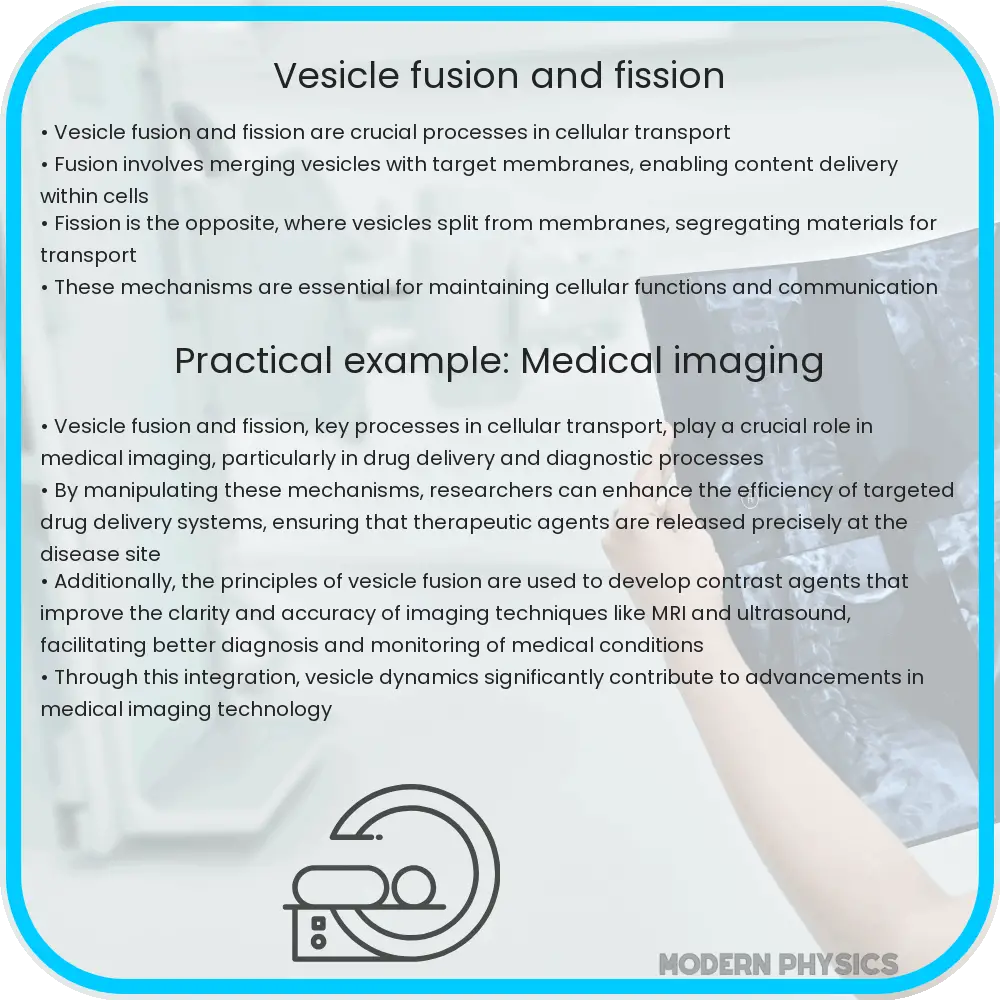
Vesicle fusion and fission are critical processes in cellular transport, influencing various biological functions such as neurotransmission, hormone release, and endocytosis. These dynamic processes enable the transport of substances within and between cells, encapsulated in membrane-bound vesicles. Understanding their mechanisms provides insights into cellular communication, disease progression, and potential therapeutic targets.
Mechanisms of Vesicle Fusion
Vesicle fusion involves the merging of a vesicle’s lipid bilayer with another bilayer, such as a target cell membrane or another vesicle. This process is essential for the release of the vesicle’s contents into the target site. Fusion is a highly regulated process, requiring specific proteins and environmental conditions to proceed. SNARE proteins (soluble N-ethylmaleimide-sensitive factor attachment protein receptors) play a pivotal role in this mechanism. They help draw the vesicle and target membranes close together, facilitating the merging of their lipid bilayers. This process is further fine-tuned by other proteins, such as SM (Sec1/Munc18) proteins, which ensure the specificity and timing of vesicle fusion.
Mechanisms of Vesicle Fission
Conversely, vesicle fission involves the pinching off of a portion of the membrane to form a new, separate vesicle. This process is crucial for endocytosis, where cells internalize substances from their environment, and for the budding of transport vesicles from donor membranes. The protein dynamin is central to fission, wrapping around the neck of the budding vesicle and constricting it through a GTP-dependent mechanism until the vesicle is released. Other proteins, such as clathrin and COP, provide structural support, shaping the membrane to facilitate fission.
Modeling Vesicle Dynamics
Understanding the precise dynamics of vesicle fusion and fission has been a significant challenge. However, advances in computational modeling and biophysical techniques have provided deeper insights into these complex processes. Models typically incorporate the energetics of membrane deformation, the roles of various proteins, and the biophysical properties of the lipids themselves. These models help in predicting the behavior of vesicles under different conditions and in understanding the impact of mutations or drugs on vesicle dynamics.
Factors Influencing Vesicle Dynamics
The dynamics of vesicle fusion and fission are influenced by a variety of factors, including the lipid composition of the membranes, the concentration and types of SNARE and other regulatory proteins, and the cellular environment. For instance, the presence of specific phospholipids in the membrane can significantly affect its curvature and propensity for fusion or fission. Additionally, calcium ions play a critical role in triggering vesicle fusion, particularly in the context of neurotransmitter release at synapses.
Implications in Health and Disease
Disruptions in vesicle fusion and fission processes are linked to numerous diseases. Neurological disorders, such as Alzheimer’s disease and Parkinson’s, have been associated with dysfunctional vesicle trafficking. Similarly, metabolic diseases like diabetes can result from impaired insulin vesicle fusion with the plasma membrane. Understanding the molecular underpinnings of these processes offers potential pathways for therapeutic intervention, making research in this field vital for medical advancements.
Future Perspectives in Vesicle Dynamics Research
Research in vesicle dynamics continues to evolve, with new technologies and approaches constantly emerging. Advanced imaging techniques, such as cryo-electron microscopy and super-resolution microscopy, are providing unprecedented views of vesicle processes at the molecular level. Meanwhile, the integration of biophysical research with molecular biology and computational modeling is leading to a more comprehensive understanding of vesicle dynamics. As our knowledge expands, so too does the potential for novel diagnostic and therapeutic strategies targeting vesicle-mediated pathways.
Conclusion
Vesicle fusion and fission are fundamental processes that facilitate cellular communication and transport. Through the concerted action of various proteins, these dynamics ensure the proper delivery and recycling of cellular components. Disruptions in these processes can lead to significant health issues, highlighting the importance of understanding vesicle dynamics in cellular biology. As research progresses, leveraging new technologies and interdisciplinary approaches, we can expect to uncover more about these intricate processes, offering new avenues for treating diseases associated with vesicle trafficking dysfunctions.