
Learn about the Urban Heat Island effect, where urban areas experience higher temperatures than surrounding rural areas due to human activities and infrastructure.
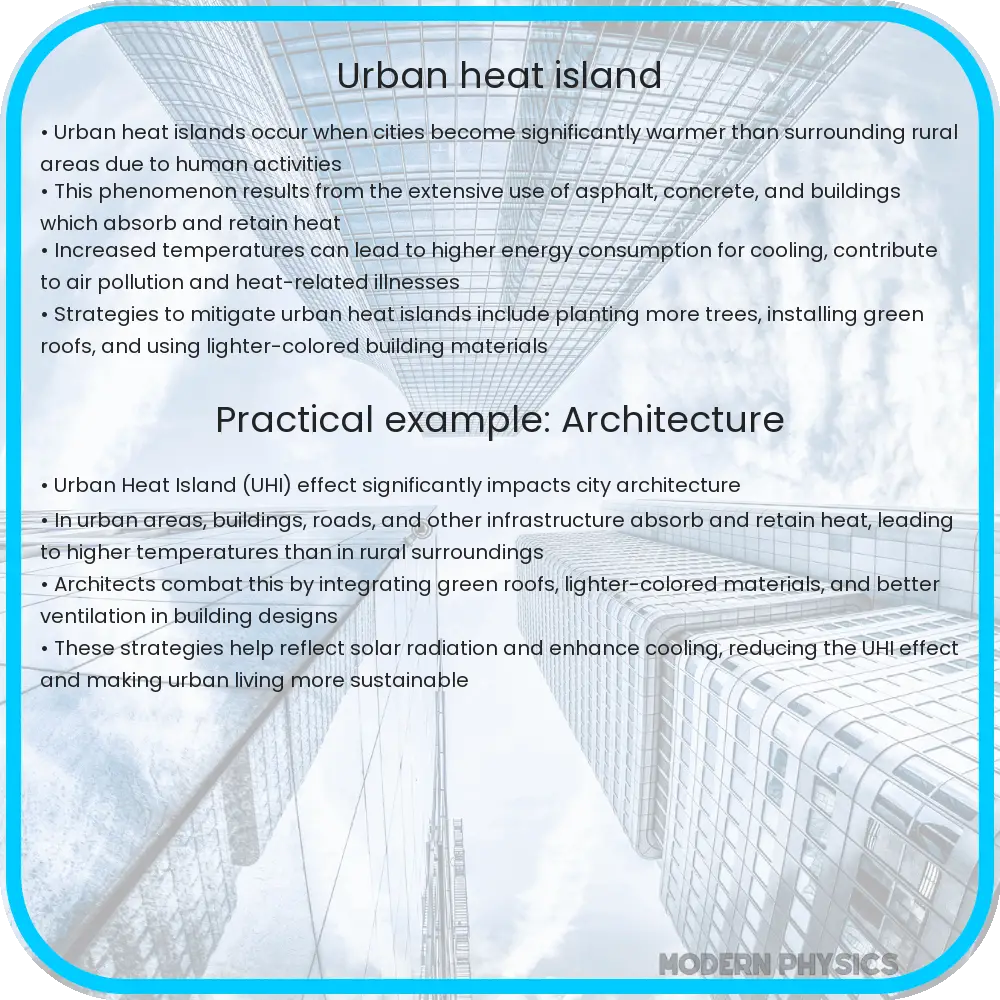
Understanding the Urban Heat Island Effect
The Urban Heat Island (UHI) effect describes how urban regions experience significantly higher temperatures than their rural surroundings. This phenomenon becomes especially noticeable during the summer months and can lead to a number of socio-economic and environmental issues. In this article, we will explore the causes, impacts, and potential mitigation strategies for the Urban Heat Island effect.
Causes of Urban Heat Islands
The primary cause of the Urban Heat Island effect is the modification of land surfaces through urban development. Buildings, roads, and other infrastructure absorb and retain heat more than natural landscapes such as forests and bodies of water. Let’s delve into the specific factors contributing to UHI:
- Dark Surfaces: Urban areas tend to have a lot of dark surfaces, like asphalt roads and tar roofs, which absorb significantly more solar radiation than lighter colored surfaces. This absorbed heat is released slowly during the night, leading to higher temperatures.
- Lack of Vegetation: Urban areas have less vegetation compared to rural areas. Plants cool the air through a process known as transpiration, releasing moisture into the air and reducing the temperature.
- Energy Usage: High energy usage in cities, from air conditioning to industrial processes, generates a significant amount of heat, contributing to the UHI effect.
- Building Density: Tall buildings and narrow streets can trap heat in urban areas. This architectural setup inhibits air flow and blocks heat from radiating into the atmosphere during the night.
Impact of Urban Heat Islands
The increase in temperatures caused by UHI can have several adverse effects:
- Health Concerns: Higher urban temperatures can lead to heat-related illnesses and mortality, particularly among vulnerable populations like the elderly and those with pre-existing health conditions.
- Increase in Energy Consumption: As temperatures rise, the demand for air conditioning increases, leading to higher electricity consumption. This not only increases energy bills but also contributes to greater greenhouse gas emissions.
- Water Quality Issues: Higher temperatures can affect water quality by increasing the rate of chemical reactions in water bodies and reducing dissolved oxygen levels, which can harm aquatic life.
- Compromised Comfort and Livability: Persistent high temperatures, particularly at night, can lead to discomfort and disrupt sleep patterns, reducing overall quality of life in urban areas.
Strategies for Mitigating the Urban Heat Island Effect
Addressing the Urban Heat Island effect requires a combination of policy intervention, community engagement, and innovative engineering. Here are some effective strategies to mitigate UHI:
- Increasing Green Spaces: Planting more trees and creating green roofs can help reduce surface and air temperatures through shading and transpiration.
- Using Reflective Building Materials: Incorporating materials with higher solar reflectance like white or light-colored paints can help reflect solar radiation away from surfaces, reducing heat absorption.
- Implementing Cool Roofs: Cool roofs are designed to reflect more sunlight and absorb less heat compared to standard roofs. They can be made of special reflective paints, sheet coverings, or reflective tiles or shingles.
- Enhancing Urban Planning: Designing cities in a way that promotes better air flow and reduces heat retention can significantly lower urban temperatures. This can include designing streets that facilitate wind flow or constructing buildings at angles optimized for sun exposure and ventilation.
- Energy Efficiency Improvements: Promoting and implementing energy-efficient technologies in buildings and industries can reduce the heat generated from excessive energy use.
Conclusion
The Urban Heat Island effect presents a formidable challenge, particularly as urban populations continue to grow and climate change exacerbates temperature extremes. Understanding the causes and impacts of UHI not only highlights the urgency of addressing this issue but also directs us towards viable solutions. By adopting strategies such as increasing vegetation, using reflective materials, implementing cool roofs, and improving urban planning and energy efficiency, cities can mitigate the effects of UHI. These efforts will contribute to making urban environments more livable, sustainable, and resilient to climatic changes.
In conclusion, while the challenges posed by the Urban Heat Island effect are significant, the solutions are accessible and implementable. Effective mitigation requires a multi-faceted approach involving government, industry, and community cooperation. Through informed decision-making and proactive policy implementation, we can ensure healthier, more comfortable urban environments for future generations.